Total Physical Hits in TPC: 2,117,793
Primaries: 593,652 (28.03%)
Non-primary origin: 1,524,141 (71.97%)
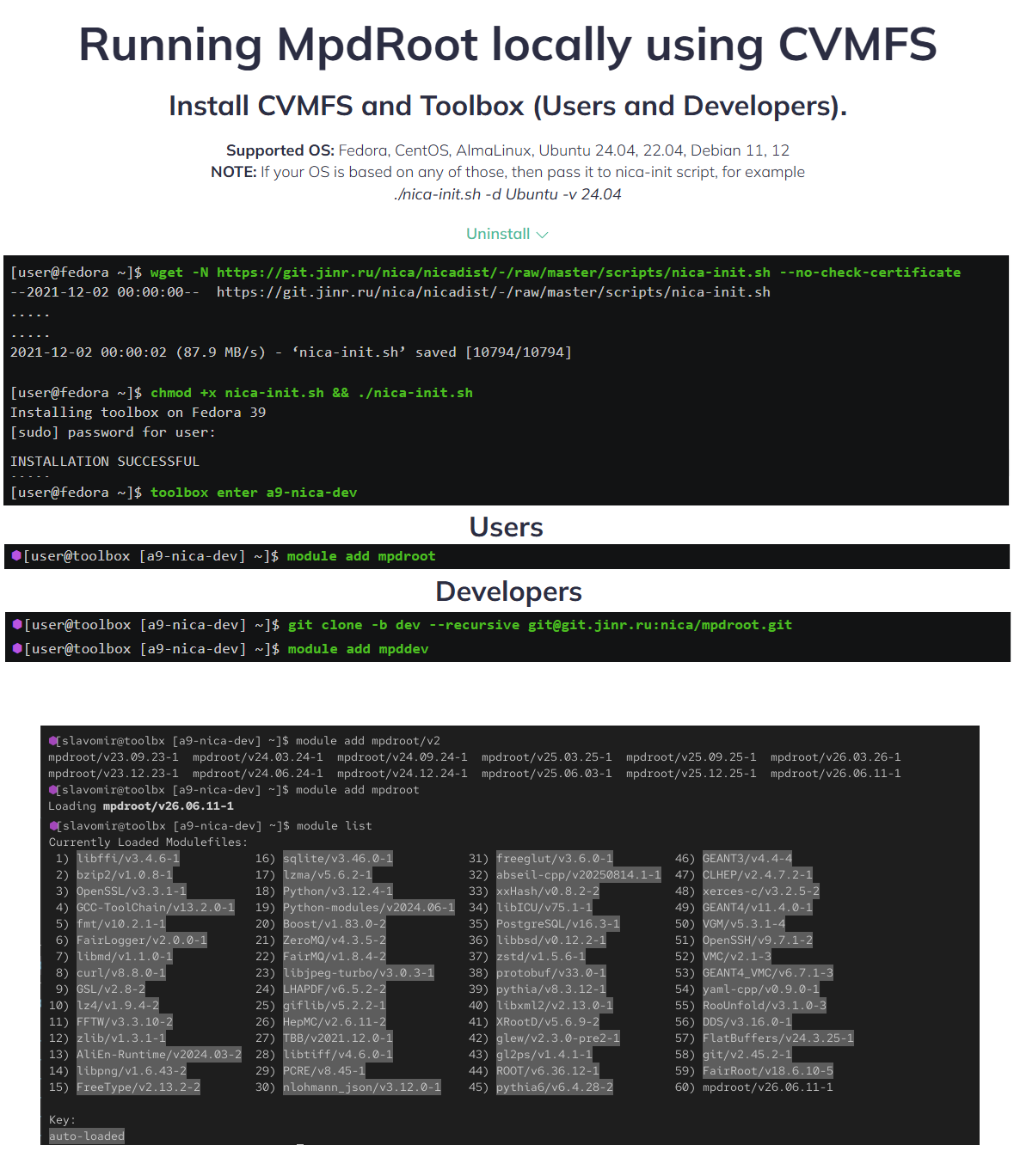
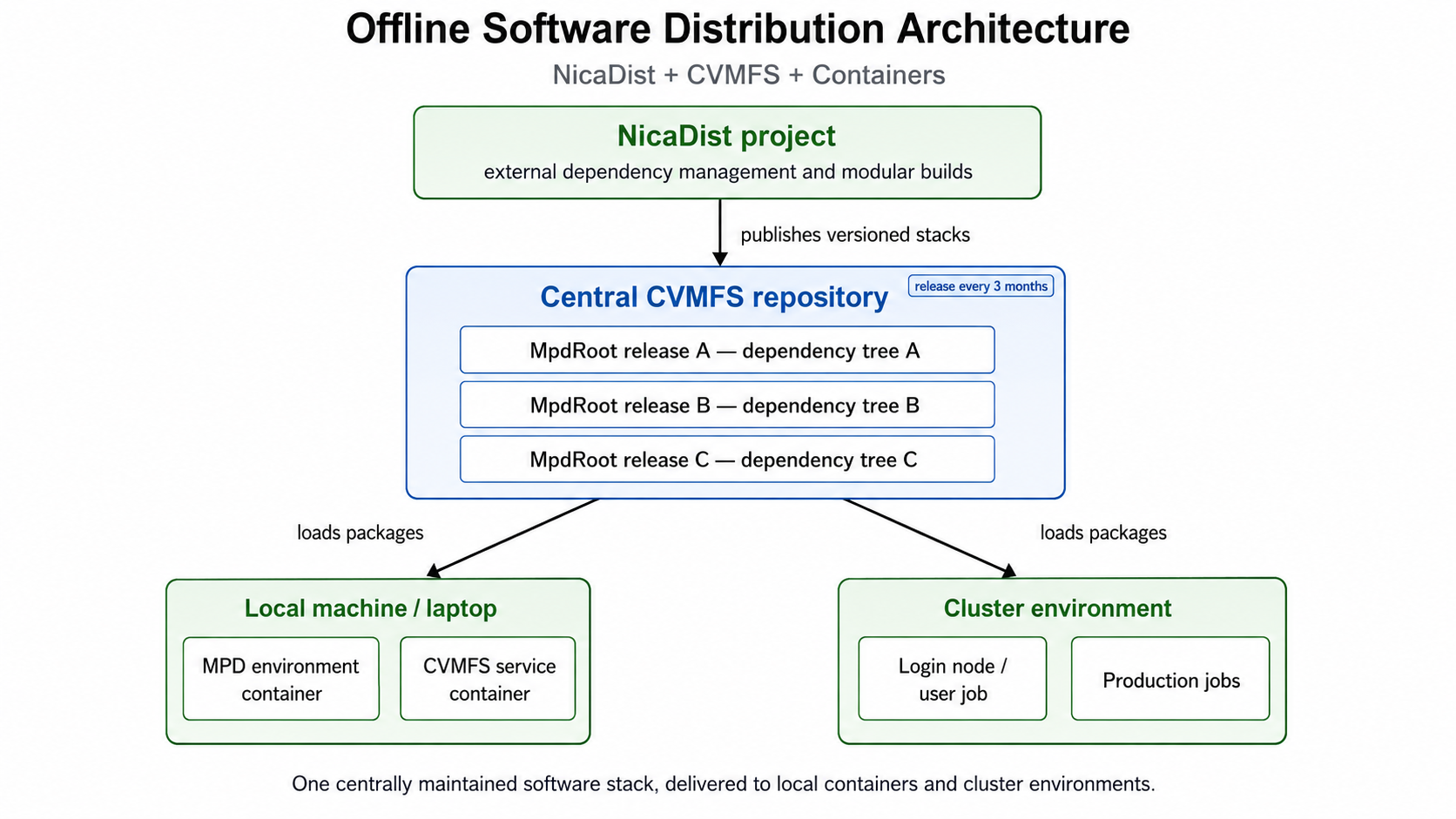
Less local maintenance, easier upgrades, reproducible user support.
ATLAS Heritage & Global Support
Built upon extensive experience from the ATLAS experiment, specifically focusing on optimized Combinatorial Kalman Filter (CKF) implementations.
Written in modern C++ and heavily templated to maximize calculation speeds and compiler optimizations.
Supports a highly modular ecosystem and native multi-threading, essential for next-generation HEP data volumes.
Houses a vast library of reconstruction algorithms beyond CKF, backed by major HEP institutions worldwide.
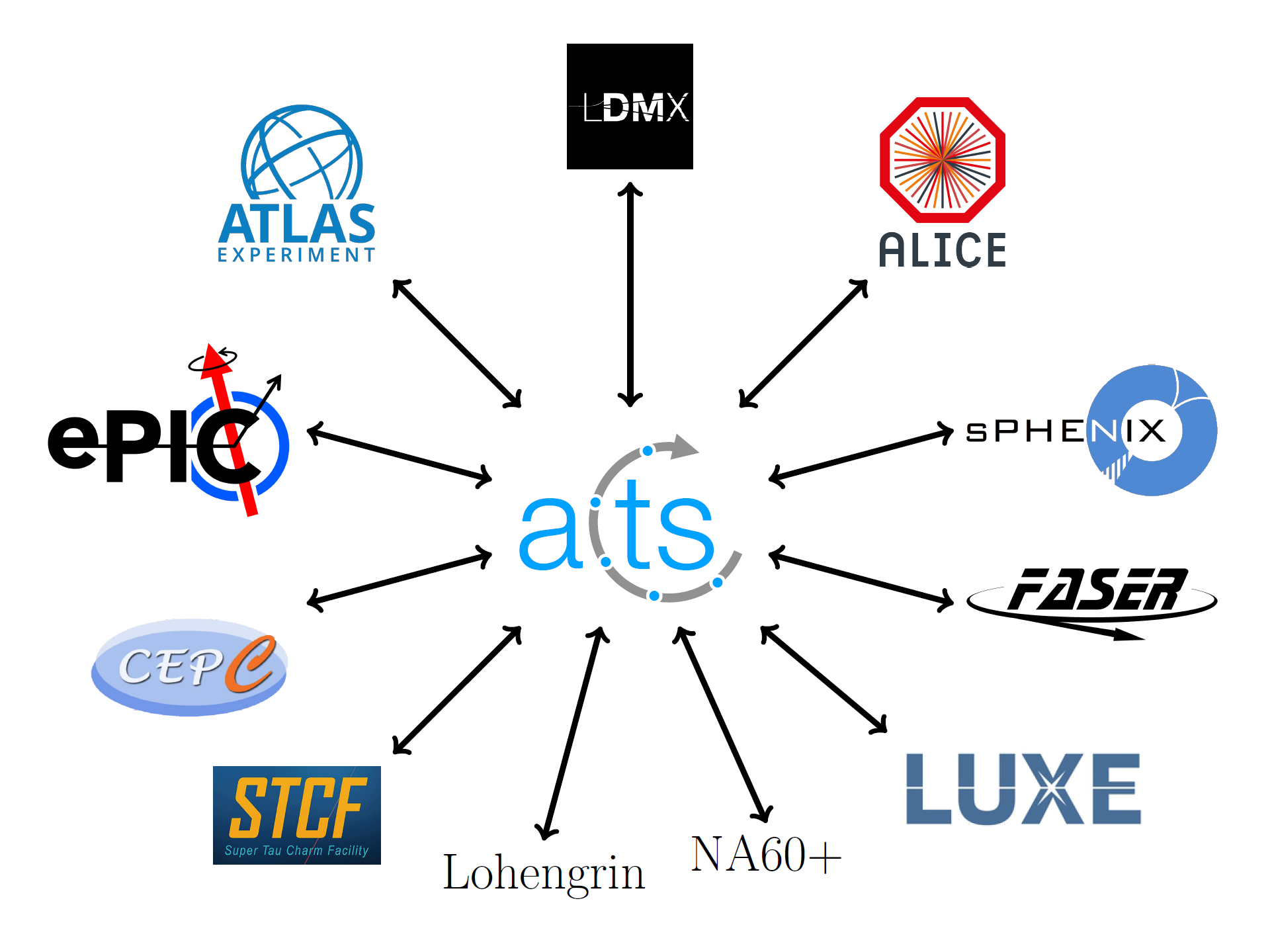
ACTS: A Common Tracking Software - Future Standard for HEP Experiments
KEY FACTOR: EVENT MULTIPLICITY
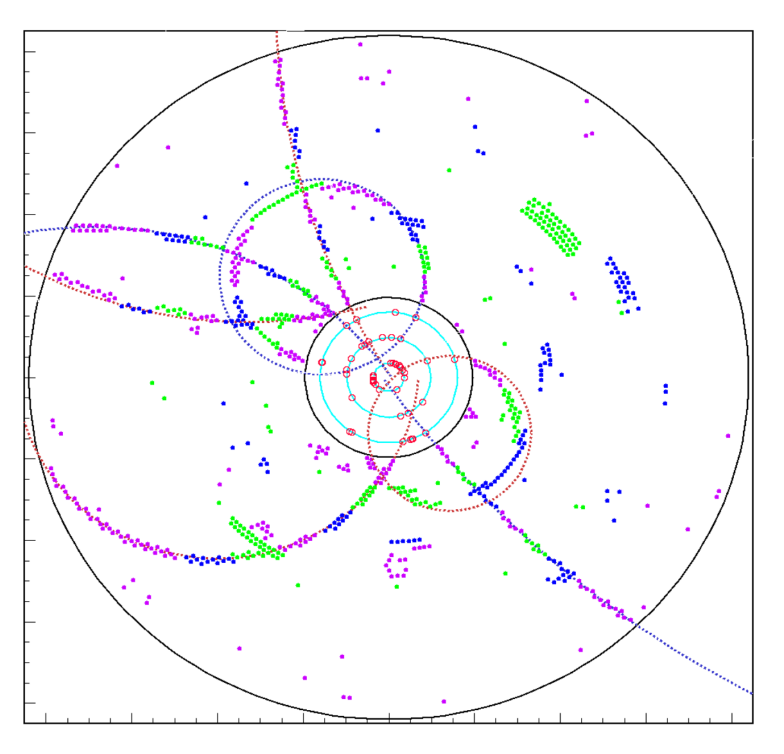
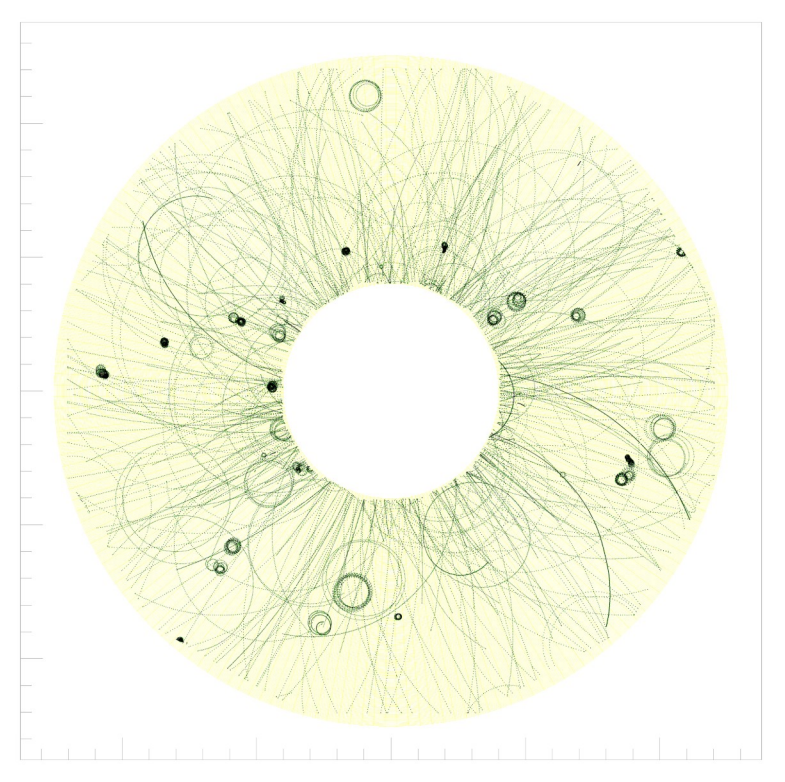
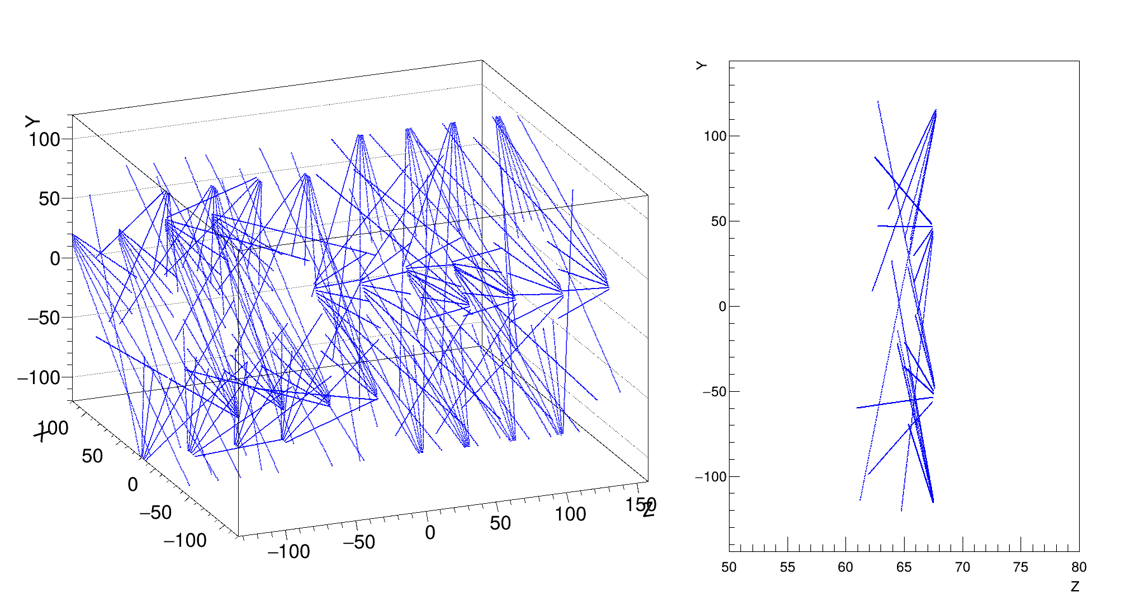
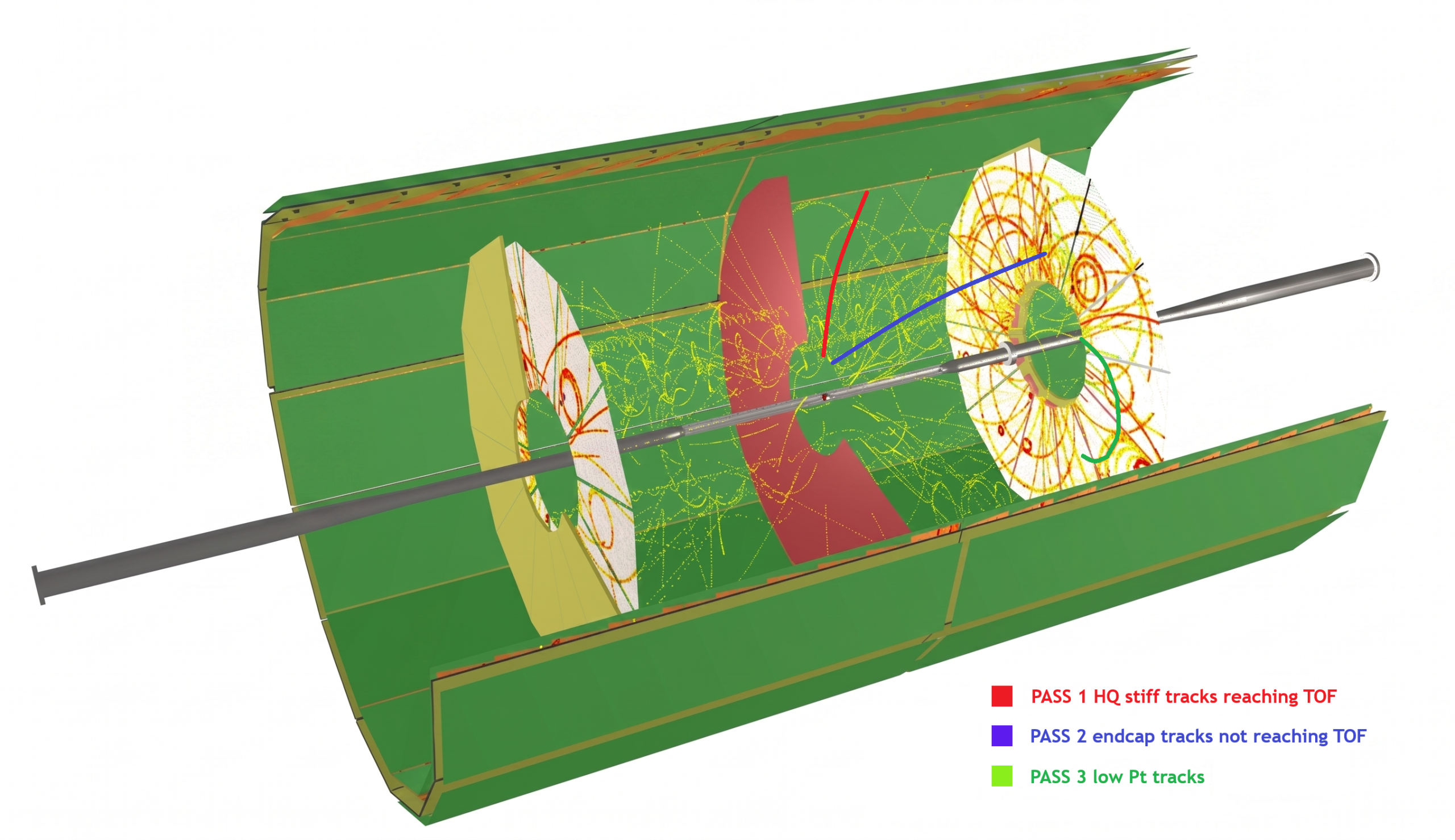
In high-occupancy environments, combinatorial clutter is overwhelming. Multi-pass reconstruction reduces complexity by sequentially isolating and removing specific track populations.
Strategy for MPD Event Reconstruction:
Reconstruct Primary Tracks
Secondaries
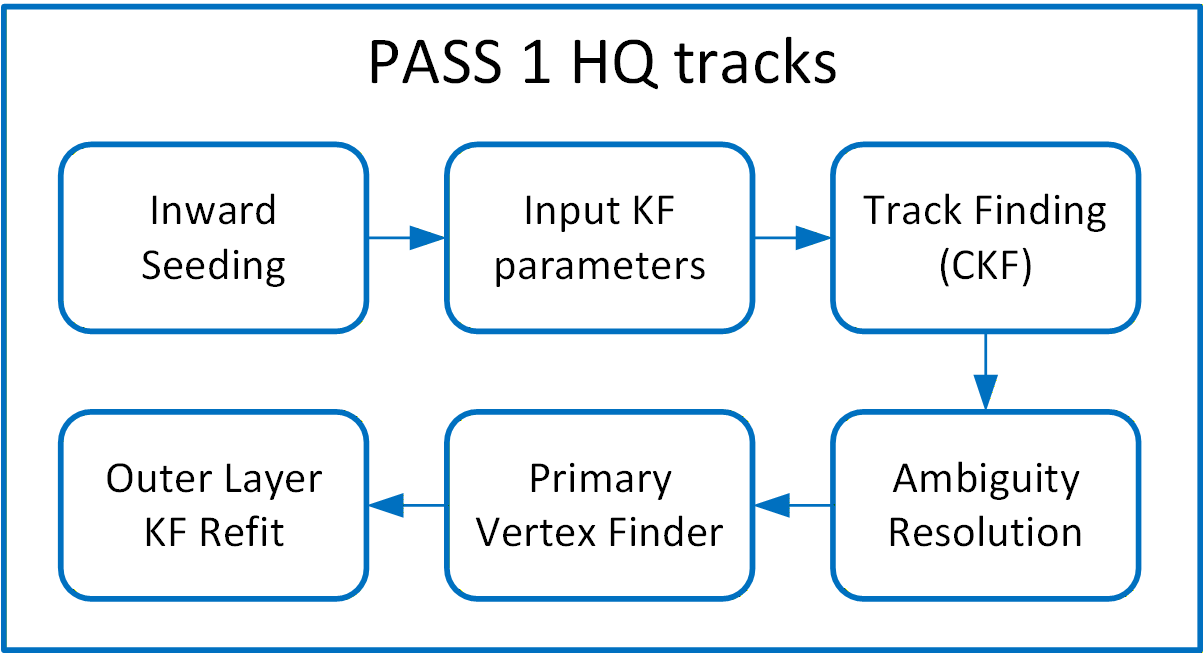
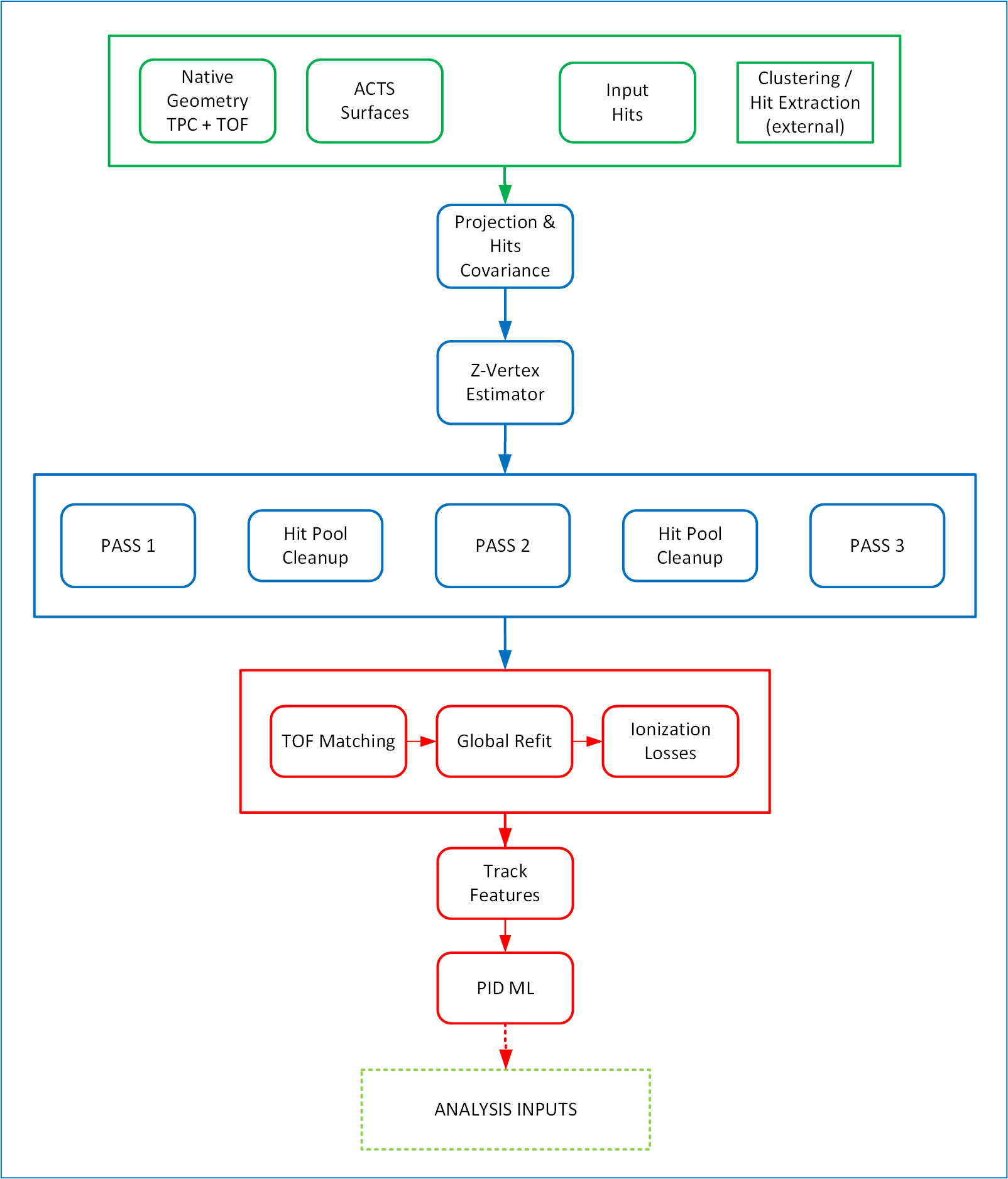
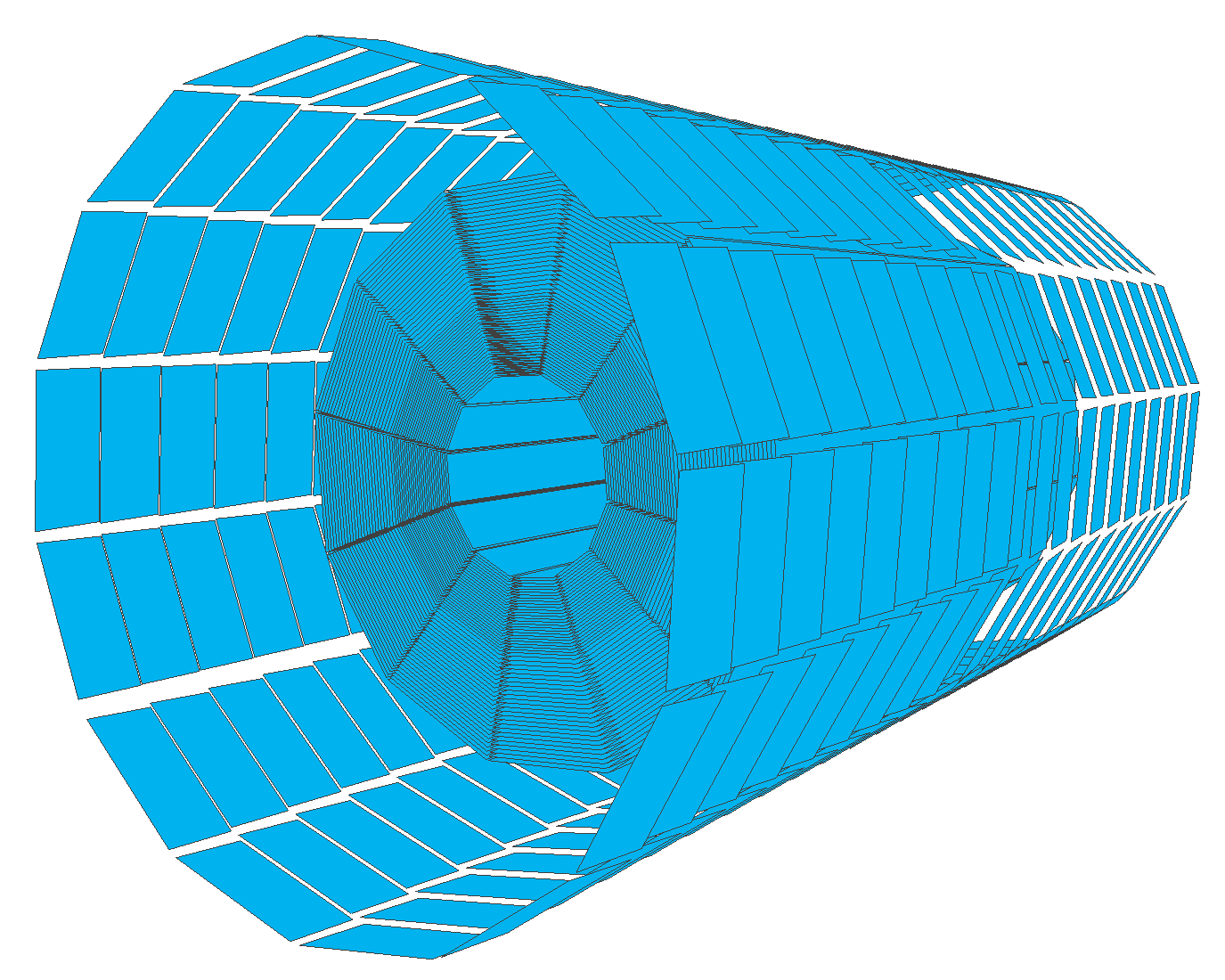
MPD ACTS reconstruction backend architecture
Key Advantage
70% of TOF matches are done automatically by the CKF with a 95% success rate.
None of the ACTS Ambiguity Resolution algorithms work for MPD.
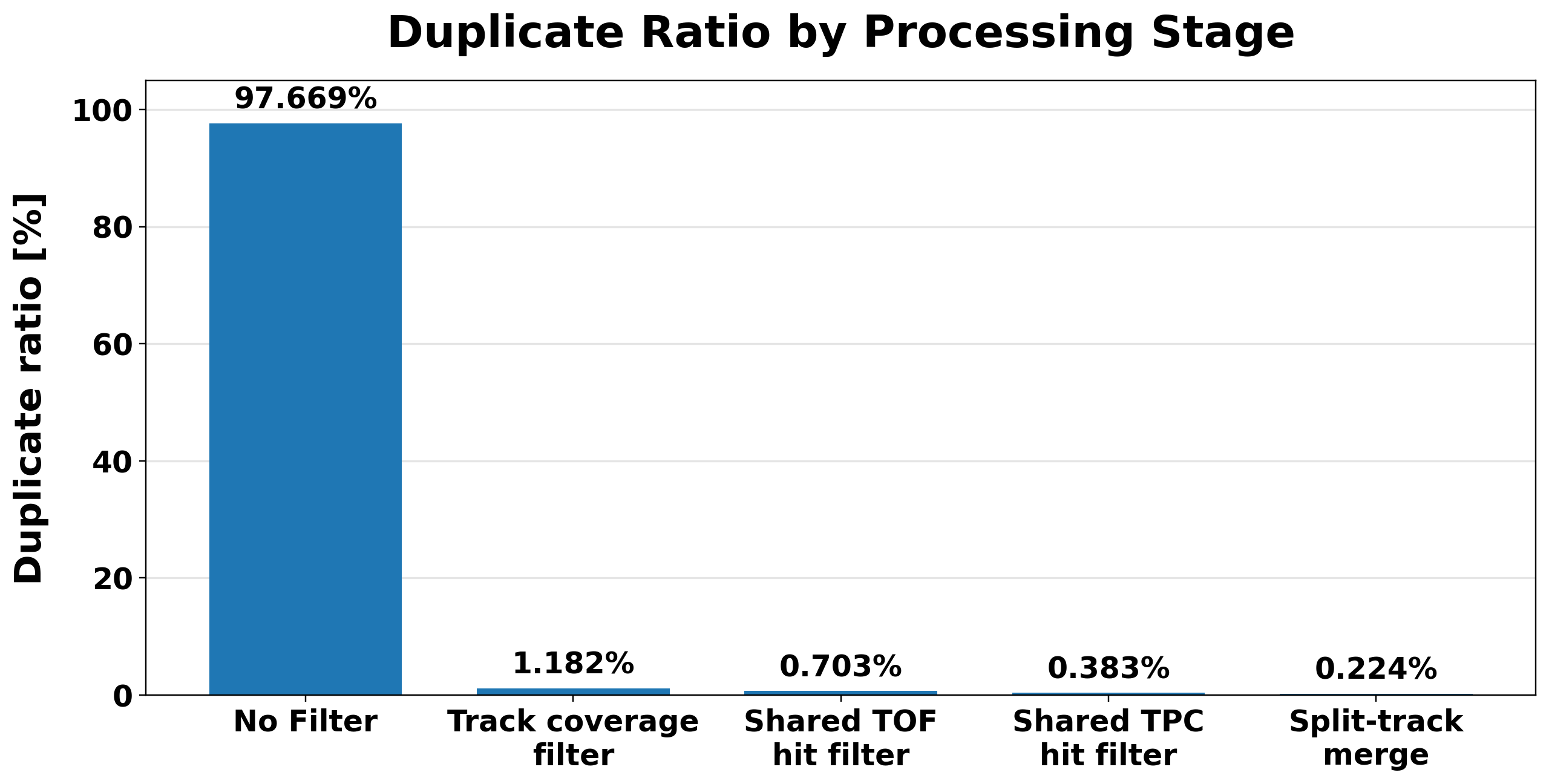
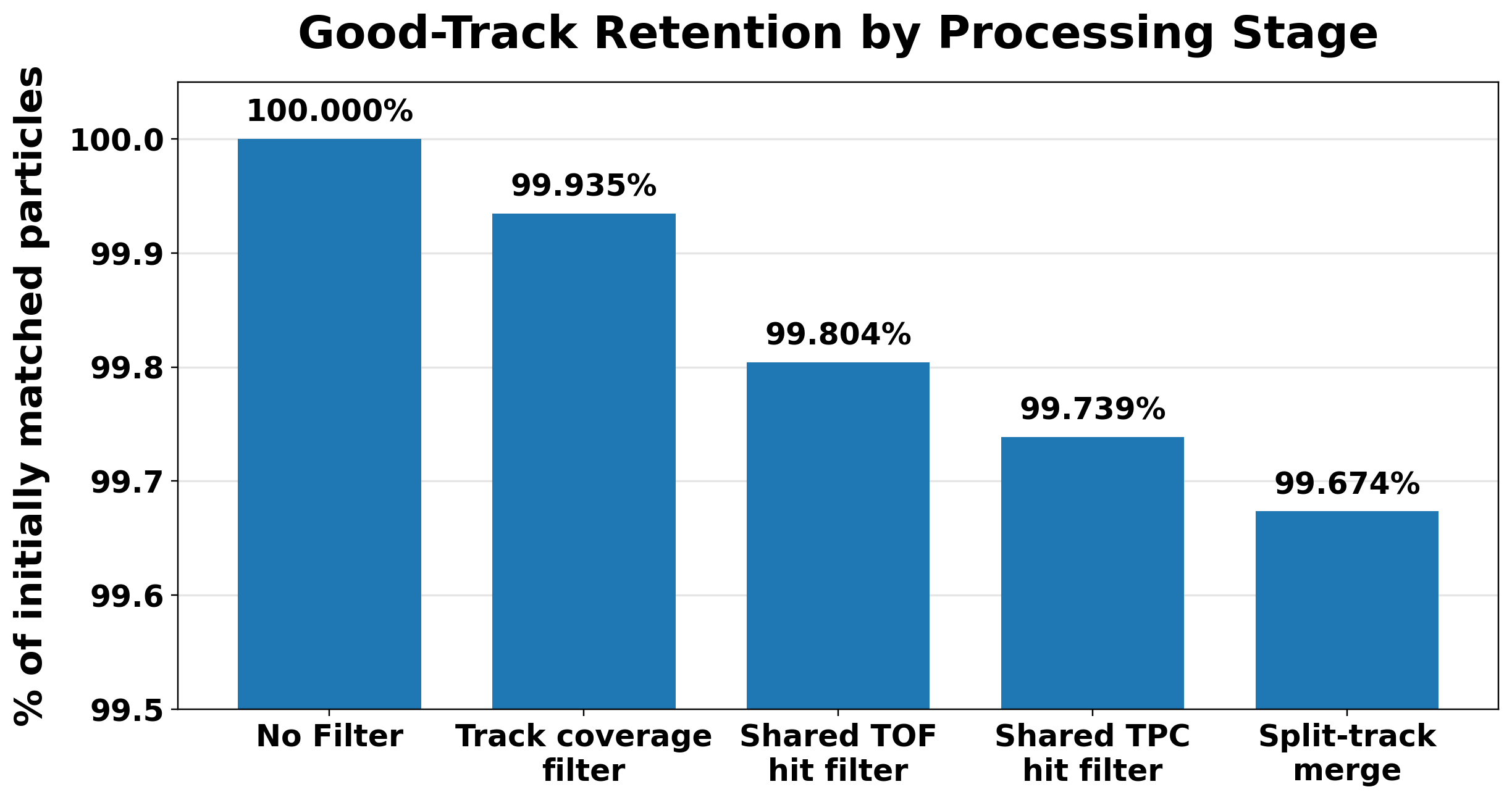
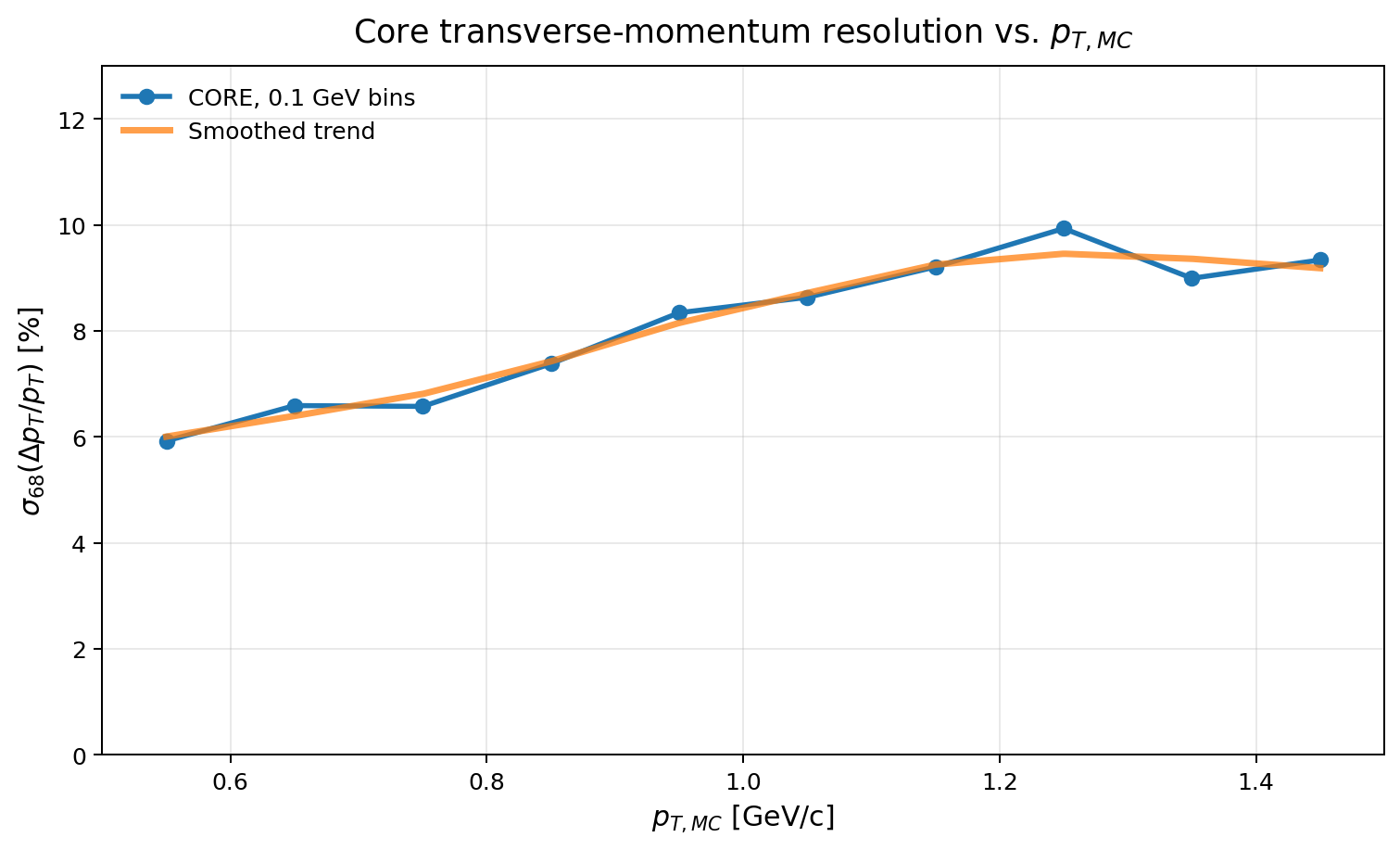
Available refit tools:
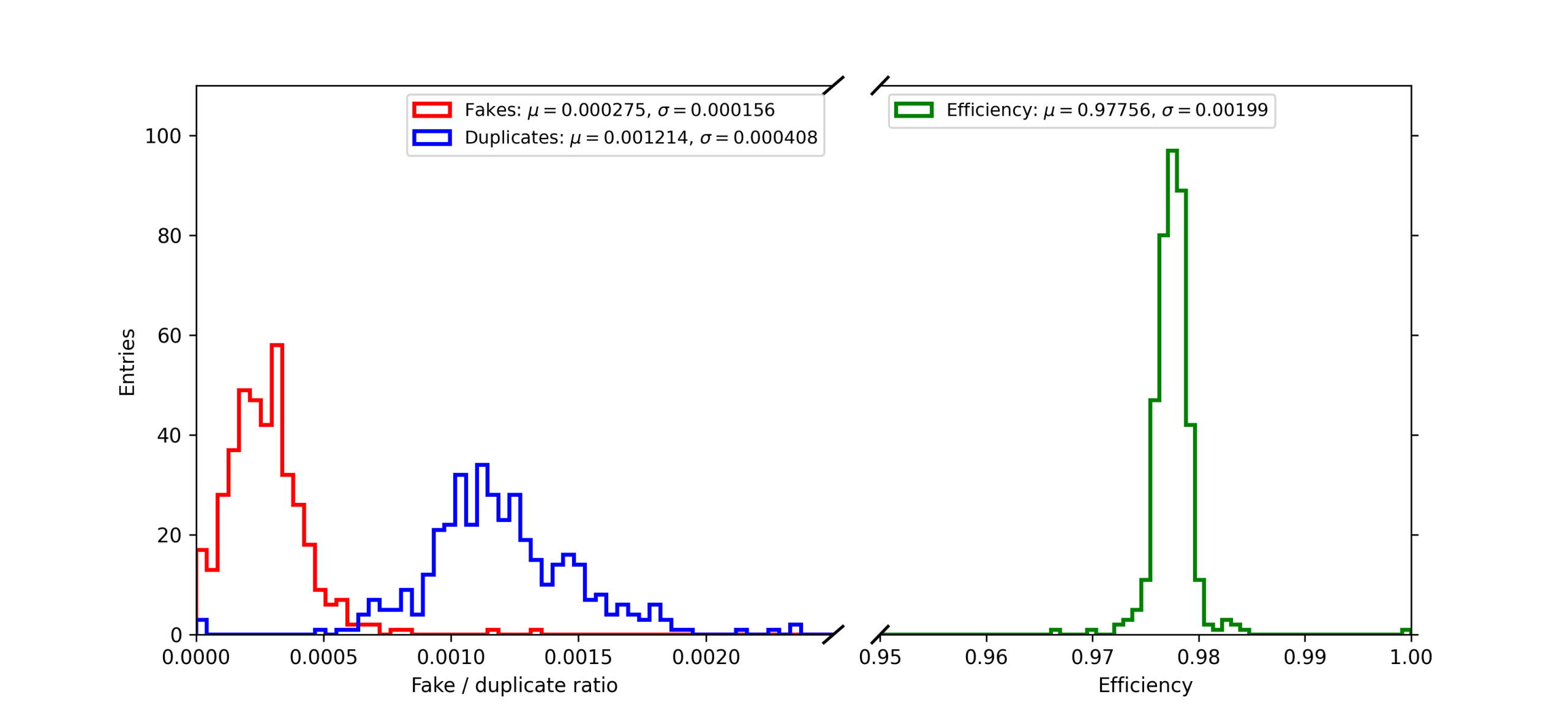
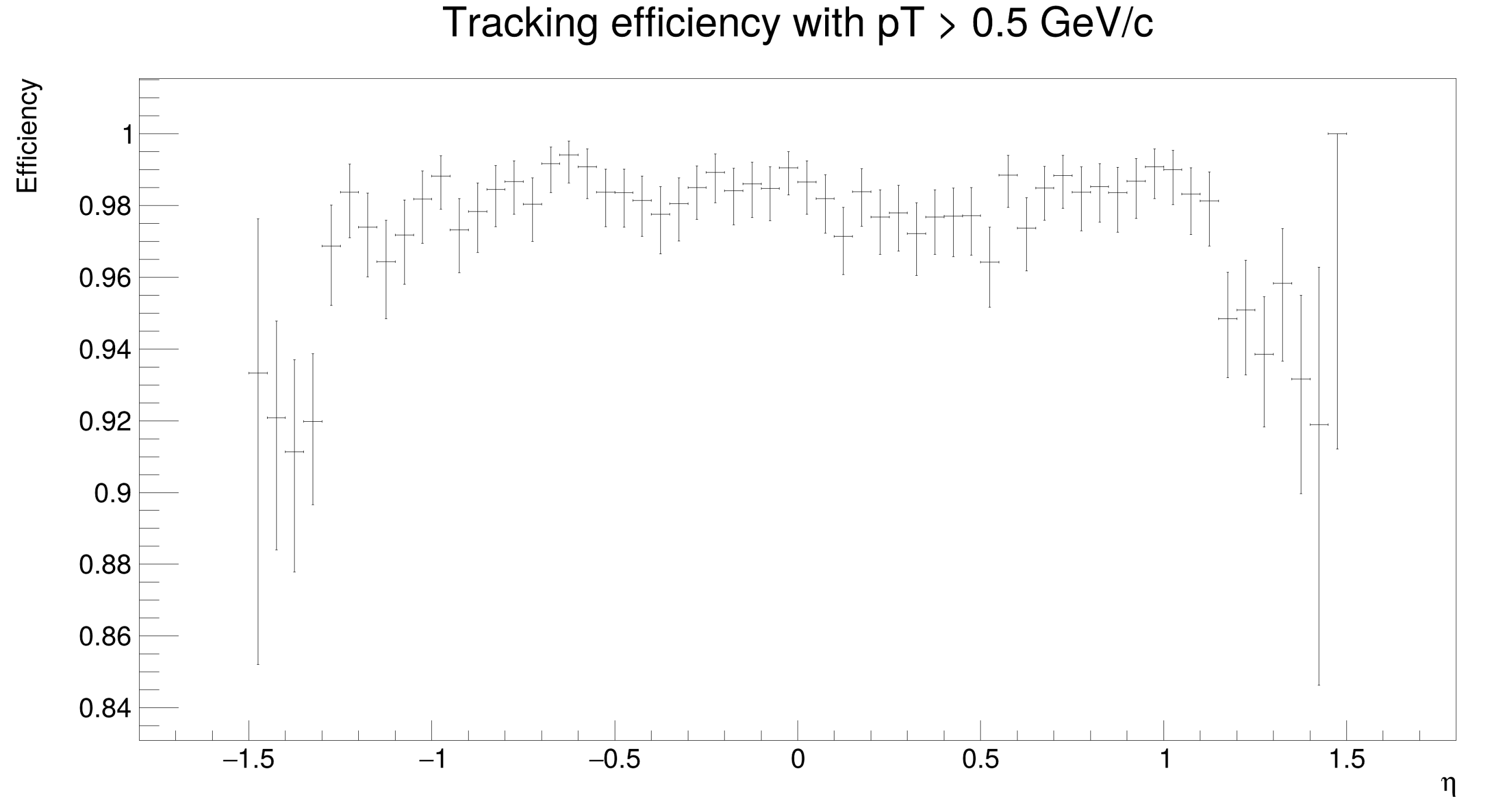
UrQMD BiBi @9.2 GeV, pT > 500 MeV, particles reaching TOF.
Preferred scenario: less fakes and duplicates at expense of efficiency.
Resulting subsets of fakes and duplicates are too sparse (less than 2 fake/duplicate per 1000 particles) for meaningful spectral graphical representation.
| Metric | Mean | Sigma |
|---|---|---|
| Efficiency | 0.97756 | 0.00199 |
| Fakes | 0.00028 | 0.00016 |
| Duplicates | 0.00121 | 0.00041 |
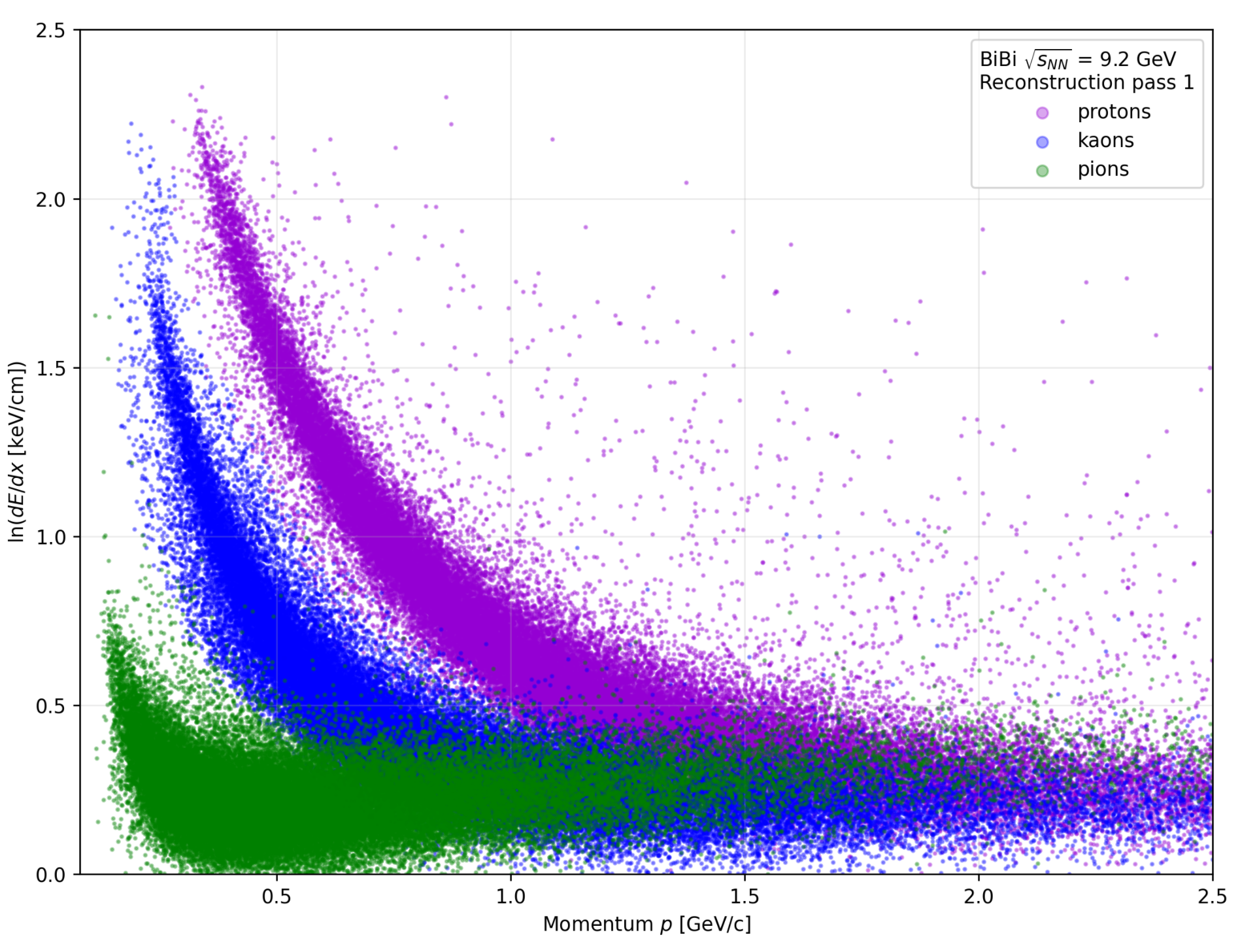
Local ionization losses remain statistically compatible with the mean track ionization.
Local ionization loss differs significantly from the mean track ionization.
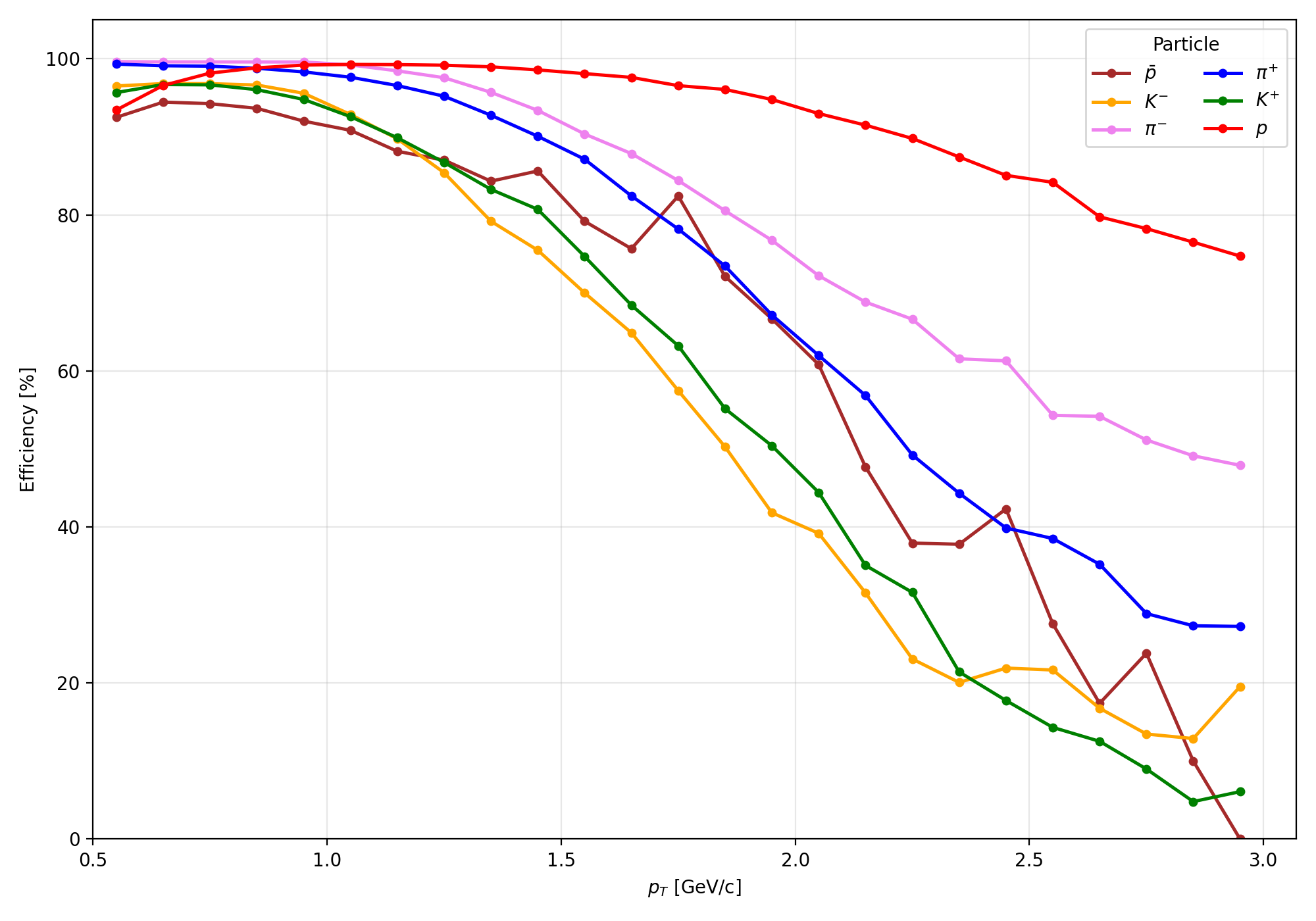
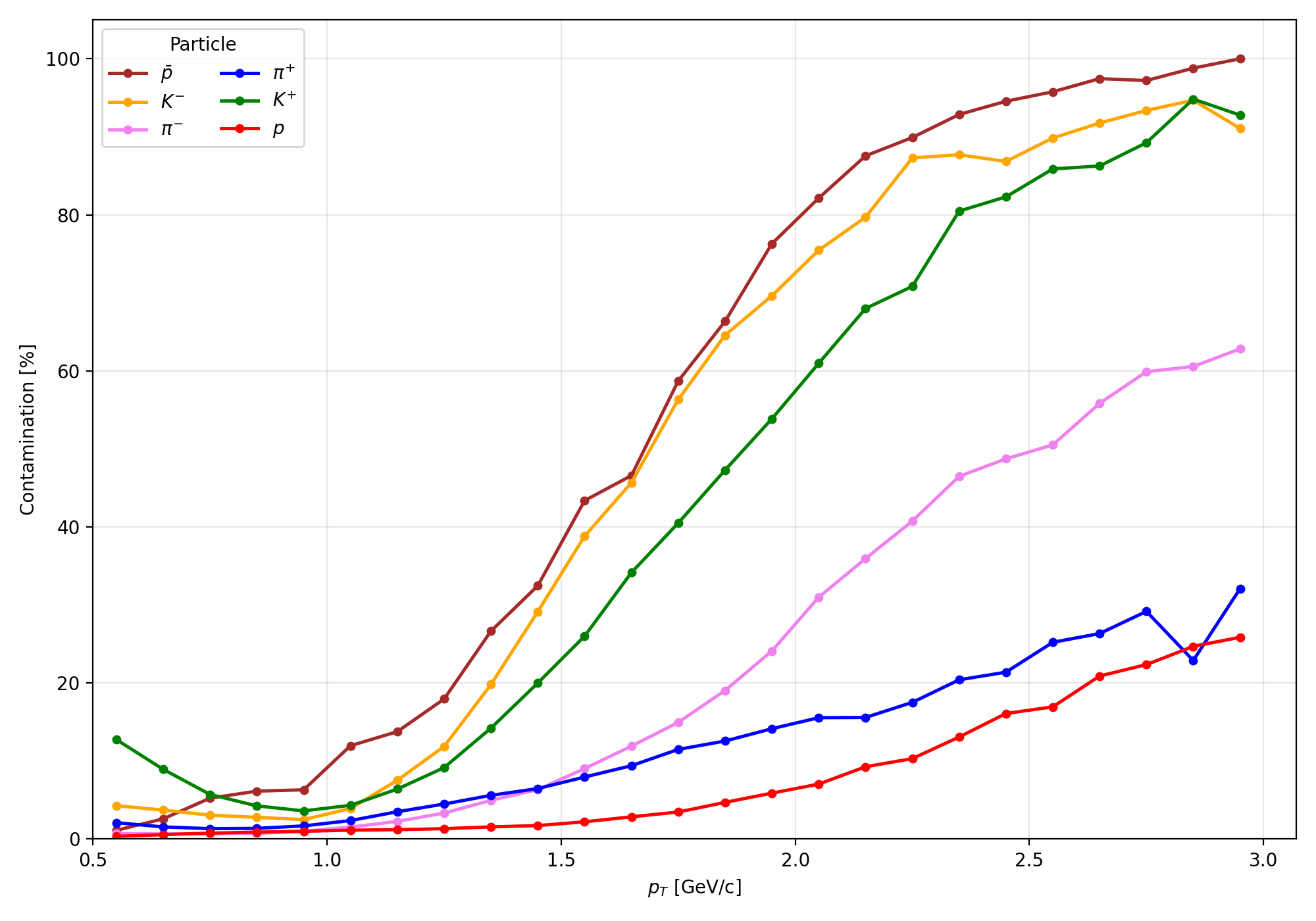
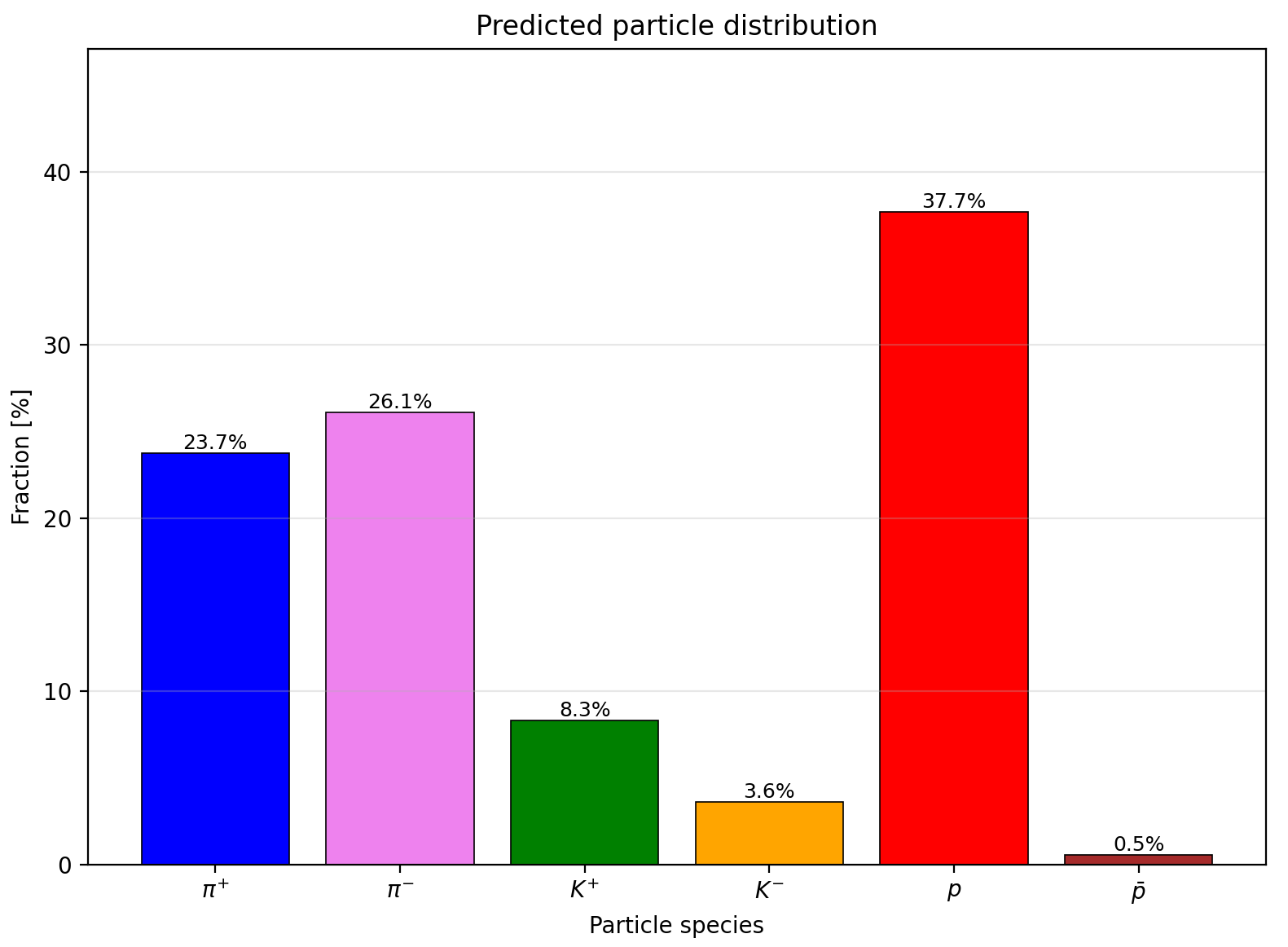
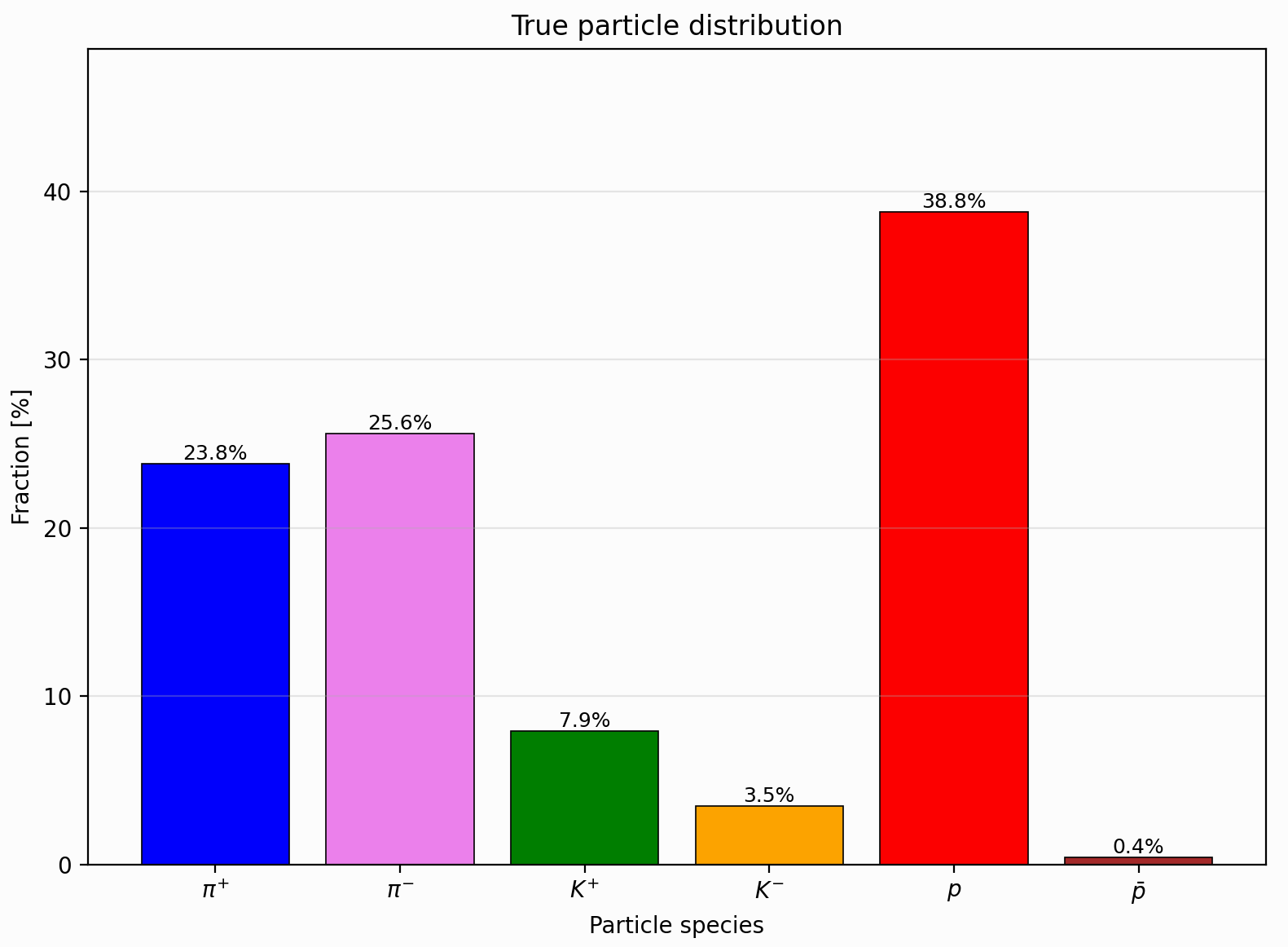
The core of PIdML is an integration interface that separates model training from model usage inside the experiment software. Any classifier exported to ONNX can be connected through the same inference workflow, regardless of the training algorithm.
The detector response is expected to follow the physical PID limits assumed in the technical design reports. Therefore, the observed ML trends should be interpreted relative to these momentum thresholds.
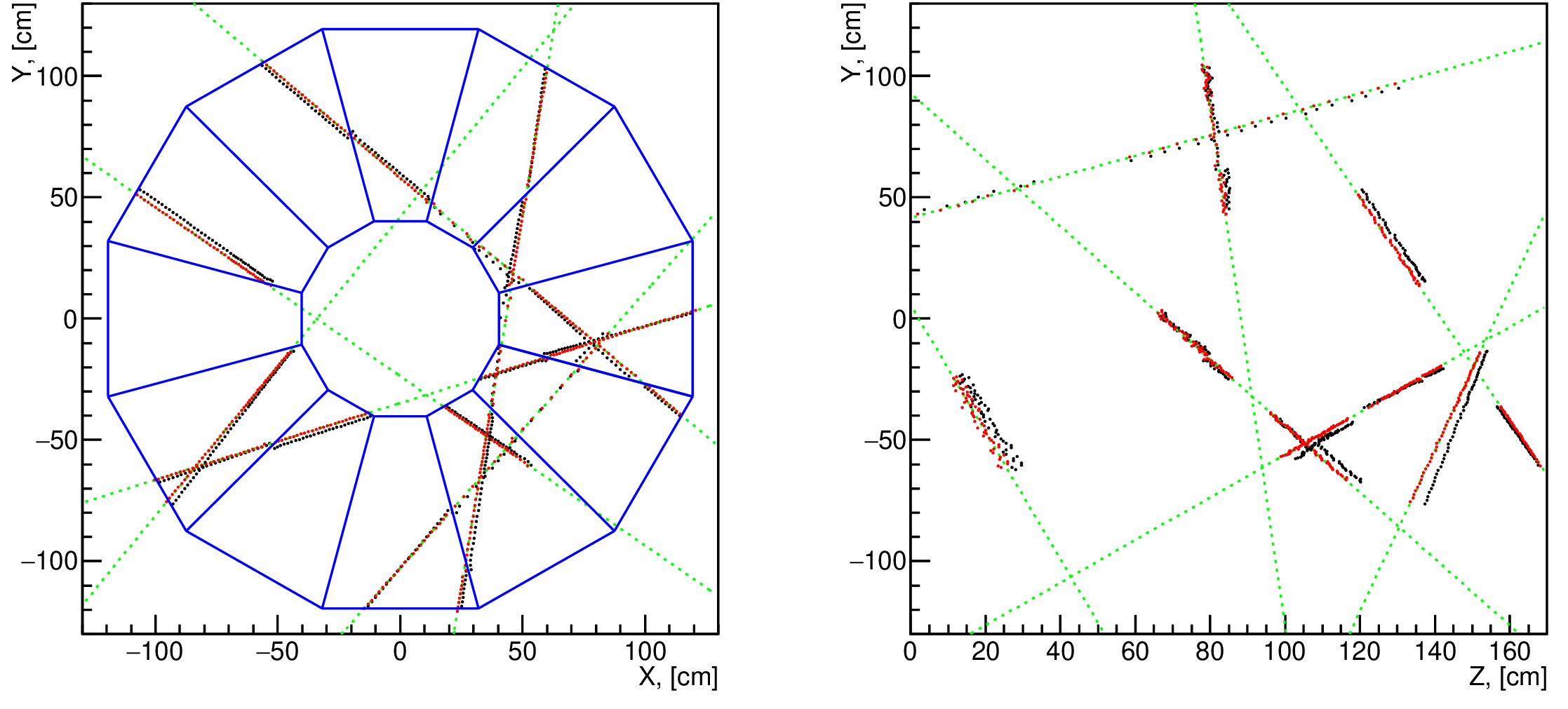
Our immediate focus is completing the reconstruction for primary particles across three distinct topological passes. These require customized variations and combinations of reconstruction algorithms, including seeding, trackfinding with CKF, ambiguity filters, and refitting.
Once primary particle reconstruction is validated, analytical focus will shift toward modeling and studying secondary effects.
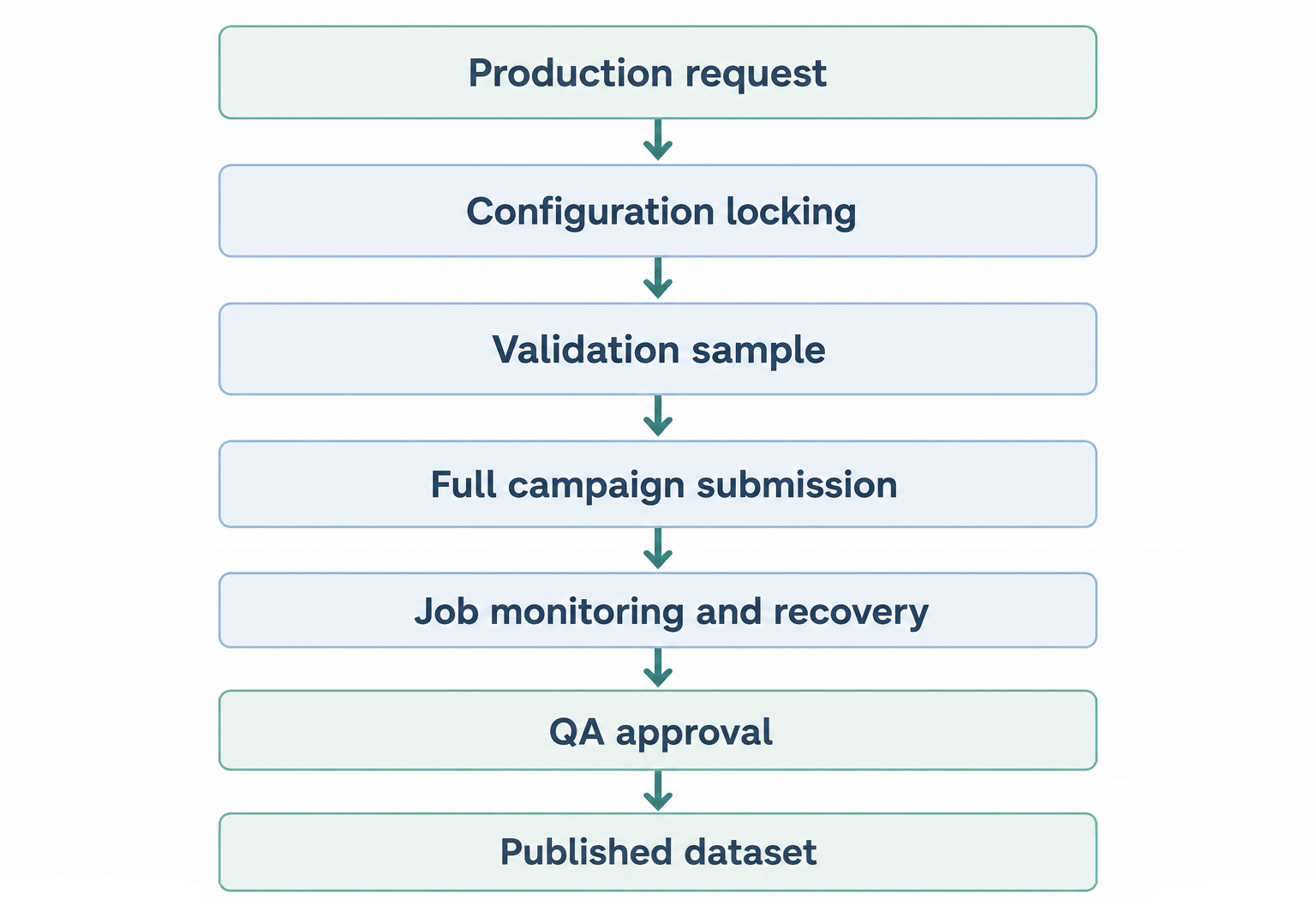
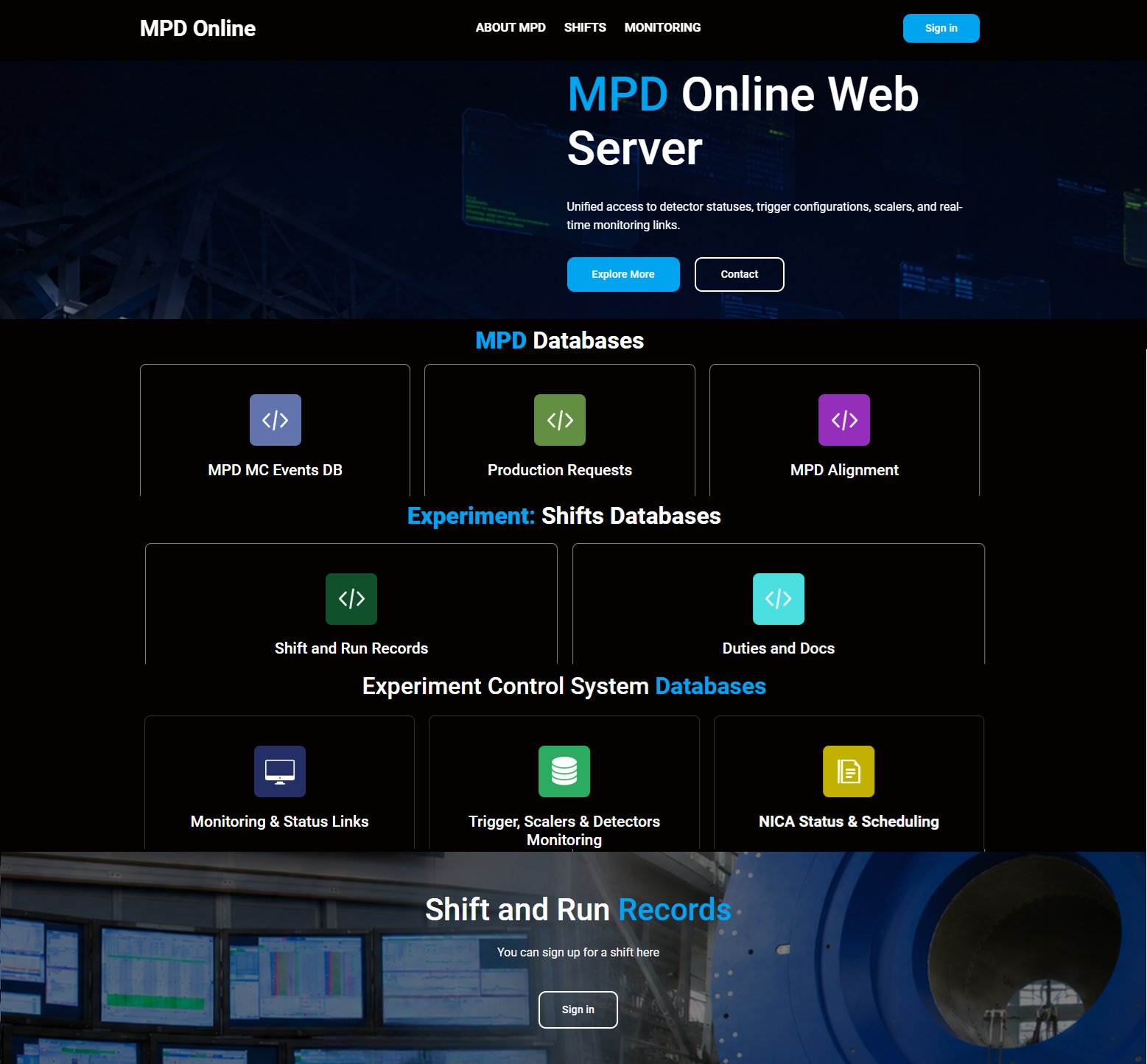
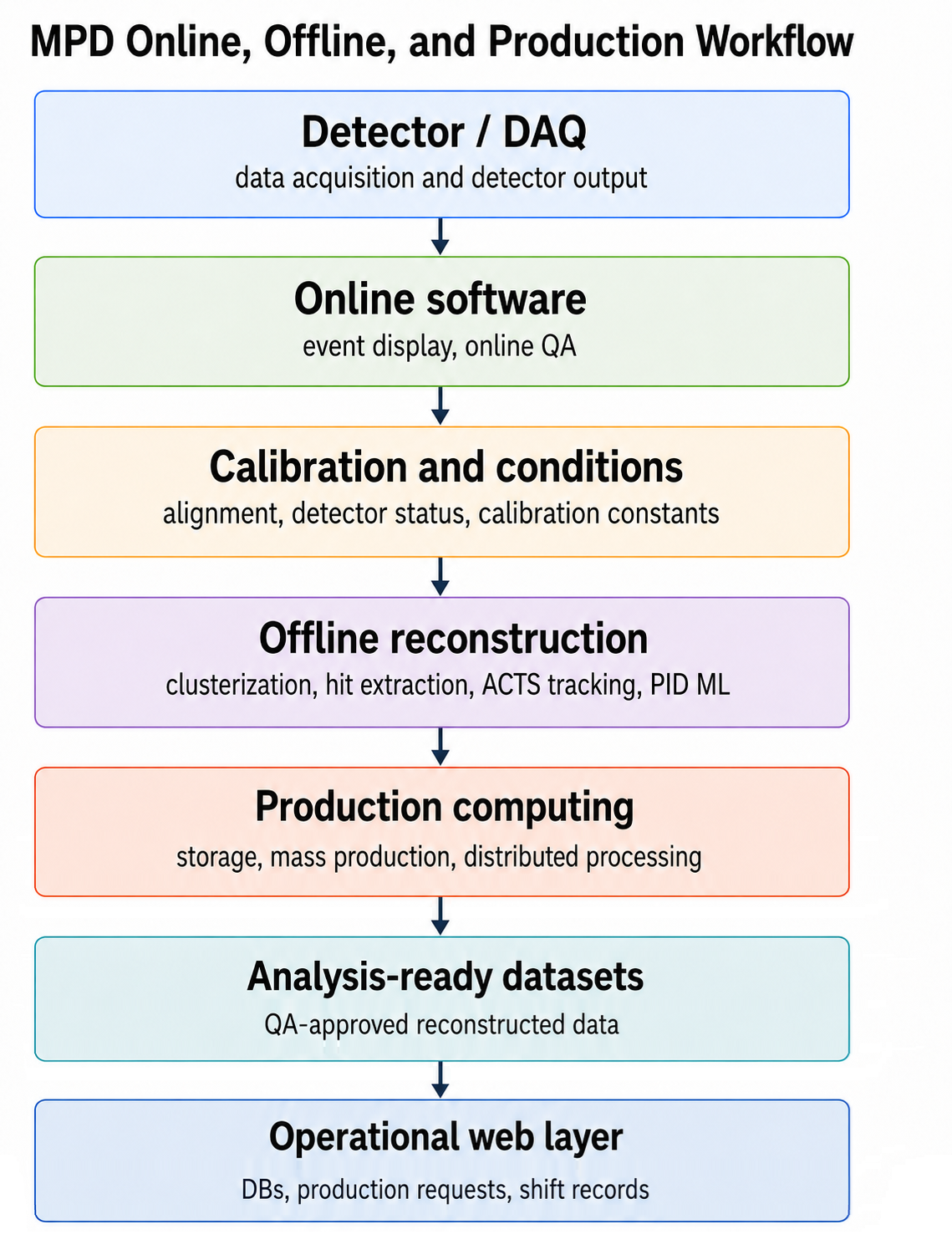
Full traceability across the production chain.