Choose timezone
Your profile timezone:
 The 29th International Scientific Conference of Young Scientists and Specialists (AYSS-2025) will take place from 27 October to 31 October 2025 at the Laboratory of Information Technologies of the Joint Institute for Nuclear Research (JINR, Dubna, Russia).
Please note that remote participation will not be available. Participants are required to attend the conference in person.
The conference is held annually for students, young scientists, and specialists from research centers around the world. Selected papers will be recommended for publication in a peer-reviewed journal. All attendees of the conference will receive participation certificates.
TOPICS
As part of the conference, leading scientists will give lectures on the recent theoretical, experimental, and applied research conducted all over the world with a focus on the major results obtained at JINR. All participants are welcome to submit abstracts on the following topics:
PARTICIPANTS
Students, young scientists, and specialists under 36 from all over the world are invited to participate in the conference with talks and poster presentations.
| SCIENTIFIC ADVISORY BOARD: |
ORGANIZING COMMITTEE: |
| Co-chairman: Grigory Trubnikov (JINR Directorate) | Chairman: Meir Yerdauletov (FLNP) |
| Co-chairman: Grigory Shirkov (JINR Directorate) | Dinara Bulatova (JINR Press Office) |
| Ayagoz Baimukhanova (DLNP) | Yulia Cojocaru (ICD) |
| Vladimir Chausov (LRB) | Grigory Gelenidze (JINR Press Office) |
| Olga Derenovskaya (MLIT) | Anna Ilina (MLIT) |
| Aidos Issadykov (BLTP) | Ksenia Ilina (VBLHEP) |
| Alexander Karpov (FLNR) | Dmitry Kamanin (UC) |
| Sergey Kulikov (FLNP) | Ysmaiyl Kambar (VBLHEP) |
| Sergei Merts (VBLHEP) | Alisher Mutali (FLNR) |
| Kanat Nurlan (BLTP) | |
| Daria Shamina (LRB) | |
| Alexey Vorontsov (MLIT) |
THE WORKING LANGUAGE of the conference is English.
THE REGISTRATION FEE for participation is 12000 RUB, covering organizing expenses, coffee breaks, the conference dinner, and social program activities. The payment link for external participants will be published on 1 October. Payments for participants affiliated with JINR will be carried out by internal cashless transactions.
FINANCIAL SUPPORT covering fee, local accommodation, and partial travelling expenses can be provided for a limited number of participants. The selection will be carried out through competition.
SECTIONS
During the conference, the participants will present their talks in one of the nine topical sections. The duration of each sectional talk is 15 minutes, including both the presentation (12 min) and the Q&A session (3 min). For the poster session, the poster size should be A1.
Swift heavy ion (SHI) irradiation with 150 MeV Xe ions (5 × 10⁹ - 5 × 10¹¹ ions cm-2) was used to tune the defect landscape and morphology of hydrothermally grown BiVO4 (BVO) thin films, aiming to enhance their photoelectrochemical (PEC) performance for the oxygen evolution reaction (OER). Irradiation induces residual stress, partial amorphization, and bismuth-rich hillocks over oxygen-depleted ion tracks. At the highest fluence, overlapping tracks and excessive defect accumulation cause irreversible performance loss. In contrast, lower fluences (5 × 10⁹ and 1 × 10¹⁰ ions cm-2) generate controlled defects that initially trap charges but subsequently boost activity, increasing photocurrent density by 58.6% and 25.2%, respectively. Post-PEC analysis reveals evolution of latent ion tracks into nanoscale holes (up to 30 nm in diameter, 200 nm deep), with the 1 × 10¹⁰ ions cm-2 sample displaying the most uniform features, indicative of an optimal defect–stress balance enabling localized restructuring. These results demonstrate SHI irradiation as a precise nanoscale morpho-structural engineering tool, with the controlled creation of holes in oxide semiconductors offering pathways for cocatalyst or plasmonic integration to further enhance PEC efficiency.
Acknowledgment: This research was supported by the Science Fund of the Republic of Serbia, grant No. 6706, “Low-dimensional nanomaterials for energy storage and sensing applications: Innovation through synergy of action“- ASPIRE.
In this study, Li2SrSiO4:Ga (0.2, 0.4, 0.6, 0.8, and 1%) series phosphors were synthesised by the combustion method. Crystal structural analysis through X-ray diffraction (XRD) confirmed a hexagonal crystal structure of the prepared nanocomposites. SEM revealed differences in morphology with increasing dopant content. EDS analysed the elemental composition of the nanocomposites. The vibrational characteristics were elucidated by FTIR spectroscopy. The bandgap estimated from UV-Vis decreased as the concentration of Ga3+ increased. Increasing Ga3+ concentration to 0.8% led to a gradual decrease in the 500 nm peak and a drastic increase in the 740 nm peak of the photoluminescence emission intensity, while 1% increase for both peaks. The CIE chromaticity analysis of samples proved that the phosphor emits warm white light according to the CCT values.
ELECTROPHYSICAL PROPERTIES OF n-Si<Pd>, IRRADIATED WITH GAMMA-RAYS
Sh.B. Utamuradova1, D.A. Rakhmanov1*, A.S. Doroshkevich2, A.Tatarinova2,
1Institute of Semiconductor Physics and Microelectronics at the National University of Uzbekistan, 20 Yangi Almazar st., Tashkent, 100057, Uzbekistan;
2 Joint Institute for Nuclear Research, 141980, Dubna, Russia;
In the context of the rapid advancement of modern microelectronics and semiconductor technology, an important scientific and technical challenge remains the comprehensive investigation of novel materials and their properties. Among them, silicon-based structures represent the most extensively utilized semiconductor materials in industry. Through doping with various elements, the electronic and electrophysical characteristics of silicon can be deliberately modified to achieve the desired properties. One dopant that has attracted particular attention is palladium (Pd), as its incorporation into the silicon crystal lattice significantly alters the electronic states and defect structure of the material [1,2].
The aim of this work is to study the influence of gamma radiation on the electrical properties of n-Si and n-Si<Pd> single crystals using impedance spectroscopy.
This article examines how the electrophysical properties of palladium-doped silicon structures change under the influence of gamma radiation. The results of the study open up new possibilities for increasing the radiation resistance of semiconductor materials and developing modified structures suitable for use in space technologies and devices operating under nuclear radiation conditions.
The objects of study were n-type silicon wafers with specific resistivity of 40 Ω•cm (KEF-40). The wafers were cut from silicon ingots grown by the Czochralski method. Doping with palladium was carried out by the diffusion method, with palladium atoms deposited on the silicon surface in evacuated quartz ampoules at temperature of 1200 °C for 3 hours.
After cleaning, both the original and doped samples were irradiated with gamma rays of 1.25 MeV energy at a total dose of 1×10⁷ rad at a temperature of 30 ± 2 °C.
The electrical properties of the silicon samples were studied at room temperature (300 K) using an Ellins P-45X impedance meter in the frequency range of 1 Hz to 0.5 MHz with an excitation signal voltage of 10 mV.
Fig. 1 shows the impedance hodographs of an undoped n-Si sample before and after irradiation (hereinafter referred to as “initial”). The impedance spectrum (Fig. 1a ) is in the resistance range of 18.5 kΩ ÷ 127.7 kΩ and has a semicircle shape, which is typical for the electrode reaction.
Fig. 1. Hodographs of the initial n-Si sample: before (a) and after (b) irradiation. The green line is the best fit curve
The hodographs of the irradiated sample (Fig. 1 b) have a similar shape and are in the range of 17 kΩ ÷ 247.3 kΩ. It can be seen that irradiation in this case led to an increase (almost 2 times) in the resistance of the sample, presumably due to the formation of radiation defects in the crystal lattice [3]. The most significant factor of radiation exposure is radiation defect formation, in particular, the formation of vacancies. Such defects primarily include oxygen vacancies Oi - vacancy V (A-center), divacancies (V-V) and the phosphorus complex PS (at the site) - vacancy V (E-center) [4].
Interesting results were obtained in doped and irradiated samples (Fig. 3 and Fig. 4 ). After doping silicon samples with palladium atoms, the electrical resistance increases to 137.2 kOhm (1200 0C).
In the work [5] it was shown that electrically active palladium exists in silicon in the form of two independent species. The first, designated Pd1, is amphoteric and has an acceptor level 0.22 ± 0.01 below the conduction band edge, as well as a donor level 0.33 ± 0.01 eV above the valence band edge. The second species, designated Pd2, has only an acceptor level 0.32 ± 0.1 eV above the valence band edge. The ratio of Pd1 to Pd2 embedded in silicon varies from 40 to 5 for diffusion temperatures from 900 to 1200 °C, respectively.
According to [6], at doping temperatures above 1150 °C, palladium attains sufficient mobility to diffuse into the silicon crystal lattice and form more stable configurations. Under such conditions, complexes that are energetically close to the equilibrium state are formed, thereby reducing the concentration of deep traps and recombination centers. This process has a beneficial effect on the electrical conductivity of the material, as the number of defects hindering charge carrier transport decreases. Consequently, precise temperature control during palladium doping represents a crucial factor for optimizing the structural and electrophysical properties of the resulting semiconductor.
Fig. 2. Hodographs of n-Si samples doped with Pd at 1200 0C degree: before (a) and after (b) irradiation. The green line is the best fit curve.
Irradiation of the original and doped samples with gamma quanta leads to a change in electrical resistance. The resistance of the original sample increases after irradiation (almost 2 times) and we wrote about this above(Fig.1b). But, in the doped samples, we obtained other results (fig. 2b), i.e. irradiation with gamma quanta leads to a decrease in electrical resistance in the doped samples (at 1200 °C - 87.1 kOhm).
In palladium (Pd)-doped silicon samples, γ-irradiation leads to a decrease in electrical resistance, which differs from the behavior observed in pure silicon. This effect may be explained by several mechanisms. First, we assumed, that γ-irradiation may destroy Pd–V (palladium–vacancy) complexes or transform them into electrically neutral states, thereby eliminating their ability to capture charge carriers. In addition, under high irradiation doses, the traps may become filled with electrons, rendering them less active and diminishing their influence on conductivity[7].
Second, we expect, that γ-irradiation can alter the energy position of trap levels within the silicon band gap. If these levels are shifted closer to either the conduction or valence band, their carrier capture efficiency decreases. This facilitates the transport of electrons and holes, which in turn reduces the overall resistance of the material. Thus, γ-irradiation in Pd-doped silicon structures can improve the electrical properties by modifying the defect structure[8].
Electrochemical impedance spectroscopy revealed that doping n-Si samples with Pd atoms results in an increase in their electrical resistance. Gamma irradiation with an energy of 1.25 MeV at a total dose of 1×10⁷ rad caused a nearly twofold increase in the electrical resistance of the original silicon samples. In contrast, for the doped n-Si<Pd> samples, irradiation led to a noticeable decrease in electrical resistance.
References
[1]. Utamuradova Sh.B., Rakhmanov D.A., Doroshkevich A.S., Genov I.G., Tuan P.L., Kirillov А(2023#). Eurasian physical technical journal, 20(3), P.35-42.
[2]. Ahmadova Kh.N., Jabarov S.H(2023). Arabian journal for science and engineering. 48(6), P.8083-8088.
[3]. Utamuradova Sh.B., Daliev Sh.Kh., Rakhmanov D.A., Samadov S.F., Doroshkevich A.S(2023). Advanced Physical research, 5(3), P.183-191.
[4]. Kozlov V.A., Kozlovskiy V.V (2001). Semiconductors. 35(7). P.769-795.
[5]. Srivastava А., Sharma D., Srivastava S.K(2023). Organic Electronics. Volume 119, 106817.
[6]. Stoynov Z.B., Vladikova D.E., Abrashev B.I., Slavova M.P., Burdin B.G., Mihaylova-Dimitrova E.S., Colmenares L.C., Mainar A.R., Blázquez J.A(2018). Bulgarian Chemical Communications., Vol.50. pp.189 – 194.
[7]. Utamuradova Sh.B., Rakhmanov D.A., Abiyev A.S(2024). Physics AUC, vol. 34, 198-203
[8]. Yunusov M.S., Karimov M., Alikulov M.N., Begmatov K.A(2000). Radiation Effects and Defects in Solids., 152(3). Pp.171 – 180.
Lithium-rich layered oxide (LRLO) cathodes (Li1.2Mn0.8O2) offer high theoretical
capacities during their utilization as cathode materials in lithium-ion batteries but
suffer from voltage fading, structural degradation, and phase instability during
cycling, due to the migration of transitional metal and irreversible oxygen loss. In this
study, we explore the role of titanium doping in improving the structural (phase
retention) and morphological characteristics of Li1.2Mn0.8-xTiₓO₂ (x = 0.02–0.10)
synthesized via a co-precipitation route. The X-ray diffraction patterns revealed that
6% Ti doping led to the highest retention of the layered Li2MnO3 phase while
suppressing the formation of spinel-type LiMn2O4. A shift in the (131) diffraction peak
toward lower angles confirmed lattice expansion due to Ti4+ incorporation. Scanning
electron microscopy showed reduced agglomeration and spherical particle formation
at intermediate Ti levels. BET analysis further revealed an increase in surface area
and pore volume up to 8% Ti, with densification beyond this point. Complementary
molecular dynamics simulations validated experimental observations, demonstrating
Ti-induced stabilization during amorphization and recrystallization. These results
highlight the dual role of Ti as a structural stabilizer and morphological modifier, with
6–8% doping identified as optimal for enhancing cathode performance in lithium-ion
battery applications
We report the search for a magnetic monopole using the 2743-day exposure cosmic-ray triggered data collected by the NOvA far detector, which is a 14kt high segmented liquid scintillator detector designed primarily to observe GeV-scale electron/muon neutrinos. The small overburden of the far detector helps us to extend the search to the low mass region that has been unexplored previously where the NOvA experiment has the best sensitivity.
The $e^+e^-\to\eta\gamma$ cross section is measured in the center-of-mass energy range from 980 MeV to 1060 MeV in the experiment with the SND detector at the VEPP-2000 $e^+e^-$ collider. The measurement is carried out in the $\eta\to2\gamma$ decay mode. It is based on data with an integrated luminosity of $73pb^{-1}$, recorded in 2018 and 2024, which exceeds statistics used for earlier measurements by more than 7 times. The measured cross section has the best accuracy to date. The product of the branching fractions $B(\phi\to e^+e^-)B(\phi\to\eta\gamma)$ is obtained from the fit of the cross section energy dependance
The observation of hidden-charm pentaquark states by the LHCb collaboration in 2015, as a result of amplitude analysis of $\Lambda_b^0 \rightarrow J/\psi p K^⁻$ decays, marked a significant breakthrough in exotic hadron spectroscopy. Independent confirmation of these states is now essential, alongside an assessment of how potential contributions from $Z_{cs}$ states might affect their significance. This work will review the methodology for studying pentaquark states via an amplitude analysis of $\Lambda_b^0 \rightarrow J/\psi p K^⁻$ decays with the ATLAS detector. Furthermore, it will discuss the prospects for their search in proton-proton collision data at a center-of-mass energy of $\sqrt{s}$ = 13 TeV.
The aim of this work is a comparative study of φ(1020) for the BM@N experiment. Both Monte-Carlo and experimental data were analyzed. Several distributions were considered during this process: residuals of the ToF400 and GEM detectors, number of tracks in the primary vertex and the number of hits per track for the two products of decay of φ(1020). Afterwards, necessary corrections were applied to MC data to minimize its deviation from the experimental one. Finally, invariant mass distributions were derived for both types of data.
This work discusses the development of structured cathodes of various configurations coated with 10B4C for thermal neutron detectors. The cathodes are made of 50 μm thick aluminum foil and have a Λ-shaped surface. The feasibility of using structured cathodes is evaluated based on theoretical calculations of the single-layer thermal neutron detector efficiency as a function of the Λ-shape ridge height, the apex angle, the distance between adjacent ridges, as well as the neutron wavelength and the 10B4C coating thickness. Numerical simulations were performed using the Geant4 software package.
Precision high-voltage power supplies are important control equipment for research and applied science installations: sources and accelerators of charged particles, X-ray machines, laser equipment, electro-optical modulators, electron microscopes, microwave and vacuum equipment etc. Described R&D activity is based on the use of experience in the development and implementation of high-voltage power supplies for KRION ion sources on the NICA injector.
Article Describes the current state of development: hardware, embedded and application software that is the product of work.
As part of the grant of JINR for innovative R&D projects with high potential for implementation in industry, scientific instrumentation, and the social sphere. (2025 year, activity A001)
Baryonic Matter at Nuclotron is a fixed-target experiment at JINR, Dubna to study heavy ion collisions at beam energies up to 4 AGeV. The new Highly Granular Neutron Detector is being developed to measure neutron yields, neutron energy spectrum and neutron azimuthal flows at the BM@N experiment. Detector design employs time-of-flight measurements for neutron energy reconstruction. Data readout of the HGND will be performed using 100 ps bin FPGA-based TDC integrated into Readout Boards. Design of the Readout Board with 248-channel TDC, White Rabbit time synchronization, photodetector bias voltage supply and front-end controls will be presented. Results of the Readout Board prototype tests will be discussed.
The ASHIPH (Aerogel – SHifter - PHotomultiplier) threshold Cherenkov counter system [1] is considered as an option for the particle identification system of the Super Tau-Charm Facility (STCF) in China [2]. To meet the requirements for separation of pions and kaons with momenta up to 3 GeV/c at high load (6 ns between beam collisions), the use of silicon photomultipliers (SiPMs) and the use of wavelength shifters (WLS) with decay times of the order of several nanoseconds is being considered. The use of SiPMs is motivated by their high photon detection efficiency (up to 40-50%), low supply voltage and immunity to magnetic fields.
To test these WLSs, a test bench was developed which is an ASHIPH counter prototype with a SiPM NDL EQR15. The counter also implements a straight light collection method, which allows it to be used without an external trigger. The relative non-uniformity of PDE was measured for the linear array of SiPMs used in this prototype. The counter was first tested on the “Extracted Beams” installation of the VEPP4-M accelerator complex with the BBQ wavelength shifter. The results of processing the experimental data, such as amplitude and timing characteristics of the ASHIPH counter prototype with BBQ wavelength shifter, are presented.
References
1. Onuchin A.P. et al. Nucl. Instr. Meth. A 315 517 (1992)
2. H.P. Peng, Y.H. Zheng and X.R. Zhou, “Super Tau-Charm Facility of China”, Physics 49, no.8, 513-524 (2020) doi:10.7693/w120200803
We review the systematics of various local mass relations (LMR) used for description of neutron-proton pairing. The shell model interpretations of several LMR are verified on the latest compilation of nuclear masses AME2020. Several theoretical approaches, such as the liquid drop model with Strutinsky corrections, finite-range droplet model, Duflo-Zucker model and the Hartree-Fock-Bogolyubov approach (HFB), are tested on their ability to reproduce the LMR related to the general mean field part of neutron-proton interaction as well as the odd neutron – odd proton interaction. We demonstrate that LMR such as $δ_{np}$ denoting the pairing between an odd neutron and proton require explicit introduction of neutron-proton residual interaction in microscopic approaches such as HFB, as blocking effects arising from pairing of like nucleons in odd-odd nuclei are not sufficient to reproduce the LMR.
In this study experiments were performed at bremsstrahlung end-point energies of 10-23 MeV with the beam from the MT-25 microtron using of the γ-activation technique. The electron energies were in range of 10-23 MeV with an energy step of 1 MeV. To produce gamma radiation, a radiator target made of tungsten, which is a common convertor material, was used. To remove the remaining electrons from the bremsstrahlung beam, a 30 mm thick aluminum absorber was placed behind the tungsten converter. The induced activity in the irradiated targets from natural mixture of Se, Mo, Cd, Te and Pt were measured using a high purity germanium γ-detector, the experimental yields of the reactions were normalized to the yield of reactions 82Se(γ,n)81Se, 100Mo(γ,n)99Mo, 116Cd(γ,n)115Cd, 130Te(γ,n)129Te and 198Pt(γ,n)197Pt, respectively. The experimental values of relative yields were compared with theoretical results obtained on the basis of TALYS with the standard parameters and the combined model of photonucleon reactions.
In the case of relative yields for photoproton reactions on the heavy isotopes, the theoretical values calculated using the CMPR are much larger than the TALYS results. The experimentally obtained results lie closer to the theoretical curve according to the CMPR code. Including isospin splitting in the CMPR allows to describe experimental data on reactions with proton escape in the energy range from 10 to 23 MeV.
$\qquad$ The $\nu$GeN experiment is designed to study rare processes, including coherent neutrino-nucleus scattering and searches for a neutrino magnetic moment and other unusual phenomena. It is located at the Kalinin Nuclear Power Plant (KNPP) in Udomlya, Russia, with the detector positioned $11.1 - 12.2$ m from the reactor core beneath Unit 3. This unique location provides an antineutrino flux of $(3.6 - 4.4) \times 10^{13} \, \nu / (\text{cm}^{2}\cdot \text{s})$ and shielding equivalent to $\sim 50$ m water, resulting in favorable background conditions.
$\qquad$Accurate assessment of the ambient gamma background is required to ensure stable operation and reliable data interpretation. For this purpose, a 3$-$kg NaI(Tl) scintillation detector with an independent data acquisition system (Caen DT5790) is employed. Preliminary results include estimates of the activity of $^{40}\mathrm{K}$, $^{208}\mathrm{Tl}$, and other isotopes, as well as contributions from several $(n,\gamma)$ reactions.
In the study of nuclear structure, clustering becomes predominant at the driplines, where nucleon binding is weak. Antisymmetrized Molecular Dynamics (AMD) describes the possibility of deuterium and alpha clusters in the neutron-rich Beryllium isotopes 10,12Be and the question of the existence of an alpha-cluster structure in their ground states still remains open. The 10,12Be ground-states are described to be an α-α core with valence neutrons into π-type or σ-type molecular orbitals. To address such exotic configurations, we conducted a study focus on alpha clusters via the 10,12Be(d,6Li)6,8He transfer reaction in inverse kinematics. The measurement was conducted at the ACCULINNA-2 fragment separator (FLNR, JINR) using a secondary 30 AMeV 10,12Be beam, produced via the fragmentation of a primary 45 AMeV 18O beam on a 2-mm thick 9Be production target. This pilot run in May 2025 aimed to validate the experimental methodology for an upcoming full-scale measurement. The energies and angles of 6Li in coincidence with the He isotopes were measured with the two telescopes, e.g double-sided silicon strip detectors followed by 4x4 CsI(Tl) and 3x3 LYSO scintillators. For gating the interested reaction channel and reconstructing the excitation energy spectrum in 10,12Be, we faced the non-linear light output response of CsI(Tl) and LYSO scintillators during data analysis. This work is dedicated to the calibration of CsI(Tl) and LYSO scintillators for different ions. Their light yield exhibits a strong non-linear dependence on particle type and stopping power (dE/dx), resulting in different light response functions for different isotopes. We present preliminary results from the ongoing calibration procedure and data analysis.
Numerical results for QED ISR corrections to the cross-section of the e+e- annihilation process at future collider energies are presented. Dependence on factorization scale choice and subtraction scheme is discussed.
Masses of tetraquarks with two heavy quarks ($\rm QQ^{'}\bar q\bar q^{'}$) are calculated within the relativistic quark model, based on the quasipotential approach and QCD, and diquark--antidiquark picture of tetraquarks. The relativistic quasipotential equation takes into account all spin-dependent and spin-independent relativistic corrections and the internal structure of the diquarks. The calculated masses of such tetraquarks are compared with the strong fall--apart decay thresholds into a pair of mesons. The states that could be observed as narrow resonances in other decay modes are determined.
In our work, we consider the process of associated charmonium and jet production.
One of the reasons why it is difficult to study charmonium hadronization process is
the non-perturbative nature of this state, which can only be described within the
framework of phenomenological models. Moreover, a double parton scattering
(DPS) contribution can be dominating in certain kinematic regions of associated
charmonium and jet production. Nevertheless, in order to estimate a potential
contribution of DPS we have to calculate a single parton scattering (SPS)
contribution.
The purpose of our work is theoretical prediction of the charmonium production
cross section together with a single hard hadron jet in proton-proton collisions in a
parton Reggeization approach (PRA). An improved color evaporation model
(ICEM) was chosen as a hadronization model. Our theoretical predictions
(transverse momenta, rapidity, invariant mass and azimuthal distributions) is
calculated at Large Hadron Collider (LHC) energies in the KaTie -- parton-level
event generator for hadron scattering processes with off-mass-shell partons.
We analyze Higgs decay $H \rightarrow f \overline{f}$ allowing for final states with nonzero angular momentum ("twisted" states). We construct the two-particle wavefunction from the S-matrix element in momentum space and transform it to coordinates. In the Higgs rest frame the wavefunction depends solely on the relative coordinate $r$ and the spin orientations, enabling a spherical-harmonic decomposition that isolates partial waves and their spin-orbit structure. We obtain compact angular factors controlled by the projections $\vec{\xi}_1 \cdot \hat{r}, \vec{\xi}_2 \cdot \hat{r}$ and $\vec{\xi}_1 \cdot \vec{\xi}_2$. The results demonstrate how spin-orbit coupling manifests in scalar boson decays and provide a theoretical framework for analyzing twisted fermion states in high-energy processes.
Sulforaphane (SFN) is a phytochemical compound that is being actively studied due to its potential anti-cancer and antibacterial properties. It is found in cruciferous plants of the cabbage family, such as broccoli, cauliflower and kohlrabi, and is the subject of intensive research, especially in the field of oncology. It is known that the interaction of anticancer drugs with cell membranes plays a critically important role in their entry into the cell, intracellular accumulation and, ultimately, in their pharmacological activity. Nevertheless, the multicomponent composition and complexity of the architecture of biological membranes significantly complicate the study of these molecular interactions. To overcome these difficulties, simpler systems such as model lipid membranes are often used as experimental models. Since the effect of SFN on the structure of cell membranes is still unexplored, a study of its interaction with model lipid membranes has been conducted.
In this work, the systems of natural (aqueous solution of broccoli extract – SFN1) and synthesized (1-isothiocyanato-4-(methylsulfinyl)butane – SFN2) sulforaphane with monolayer phospholipid vesicles DMPC (1,2-dimyristoyl-sn-glycero-3-phosphocholine) at different lipid/sulforaphane ratios (10/1 and 50/1).
Various options for the arrangement of the sulforaphane molecule relative to the hydrophilic and hydrophobic parts of the lipid molecule were considered. Quantum chemical calculations of the optimal bonding geometry of DMPC and SFN lipid molecules have shown that in the most energy-efficient cluster, the sulforaphane molecule is located near the lipid head and perpendicular to its tails, while a hydrogen bond (1.8 Å) is formed between the oxygen of the SO group of sulforaphane and the hydrogen of the CH2 group of the lipid head (Fig. 1a).
According to IR spectroscopy data, conformational changes induced by SFN in the DMPC bilayer are noticeable in areas sensitive to the state of acyl chains (2800-3000 cm-1) and polar heads of lipids (Fig. 1b). The frequencies of symmetric and asymmetric stretching of the PO2-functional group practically do not change when SFN is added to DMPC. Changes in the band widths of the PO2--group (broadening for symmetrical, narrowing for asymmetric) indicate a complex change in the dynamics and heterogeneity of the environment of phosphate heads, and may be due to the fact that SFN, being partially immersed, changes the hydration shell of phosphate groups and their conformational dynamics. Analysis of the valence vibrations of the methylene (CH2) and methyl (CH3) groups in the region of 2800‑3000 cm-1 showed a narrowing of these bands, indicating an increase in the ordering and/or a decrease in the conformational heterogeneity of lipid acyl chains in the hydrophobic core of the membrane by the influence of SFN. The most significant changes related to SFN localization were found in the region of valence vibrations of the isothiocyanate group (-N=C=S) of sulforaphane itself, which is characterized by two intense bands of 2107 and 2181 cm-1 for symmetrical and asymmetric stretching, respectively. There was a significant shift of the 2107 cm-1 band by 8 cm-1 towards higher wave numbers. (up to 2115 cm-1). This indicates that the isothiocyanate group has moved to a less polar, more hydrophobic, and/or more sterically restricted environment. The only such medium in this system is the inner part of the DMPC lipid bilayer. Based on changes in the IR spectra, it can be assumed that sulforaphane is embedded in the DMPC lipid bilayer. This conclusion is in good agreement with the optimal geometry of DMPC and SFN lipid molecules obtained using quantum chemical calculations.
Structural studies of the DMPC, DMPC/SFN1 and DMPC/SFN2 systems were carried out using small-angle X-ray scattering (SAXS) at the XEUSS 3.0 station (Fig. 2a). The scattering curves were modeled using the three-layer shell core model in the SasView program. The internal radius of the vesicles (R = 211,8 ± 1,2; 209,9 ± 1,2; 216,8± 0,4; 220,5 ± 1,0 Å) and the thickness of the lipid bilayer (T = 38,6 ± 2,4; 38,7 ± 0,2; 38,3 ± 0,9; 38,9 ± 2,8 A) for pure lipid, lipid with SFN1 and lipid with SFN2 (DMPC/SFN = 50/1 and 10/1), respectively. It is worth noting that an increase in the concentration of sulforaphane leads to the fusion of vesicles, as evidenced by the appearance of a peak at q = 0.12 $nm^{-1}$, which corresponds to the average distance between adjacent bilayers of 53.8 nm. In the wide-angle region of the scattering curves, an increase in peak intensity is observed with an increase in SFN concentration (Fig. 2b). This indicates a greater ordering of the hydrocarbon tailings and is consistent with the results of the FTIR mentioned earlier.
The obtained results of the interaction of sulforaphane with model single-layer vesicles are important for understanding the effect of this anticancer compound on the structure and biological functions of cell membranes.
SIMULATION OF A NEUTRON REFLECTOMETRY EXPERIMENT FOR A HELICOID
R.N. Sadradze$^{2*}$, V. D. Zhaketov$^{1,2}$
*e-mail: srn.22@uni-dubna.ru
Layered nanostructures are of interest for research in the field of information storage and spintronics. Spintronics, as an alternative to electronics, promises more energy efficient and compact devices through the use of electron spin. Of interest are quasi-periodic structures that are devoid of periodicity, but retain long-range order, allowing for the realization of effects that are unattainable in periodic systems. These structures can be constructed using substitution rules such as the Fibonacci sequence (A→AB, B→A).
As shown in studies of multilayer Fe/Cr layers [Machado et al., Phys. Rev. B 85, 224416 (2012)], such quasi-periodic superposition of magnetic (Fe) and non-magnetic (Cr) layers leads to non-collinear magnetization and anomalous magnetoresistance. It is noteworthy that these systems exhibit a pronounced parity effect, when the even and odd generations of the Fibonacci sequence exhibit different magnetic resistance (MR) profiles. In addition, under certain conditions (for example, for the growth direction [100] with a strong biquadratic bond), these structures can exhibit a positive change in MR (DMR/ΔH > 0), in which the resistance increases with the applied magnetic field.
The study of such complex magnetic states, including spiral magnetic structures due to magnetization, requires advanced characterization techniques. Polarized neutron reflectometry (PNR) is a powerful non-destructive technique that allows obtaining information about the structural and magnetic profile of layered systems with nanometer resolution. Due to the magnetic interaction between the neutron spin and the material, PNR has a unique sensitivity for determining the potential of magnetic interaction and the order of arrangement of complex magnetic structures. Its high spatial resolution makes it possible to study the effect of interface defects and roughness on magnetic properties, which is important for fine-tuning nanostructures for use in devices.
Recent research has expanded to study superconducting/ferromagnetic quasi-periodic heterostructures (e.g., Nb/Gd), which are ideally suited for PNR studies [Zhaketov et al., poster (2024)]. These systems offer a platform for the study of non-trivial strongly correlated phenomena, such as the coexistence of fractal superconductivity and long-range magnetic order in a quasi-periodic potential. Neutron-optical calculations confirm that such layered quasicrystals produce pronounced "quasi-Gregg" peaks on the reflection curves, which differ from both periodic and disordered systems.
Thus, simulation of the neutron experiment for quasi-periodic magnetic and superconducting multilayer materials opens up new possibilities for controlling the properties of materials in a quasi-periodic manner. The quality of spintronic devices will depend on the improved magnetic properties of nanostructures with optimal parameters of the helicoid and nanostructure thickness.
Iron-based alloys have many useful functional properties that have been widely used in various technologies for a long time. One of these properties is "giant" magnetostriction, which was discovered in the early 2000s in Fe-Ga alloys. These alloys, whose magnetostriction shows two peaks depending on Ga content, have been actively studied for the past twenty years. [1.]. An interesting research topic is studying how adding rare-earth (RE) elements to Fe-Ga alloys affects their structure. Adding small amounts of rare-earth elements improves the magnetostrictive properties of these functional alloys. The physical and technical properties of such alloys largely depend on their specific atomic structure, the amount of different structural phases, and their microstructural state. Despite many studies, the mechanism of formation of increased magnetostriction in Fe-Ga alloys and its connection to atomic ordering is still under discussions.
Studies were carried out over a wide temperature range to observe changes in the phase composition and microstructure of as-cast magnetostrictive Fe$_{100-(x+y)}$Ga$_{x}$RE$_{y}$ alloys (where $x\approx$ 19 at.% and 27 at.%). These alloys were doped with small amounts ($y\approx$ 0.1 – 0.5 at.%) of rare-earth elements (Dy, Er, Pr, Sm, Tb, Yb), totaling 14 different compositions. The results were obtained from neutron diffraction experiments performed at the HRFD facility (JINR, IBR-2, Dubna) in two modes: high resolution in interplanar distance and high intensity with continuous temperature scanning. The samples were heated to $\sim$900$^\circ$C and then cooled at a rate of $\pm$2$^\circ$C/min [2.]. Information about the microstructural state of the alloys was obtained using the Williamson-Hall and Pelashek methods. These methods help to estimate the typical size and size distribution of coherent scattering domains by analyzing diffraction peak profiles.
Heating and subsequent cooling of Fe$_{81}$Ga$_{19}$RE alloys leads to the formation of $D0_3$ phase clusters with sizes ranging from 200 to 300 Å within a disordered $A2$ phase matrix [3.]. The structural changes in these alloys generally occur in the same way as in the original Fe$_{81}$Ga$_{19}$ alloy. In Fe$_{73}$Ga$_{27}$RE alloys with RE content from 0.1 to 0.5 at.%, both the sequence of structural phases that appear and disappear during heating and cooling and the final state of the alloy depend on the type and amount of the rare-earth element [4,5.]. In these alloys, a suppression effect was observed: adding RE elements inhibits the formation of phases with structures based on FCC ($L1_2/A1$) and HCP ($D0_{19}/A3$) unit cells and stabilizes phases with structures based on BCC ($D0_3/A2$) unit cells. The behavior of the Fe$_{73}$Ga$_{27}$Yb$_{0.2}$ alloy is different. In its initial state, a significant presence of the $L1_2$ phase (17%) was detected (Fig. 1). During heating, phases with structures based on the FCC unit cell ($A1/L1_2$) remain present up to 900$^\circ$C, which is not observed in any other composition. During cooling of the Yb-containing alloy, the equilibrium $L1_2$ phase with a lattice parameter of $a$ $\approx$ 3.687 Å becomes the main phase at T < 500$^\circ$C (Fig. 2), similar to other compositions. However, an additional phase (about 20%) also forms. It has the same peak system as $L1_2$ but with a larger lattice parameter of $a$ $\approx$ 3.708 Å.
The search for a structural order in the bulk of the alloy corresponding to the tetragonal $L6_0$ phase, which has been found in several electron diffraction studies of Fe-Ga alloys, did not give a positive result.


Literature:
[1.] E.M. Summers, T.A. Lograsso, M. Wun-Fogle, J. Materials Science, 42. 9582–9594 (2007). DOI: https://doi.org/10.1007/s10853-007-2096-6.
[2.] Balagurov A.M. and et al, Nuclear Inst. and Methods in Physics Research B, 436, 263–271 (2018). DOI: https://doi.org/10.1016/j.nimb.2018.09.045.
[3.] Balagurov A.M. and et al, Phys. Met. Metallogr. 125, p. 185–195 (2024). DOI: https://doi.org/10.1134/S0031918X2360286X.
[4.] Balagurov A.M. and et al, Phys. Met. Metallogr. 125, p. 525–534 (2024). DOI: https://doi.org/10.1134/S0031918X24600131.
[5.] Yerzhanov B., and et al, Appl. Phys. A 131, 356, (2025). DOI: https://doi.org/10.1007/s00339-025-08432-y.
The method of small-angle X-ray scattering was used to study the supramolecular organization in segmented polyurethanes modified with different copper-containing metal complexes. It was found that with an increase in the concentration of the modifier, the average particle size in the materials changes differently. In one series, this parameter increases, while in the other it remains constant
Copper (II) oxide (CuO), a stable, abundant and environmentally friendly p-type semiconductor with a narrow bandgap ranging from 1.21 to 1.55 eV, is increasingly investigated for advanced optoelectronic devices. Among the various approaches to tailor the properties of materials, defect engineering stands out, including thermal treatments, doping and irradiation, as key techniques to control and modify defects within the materials. This work explores the structural evolution and defect dynamics of nanostructured CuO under He+ ion irradiation with doses up to 3.38×10^16 particles/cm². Scanning electron microscopy (SEM), X ray diffraction (XRD) and positron annihilation spectroscopy (PAS) were used to study the irradiated CuO nanostructured layers. The results revealed competition between different mechanisms: lattice recovery and defect formation processes. Besides, the width of a defective surface layer dominated by a high concentration of complex defects was quantified. This corresponds to significantly high positron lifetimes, attributed to positron trapping at defects on the spatially separated nanorod surfaces. Irradiation induces initial defect creation followed by lattice recovery at short irradiation dosis, and the competition of three radiation induced processes at longer irradiation times (i.e. vacancies creation, complex defects creation and its reduction). These findings deepen understanding of defect engineering in nanostructured CuO and its applications in radiation-exposed environments.
In heavy-ion collisions at kinetic beam energies of several GeV per nucleon, a dense, strongly interacting matter is created, with properties similar to neutron star interiors. By studying experimental observables, the equation of state (EOS) of this matter, which relates pressure, temperature, and density, can be extracted. Collective flow patterns, particularly directed flow, are highly sensitive to the EOS. This work presents recent measurements of proton directed flow from the BM@N experiment at the NICA accelerator complex, for Xe+CsI collisions at 3.8A GeV. The new data are compared to existing results from other facilities and to theoretical predictions from the JAM model.
The fixed target experiment BM@N is the first operational experiment at the NICA accelerator complex. One of the main physics goal of the experiment is study of production of hyperons and hypernuclei. This work is devoted to reconstruction the 3HL and 4HL hypernuclei in two-particle meson decays. A V0 reconstruction algorithm is proposed, the selection of geometric constraints is optimized and the efficiency of the proposed algorithm is estimated for both hypernuclei. Further continuation of this work involves comparison with experimental data obtained with a 3.8 AGEV xenon beam in 2023.
The search for glueballs – colorless bound states of gluons – is one of the most important tasks within the modern QCD. While parameters of glueballs are predicted under a wide range of models, their experimental observation is extremely difficult due to the mixing with the conventional mesons. Glueballs are predicted to be abundantly produced in glue-rich processes, such as charmonia decays. In this talk we present results of searches for various glueball states performed using uniquely large datasets of charmonia decays obtained by the BESIII experiment.
The NA64 experiment at the CERN SPS is designed to search for dark photons in events with missing energy. The most studied production mechanism is dark Bremsstrahlung through a vector mediator. Bremsstrahlung photons can convert to hard vector mesons in exclusive photoproduction processes, which then decay to dark matter (DM). The vector meson decays invisibly to DM via mixing with the dark photon. The possibility of rho0 invisible decay will be discussed. An alternative possibility of studying the decays of the rho meson (into mu mu) will also be highlighted.
We study hydrodynamic effects in the measurements of bulk properties of the matter produced in Au+Au collisions at $\sqrt{s_{NN}}=7.7$ GeV using identified hadrons ($\pi^{\pm}$, $K^{\pm}$, $p$ and $\bar{p}$) with EPOS4, SMASH and PYTHIA8 models. Midrapidity ($|y| < 0.1$) results for invariant particle yield, average transverse momenta and particle ratios, in dependence of various collision centralities are presented and compared with the 2010 collected data from STAR experiment in the Beam Energy Scan (BES) Program at the Relativistic Heavy Ion Collider (RHIC).
The evolution of charged particle distribution function is described by Fokker-Planck equation. The stationary solution of Vlasov-Fokker-Planck equation that takes into account space charge induced field and predicts the equilibrium line density of circulating bunch is the Haissinski equation. In this work we have described the method of rms momentum spread $σ_δ$ measurement from longitudinal bunched beam profiles obtained with fast current transformer on NICA Booster synchrotron. The method of transcendent Haissinski equation derivation for the fitting of data, as well as the evolution of momentum spread $σ_δ$ and space charge impedance $Z_∥/n$ for circulating Xe ions in the presence of electron cooling are demonstrated.
The Geant4 toolkit is widely used in basic and applied sciences to model radiation propagation in matter [1,2]. Several hadronic models [3-5] are implemented in the Geant4 library to simulate nuclear reactions induced by different particles colliding with nuclei of various materials. The Geant-val web application [6] has been designed to validate model performance for specific tasks. Reference Physics Lists [7] (RPL) are recommended for detector simulation in particle and nuclear physics. RPLs combine models for different physical processes and particle energies because no single model applicable at all energies. Recently, simulation results for 20-200 GeV π- and e- interacting with ATLAS and CALICE calorimeters have been included [8] in the Geant-val web application.
The interactions of primary high-energy neutrons with calorimeters or other detectors are not yet included in Geant-val. In this work the modeling of the Highly-Granular Neutron Detector (HGND) [9], which was constructed for the BM@N experiment at NICA, is proposed to fill this gap. The HGND was constructed to detect neutrons with kinetic energy of 0.3-4 GeV, which are produced in nucleus-nucleus collisions, in particular, in nuclear fragmentation and electromagnetic dissociation (EMD) of 3.8A GeV 124Xe on CsI target [10]. In the BM@N setup equipped with a large magnet, forward spectator neutrons and neutrons from EMD can be separated from forward spectator protons and directed to HGND. The HGND consists of alternating layers of absorbers and scintillators. It is modeled with Geant4 v11.3 using the Bertini Cascade [3], Binary Ion Cascade [4] and INCL [5] models, implemented in the respective RPLs. Signals from the different scintillator layers are calculated using these three options and then compared. The feasibility of benchmarking Geant4 hadronic models with future HGND data is evaluated.
References
One of the subsystems of the phase 1-st of the SPD experiment is the Beam-Beam Counter (BBC). The BBC is designed as a high granularity scintillation detector, divided by sectors and containing about 800 channels.
Previously, a series of studies was conducted for the selection of optimal prototype materials, and a method for testing a single scintillation tiles was proposed. A prototype of the small ring BBC is currently underway. In this regard, it becomes an urgent task to develop a tool for quick verification of the assembled sector together with electronics.
A study of the performance of assembled 8-channel sectors of a small ring prototype using Side Glow Fiber is presented. The developed approach is recommended for application within the BBC subsystem as an alternative to the use of ionizing radiation sources.
The aim of this study was to determine the mass of a high-purity germanium (HPGe) detector, similar to that used in the $\nu$GeN experiment, and to compare this estimate with the manufacturer's specified value. Experimental measurements were performed on a low-background setup using a dissolved uranium calibration source. Mass estimates were obtained from Monte Carlo simulations implemented in Geant4.10. This approach utilizes the well-characterized mass activity of U-238 calibration source (12440 Bq/g) to provide an absolute calibration scale. Experimental spectra and simulated detector responses were analysed and compared. The mass estimated from the measurements and simulations is in good agreement with the manufacturer’s specification. As a result, uranium calibration sources with certified mass activity provide a practical alternative for HPGe mass calibration and for validation of Monte Carlo detector-response models.
The threshold aerogel Cherenkov counters made by the ASHIPH method (Aerogel, Shifter and Photomultiplier) currently are being upgraded for the SND detector (VEPP-2000, INP SB RAS) in order to improve the quality of particle identification. The main idea of the upgrade is to replace the MCP PMT on more efficient Silicon PMTs (SiPM), which have PDE in maximum of up to 40%. An optimal electrical circuit for the SiPM by supply voltage and signal was developed. A prototype the ASHIPH counter was created for tests, which content a cooling system to reduce the SiPM thermal noise (or DCR). Prototypes of ASHIPH counters with SiPMs with refractive indices n=1.05 and n=1.12 were tested on a test electron beam. The results on the detected average number of photoelectrons per particle, light collection inhomogeneity and particle separation quality will be presented.
Theoretical and experimental investigations of neutron-rich nuclei represent one of the most fascinating and abundant sources of new information about nuclear structure. The varied properties of atomic nuclei impose significant requirements on theoretical approaches. One of the most effective microscopic methods for investigating ground-state properties is the Hartree-Fock (HF) approach, which utilizes a self-consistent mean-field based on the Skyrme energy density functional (EDF) [2]. The HF calculations with the Skyrme interactions provide a rather satisfactory description of the radii, binding energy, and single-particle (s.p.) energy of magic nuclei. However, the calculated density of the s.p. states near the Fermi level is less than what has been observed experimentally.
The s.p. states around the Fermi surface are known to be strongly affected by the dynamical particle-hole correlations [3], which modify the level density. These effects can be implemented in the Skyrme EDF by including the isoscalar correction term. The correction term enhances the nucleon effective mass and increases the density of states [3, 4]. However, such modification of the EDF leads to a decline in the accuracy of the binding energy description. In this work, we readjust the parameters of the Skyrme interaction and isoscalar correction term in order to reach more accurate description of binding energies and density of the s.p. states near the Fermi level [5]. As an illustration, we study impact of surface peaked effective mass on the ground-state properties of magic nuclei $^{16}$O, $^{40,48}$Ca, $^{56,78}$Ni, $^{132}$Sn и $^{208}$Pb.
Precise mass measurement of neutron-rich nuclides is necessary to determine the path of stellar nucleosynthesis during the r-process, which is an important task in modern cosmology. Also, based on these data, it is possible to construct a mass landscape in the neutron-rich part of the chart of nuclides. This, in turn, will allow us to determine the properties of the nuclear structure of such nuclides.
To solve these problems, it is proposed to create a precise mass spectrometer that uses the multi-reflection time-of-flight technique (MR-TOF), in which the mass measurement is based on the time separation of charged ions with different masses. These ions start at the same time with the same kinetic energy and travel the same distance in the same electric field, but they are registered at different times.
In Russia, there are no MR-TOF installations operating at research reactors. The creation of such an installation is proposed on the basis of the unique PIK reactor complex, which will allow studying nuclides with a uniquely large number of neutrons.
The results of the development and creation of a multi-reflective time-of-flight mass spectrometer are presented.
The experiments with light exotic nuclei near nuclear driplines are of great interest, since such isotopes and their are poorly studied. One of the types of reactions is proton radioactivity, where nuclei near proton dripline emit 1, 2 or even 4 protons in a decay mode.
The EXPERT (EXotic Particle Emission and Radioactivity by Tracking) project is a part of the SuperFRS (Super Fragment Separator) Experiment collaboration at FAIR (Facility for Antiproton and Ion Research), GSI, Darmstadt. The main goal of the project is to study nuclear systems in the vicinity of neutron and proton driplines, as well as to investigate the mechanisms of exotic decays. The EXPERT project uses a variety of detector systems, including tracking silicon microstrip detectors FOOT (FragmentatiOn Of Target), which are the main focus of the presented work.
One of the yet unobserved light exotic isotopes is 7C, where a true four-proton decay is anticipated. Other subjects of interest include 5Be and 6Be, in both of which two-proton decay is expected. Study of the angular correlations of 7C decay products will also help to better understand the properties of its mirror isotope 7H.
This work presents preliminary results of the data analysis of the experiment conducted at FRS in May 2025. In order to populate the exotic nuclei of interest the experiment used a 9Be secondary target and 9C, 7Be secondary beams produced by fragmentation of 12C. The presentation covers the FOOT detectors analysis, including their alignment, correlation with standard FRS detectors and ALPIDE (ALICE PIxel DEtectors), particle identification of the heavy fragments of the decays (4He and 3He), reconstruction of tracks and vertices.
The study of Fl chemistry is important because of its controversial behaviour in gas chromatography experiments. In order to resolve this issue, one needs to conduct new experiments with higher statistics. A new gas-filled recoil separator GRAND was built at the Superheavy Element (SHE) Factory to provide physical separation of the desired ions with the highest efficiency possible for further experiments in physics and chemistry. The setup created for studying the chemistry of Nh was modernized to meet the requirements for experiments with Fl. The improved setup called Cryodetector consists of the RTC filled with an inert gas mixture to stop and thermalise all the reaction products coming from the GRAND separator through a thin film separating gas volume of the Cryodetector from the low pressure of the separator (0.7 Torr); gas transportation and purification system to transport volatile species formed in the RTC to the detector assembly with applied temperature gradient to adsorb the studied species at a temperature. Improvements included developing a new RTC based on recoil stopping range measurements, manufacturing new gold coated detectors, extending the linear temperature gradient from room temperature to –170 ºC, implementing a closed gas loop, and replacing all components of the measurement system with new high-quality electronics for better resolution. The setup coupled with GRAND was tested in on-line experiments using short-lived radioisotopes 178,179Hg produced in 144Sm(40Ar,xn) reactions. Experimental results of collecting recoil atoms of Hg and No in different He and Ar gas mixtures are presented. A median transport time 0.2 s was achieved, which is shorter than 287Fl half-life and leads to a significant increase in transport efficiency. The test results demonstrated the setup readiness for gas adsorption thermochromatography experiments with 287Fl behind the GRAND separator.
The work focuses on the "double-hit" experimental approach in the registration and analysis of ternary decay events, particularly in the context of fission fragment interactions with a solid-state foil. The methodology employed in the experiment involves a double-armed time-of-flight COMETA-F spectrometer equipped with an MCP time detector and 28 PIN diodes for precise energy measurements. the double-hit registration approach means that two fragments, with an open angle between them 5 degrees or less, were detected in the same PIN diode during one registration gate of 200 ns. The minimum time interval between the fragments timestamps should not exceed 30ns. An algorithm is described for retrieving these events from the collected data, emphasizing the importance of peak detection and analysis through various software tools developed at the Flerov laboratory. Additionally, it addresses the challenge of distinguishing genuine double-hit events from random coincidences with alpha particles, which constitute a significant portion due to their prevalence in 252Cf decay. A method for filtering out these random coincidences by analyzing energy and velocity data associated with each detected particle is presented here. Thus, for the first time the experiment demonstrates directly that the partners of the break-up in the solid-state foil fly with very low angular divergence as was hypothesized earlier for the CCT products.
We demonstrate how extended gravity theories can be derived from the вeformation of topological BF field theory. Initially, BF gravity can be deformed by the disformal modification of theory’s internal fields. This transformation leads to the appearance of a scalar-tensor gravity action. Thus, one generates the theory that includes the inflaton field, as opposed to earlier models (e.g. emergent gravity a la Wilczek). Сonsequently, the proposed approach reproduces scalar-tensor gravity as it could occur at the pre-inflationary stage of the Universe.
In the report, the off-shell electromagnetic pion form factors in the Bethe-Salpeter formalism are considered. The separable kernel of the first rank quark-antiquark interaction is used to solve the equation analytically. The half-off-shell pion form factors $F_1$ and $F_2$, which are related to each other by the Ward-Takahashi identity, are calculated. The obtained off-shell form factors as well as static properties of the pion are compared with the results of other authors.
The Skyrme energy density functional have applied to calculate the nucleus-nucleus interaction potentials for sub-barrier fusion reactions within the framework of double-folding model. It is shown that the calculated potential is sensitive to the velocity-dependent terms in the Skyrme EDF. To accurately capture the height of the Coulomb barrier, it is essential to amplify the contribution from the velocity-dependent terms. A new set of Skyrme functional parameters is proposed that significantly enhances the description of both the height and position of the Coulomb barrier. The new set also provides a reliable representation of nuclear ground-state properties, including binding energies and charge radii.
Studies of non-perturbative effects of quantum electrodynamics (QED) in extremely strong electromagnetic fields have been carried out for decades and remain one of the most topical problems of modern physics. Special attention is paid to the spontaneous decay of the vacuum in collisions of heavy ions. When nuclei with the total charge $Z > Z_{\text{cr}}$, where $Z_{\mathrm{cr}} \approx 173$, approach each other, the lowest quasimolecular electronic state $1s\sigma$ dives into the negative-energy continuum. As a result, spontaneous electron-positron pair creation may occur; positrons in this case escape the collision region due to the Coulomb repulsion from the nuclei. Such processes are classified as supercritical. Observation of spontaneous vacuum decay, which is yet to be confirmed experimentally, would significantly expand our understanding of the QED vacuum structure, as well as the processes occurring under extreme conditions near neutron stars and black holes.
Over the past decade, the theoretical group of Saint Petersburg State University has made substantial progress in the study of pair creation in collisions of heavy ions. Theoretical models and numerical methods have been developed, including those beyond the monopole approximation, for the calculation of positron creation probabilities and their distributions over the energy and emission angle. Typically, collisions of identical nuclei have been considered. In this work, these theoretical and computational methods are extended to the case of asymmetric collisions. The time-dependent Dirac equation is solved numerically using the generalized pseudospectral method in modified prolate spheroidal coordinates, which fully reflect the two-center nature of the problem. Time propagation is carried out on the basis of the Crank--Nicolson algorithm. The analysis of the free-positron wave packet after the collision allows one to obtain both the total probabilities of positron creation and their distributions over the energy and emission angle.
In particular, collisions of uranium (U$^{92+}$) and curium (Cm$^{96+}$) nuclei, whose total charge exceeds $Z_{\mathrm{cr}}$, are considered. At the fixed minimum internuclear distance $R_{\mathrm{min}} = 17.5$~fm, such collisions are supercritical and can lead to spontaneous electron-positron pair creation. Previously, our group obtained results for symmetric collisions U$^{92+}$-- U$^{92+}$ and Cm$^{96+}$-- Cm$^{96+}$ 1. The data obtained in the present work for the asymmetric collisions U$^{92+}$-- Cm$^{96+}$ confirm the main signatures of the supercritical pair creation regime 1, which can be observed in the positron energy spectra. The angular distributions of the emitted positrons remain highly isotropic, as in the case of symmetric collisions. The figure shows the differential probability of positron creation in the $z-x$ collision plane, where the $z$-axis corresponds to the initial direction of the internuclear axis, for the case of the head-on collision with $R_{\min} = 17.5$ fm.
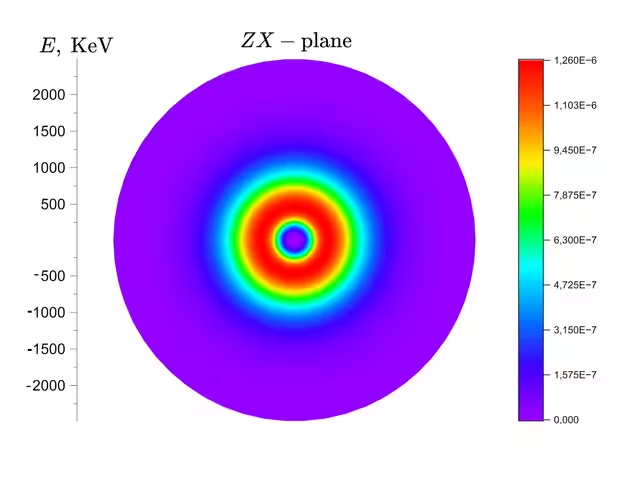
FIG1:Pseudo-color plot of differential probabilities,
corresponding to projections of the emitted positron momentum
kz and kx in the collision plane. Asymmetric collision with U$^{92+}$- Cm$^{96+}$,
Rmin = 17.5 fm and collision energy ε = 1.0. The color scale is linear.
This work was financially supported by the Russian Science Foundation (grant No. 22-62-00004).
References
1 N. K. Dulaev, D. A. Telnov, V. M. Shabaev, Y. S. Kozhedub, X. Ma, I. A. Maltsev, R. V.
Popov, I. I. Tupitsyn. Three-dimensional calculations of positron creation in supercritical
collisions of heavy nuclei. Physical Review D, 111, 016018 (2025).
The research investigates rare processes in photon-photon collisions (light-by-light scattering and the production of hypothetical scalar and pseudoscalar (ALP) particles) using photon beams of the future project of the NCPhM Compton source, based on the inverse Compton effect: the photon beam generated by the Compton source collides with a photon beam from a laser.
New high-brilliance ultracold neutron source at the IBR-2 pulsed reactor is currently being developed at the FLNP JINR. Work on the project of a new type of UCN source requires conducting a series of methodical experiments with very cold neutrons, which are currently not feasible at JINR. Therefore, at the first stage of work on the project, it is planned to create a prototype VCN channel. It is assumed that one of the main components of this VCN facility will be a monochromator, which makes it possible to produce a monochromatic neutron beam with velocities of $v = 20 \pm 1$ m/s.
In this work, an optical Bragg monochromator for very cold neutrons is considered. The monochromator consists of two multilayered NiMo-Ti mirrors arranged to preserve the initial beam direction. The necessary requirements for such a monochromator were analyzed and compared with a mechanical velocity selector. It has been shown that the Bragg monochromator allows for higher transmissivity with a better monochromatization. Moreover, as an extension to the monochromator, neutron interference filter with sharp transmissivity line was also considered. This filter allows to maintain even better monochromatization with a neutron velocity range of $v = 20.2 \pm 0.1$ m/s.
A thin oxide layer called the native oxide layer forms on the surface of semiconductor materials when they are exposed to air. This native oxide layer has a significant impact on the electrical properties and operation of semiconductor devices. A common semiconductor material in electrical and optoelectronic applications is Gallium arsenide (GaAs). In order to enhance the functionality, dependability, and integration of GaAs-based devices, it is imperative to investigate the development and expansion of the native oxide layer on GaAs surfaces. The native oxide layer on the surface of the GaAs material was investigated in this work both before and after the implantation of noble gas ($Ne^+$, $Kr^+$, and $Xe^+$) ions. The GaAs samples were irradiated with 100 keV noble gas ions at a fluence of 3 x 10¹⁵ $ions/cm^2$ for the research at room temperature. The
depth profile of the elements on native oxide layer was determined using the Rutherford backscattering spectroscopy with nuclear reaction analysis (RBS/NR) method. At about 3.05 MeV, the nuclear reaction $^{16}O(^{4}He^+, ^{4}He^+)^{16}O$ shows elastic resonance. This resonance offers a practical way to extend RBS methods for examining the amount of oxygen present on sample surfaces. The backscattering cross-section near the resonance energy, which is up to 25 times greater than the Rutherford cross-section, indicates a clear resonance. The result of the RBS/NR method suggests that there is an oxygen-enriched layer on the surface of GaAs samples. It has also been shown that the thickness of native oxide layer varies with the type of ion.
Non-stoichiometric spinel ferrites are attracting increasing interest for gas sensing because their electrical and surface properties can be altered through composition control. In this work, ZnxFe₂O₄ nanostructures with varying zinc content (0.95,1.00,1.05) were synthesized with a microwave-assisted coprecipitation method and investigated for the detection of toxic and flammable gases. The influence of non-stoichiometry on the structural, morphological, and electronic properties was examined using X-ray diffraction and transmission electron microscopy, confirming the formation of nanostructured spinel phases with controlled deviations from stoichiometry. Gas sensing measurements were performed against representative reducing gases at operating temperatures of 25 – 225°C. The results show that both zinc-deficient (x < 1) and zinc-rich (x > 1) compositions display markedly different sensing behaviors compared to stoichiometric ZnFe₂O₄ (x =1). In particular, the Zn-deficient sample (x = 0.95) exhibited the highest response of S = 2941.59 to LPG at 25°C, with a response (97s) and recovery (303s) times. These findings indicate that modifying the Zn:Fe ratio changs defect chemistry, and surface adsorption sites, thereby enhancing selectivity. Overall, the study demonstrates that controlled non-stoichiometry in ZnxFe₂O₄ nanostructures is an effective strategy for improving sensitivity and stability in toxic and flammable gas detection, making them strong candidates for environmental monitoring and industrial safety applications.
This report presents a measurement of the double-differential cross sections of neutron production in $^{124}\text{Xe}$ + CsI collisions at a beam energy of 3.8 A GeV. The experiment was performed at the BM@N facility using a compact TOF neutron spectrometer with stilbene scintillators coupled with a set of SiPMs. Data were acquired at laboratory angles of 95°, 110°, and 121° for neutron energies from 2 to 200 MeV. A detailed description of the data processing procedure is provided, including efficiency calculations, background subtraction, and corrections. The energy spectra of neutrons obtained for different angles demonstrate a good agreement between in the low energy region, that corresponds to isotropic emission of neutrons from the target spectator source. The presence of the intense low energy component below 10 MeV is not reproduced by the DCM-QGSM-SMM model and it proves that the model needs in father development
Today, photon pair production is the subject of active experimental and theoretical studies. This process has a number of unique features that make it an important tool for physical analysis. In this work we calculate differential cross sections for pair production of isolated photons within the parton Reggeization approach (PRA) [1] at energies of 1.96, 7, and 13 TeV. The calculations were performed within the KaTie parton-level event generator [2] and modified KMRW unintegrated parton distribution functions [3]. The results were compared with experimental data obtained by the ATLAS and CDF collaborations and with results of early calculations in the PRA [4].
References:
[1] M. A. Nefedov, V. A. Saleev, and A. V. Shipilova, Dijet azimuthal decorrelations at the LHC in the parton Reggeization approach, Phys. Rev. D 87, 094030 (2013).
[2] A. van Hameren, KaTie: For parton-level event generation with kT-dependent initial states, Comput. Phys. Commun. 224, 371 (2018)
[3] M. A. Nefedov and V. A. Saleev, High–energy factorization for Drell–Yan process in $pp$ and $p\bar{p}$ collisions with new unintegrated PDFs, Phys. Rev. D 102, 114018 (2020
[4] M. Nefedov and V. Saleev, Diphoton production at the Tevatron and the LHC in the NLO approximation of the parton Reggeization approach, Phys. Rev. D 92, 094033 (2015).
An analysis is presented concerning the search for the associated production of a Higgs boson with a single top quark (tH), a process highly sensitive to the complex phase of the top-quark Yukawa coupling. The analysis uses the full 140 fb⁻¹ of ATLAS data at √𝑠 = 13 TeV, targeting H→bb, WW, ZZ, ττ decays. Advanced multivariate analysis techniques were employed to achieve optimal sensitivity and to separate the tiny tH signal from the large background. The measured signal strength is 𝜇_𝑡𝐻 = 8.1 ± 2.6 (stat.) ± 2.0 (syst.). The observed (expected) significance of the tH signal over the background-only hypothesis is 2.8σ (0.4σ). The observed (expected) upper limit on the tH production cross-section is 13.9 (6.1) times the SM prediction at the 95% confidence level. Interpretations for both Standard Model and inverted top-quark Yukawa coupling scenarios also are presented.
BM@N is the first operating fix-target experiment at the NICA collider facility at JINR. BM@N is using ion beams from the Nuclotron accelerator ring to study the properties of cold dense baryonic matter. In 2017 the physics program of BM@N was enriched by studies of Short-Range Correlations (SRC) in carbon nuclei. SRC are specific nucleon configurations, where nucleons are separated by a distance comparable with the nucleon radius and having high and opposite momenta exceeding the Fermi level for the given nucleus. The first SRC measurement took place in 2018, and the first results were published in 2021. In 2022 the second measurement of SRC in inverse kinematics at the BM@N setup was carried out. It aims at measuring absolute cross-sections, improving resolutions, and increasing the statistics. This contribution presents the Si-MWPC tracking and momentum reconstruction procedure for the SRC-2022 experiment.
In modern high energy physics detectors a calorimeter is one of the most important system to measure the energy of elementary particles. The paper is devoted to Belle II calorimeter operated at KEK. The calorimeter is based on 8736 CsI(Tl) scintillation crystals. Signals from counters are processed by electronic modules as a result recovering information about energy and time of the detected particle. Pulse shape discrimination of electromagnetic and hadronic showers with CsI(Tl) counters is a novel approach recently used at the Belle II electromagnetic calorimeter in offline reconstruction. The method allows to measure the contribution of scintillation component with faster decay time which doesn't present in scintillation emission from electromagnetic shower but indicating production of hadronic shower. This paper describes hardware implementation of such pulse shape discrimination algorithm in FPGA for online reconstruction into the current detector electronics with no need in its major upgrade. According to this algorithm modeling and calculations of signal amplitude, time, photon and hadron contributions into the waveform are presented as well as report of logic routing with estimation of available resources on FPGA.
The SPD experiment for the NICA collider (JINR, Dubna) is currently under development. Its goal is to study the spin structure of nucleons in collisions with momenta up to 27 GeV/c. Preliminary estimates indicate that in the end-cap section of the detector, the momenta of π and K mesons can reach up to 6 GeV/c. For efficient particle identification with a confidence level better than 3σ, a Cherenkov ring imaging detector system based on focusing aerogel (FARICH) is proposed.
The FARICH system is being developed at the Budker Institute of Nuclear Physics (BINP, SB RAS) in collaboration with the Institute of Catalysis SB RAS. In the spring of 2024, the Institute of Catalysis synthesized new aerogel samples, including multilayer monoblocks with a refractive index below 1.04 (for the SPD experiment) and ultra-light samples with a refractive index below 1.008.
A prototype FARICH detector, assembled using these new radiators, was tested on the electron beam of the VEPP-4M complex. This paper presents the results of testing the prototype with the new aerogel samples, describes the data processing from the experiment, and outlines future plans for the prototype's development.
The fixed-target BM@N experiment at Nuclotron is a part of the NICA facility at JINR (Dubna, Russia). It studies dense baryonic matter with light and heavy ion beams with the kinetic energies of 2–6~GeV per nucleon. Since 2017, the BM@N physics program has included investigations of Short-Range Correlations (SRC), short-lived fluctuations of nucleon pairs where two nucleons have high relative and low center-of-mass momenta.
The first SRC measurement in 2018 at JINR with a carbon beam 48 GeV/c and a liquid hydrogen target focused on the hard quasi-elastic scattering reaction $^{12}\mathrm{C}(p,2p)X$, $X=\ ^{11}\mathrm{B}, ^{10}\mathrm{B}, ^{10}\mathrm{Be}$. The data revealed 25 SRC-pair knockout events and demonstrated that an intact $^{11}\mathrm{B}$ in the final state indicates suppressed rescattering in initial- and final-state interactions.
The second experiment in 2022 used an upgraded detector system with a hadron calorimeter in the two-arm spectrometer and improved scintillation counters. A laser-based calibration system enabled timing adjustment of all counters, which in turn made it possible to apply detailed corrections. Here we discuss a series of corrections aimed to improve the time and
amplitude response of the beam scintillation counters. These corrections allowed to minimize the influence of non-uniform light collection on amplitude resolution, and to achieve final time resolution of approximately 50 ps.
We investigate the properties of $SU(3)$ gluon plasma at high temperature under acceleration using lattice simulations in Rindler coordinate. Our results reveal a spatial crossover transition from confinement to deconfinement opposite to the direction of acceleration, consistent with the Tolman-Ehrenfest (TE) law. Using this law, we renormalize the Polyakov loop in Rindler space. Additionally, we observe that the transition width and peak diminish as acceleration increases.
This study computes the phonon density of states (PhDOS) of graphite using first-principles density functional theory (DFT) with the open-source Quantum ESPRESSO package. The results provide insights into the vibrational properties of crystalline graphite that govern thermal scattering processes. The phonon spectrum, regarded as a probability density function, serves as essential input for further investigations of the thermal neutron scattering law S(α, β) and neutron cross-section evaluations. Incorporating phonon effects into neutron interaction models is expected to enhance the accuracy of thermal neutron cross-section calculations. These preliminary results represent a step toward the systematic evaluation of thermal neutron cross-sections for crystalline materials.
Keywords: Graphite; first-principles study; phonon density of state (PhDOS); thermal neutron cross-section.
Third- and fourth-order FEM schemes with multivariate Hermite interpolation polynomials of a $d$ $-$ dimensional hypercube for solving boundary value problems (BVP's) on hyperparallelepipedal meshes are elaborated. An exactly solvable model of a system of several identical particles with pair oscillator interaction known as the Moshinsky atom is used as a test example. To describe the energy spectra of symmetric and antisymmetric bound states, the 2-,3-,4-, and 5- dimensional BVP's with Dirichlet and Neumann boundary conditions on a nonrectangular domain are formulated. To generate new FEM schemes with mixed partial derivatives, additional affine coordinate transformations are applied. Benchmark calculations of the BVP's confirm the order of declared FEM schemes.
Rapidly moving neutron stars are believed to gain high linear velocities – kicks – in aspherical supernova explosions. The mechanism of the kick formation is probably connected with anisotropic neutrino flash, and/or anisotropic matter ejection during the explosion. In this paper, we investigate a neutron star's kick origin due to a recoil effect in a magnetorotational (MR) supernova explosion model. The simulations have been done for a series of core collapse supernova models of a massive star with rotation and initial equatorially asymmetric magnetic fields. We have conducted 2D MHD simulations, considering the kick of a protoneutron star and explosion properties in three different asymmetric magnetic field configurations, namely in presence of multipoles composition in the core, an offset dipole field, as well as a superposition of dipolar and toroidal fields. The simulations show that in the MR supernova model protoneutron star kicks are formed with velocities up to ~500 km/s during ~1 second after the core bounce, due to asymmetric matter ejection in jet-like outflows, which may explain the observed kick velocities. Additionally we have performed a study of the dependence of the recoil effect in this scenario on a presupernova mass.
Boron nitride quantum dots (BNQDs) are promising for Boron Neutron Capture Therapy (BNCT) due to their unique properties. This work analyzes their electronic structure using DFT and TD-DFT to understand their absorption characteristics. We demonstrate both theoretically and experimentally that solvents used in synthesis do not act merely as a medium but chemically attach to the BNQD surface, altering their optical properties. A fundamental absorption edge is identified at 215-220 nm for BNQDs with diameters of 10-15 nm, resulting from a size-saturation effect.
Boron Neutron Capture Therapy (BNCT) requires effective agents for delivering $^{10}$B, a role for which boron nitride quantum dots (BNQDs) are well-suited due to their high boron content and stability.$^{1}$ Their excellent biocompatibility and tunable optical properties make them promising for theranostics, though shifting their absorption into the near-infrared (NIR) window remains a challenge.$^{2}$ This work investigates two key factors governing their absorption: the quantum confinement effect and surface functionalization by synthesis solvents.
BNQDs were synthesized via a "top-down" solvothermal method. Bulk h-BN was first exfoliated into nanosheets (BNNSs, avg. size 0.56 µm) using ultrasonication, which were then converted into quantum dots (avg. diameter 4.9 nm) by solvothermal treatment at 200 °C (Fig. 1).
To understand their intrinsic optical properties, we performed TD-DFT calculations (ORCA$^{4}$, B3LYP/6-31++G**) on BNQD models ranging from 7 to 61 rings. As dot size increases, the band gap ($E_g$) systematically decreases from 6.62 eV to 5.96 eV due to quantum confinement (Fig. 2). This narrowing of the HOMO-LUMO gap is clearly visible in the Density of States (DOS) plots (Fig. 3).
However, this electronic modulation results in only a minor bathochromic shift of the absorption maximum ($\lambda_{abs}$) from ~199 nm to ~210 nm (Fig. 4). The reason is a strong size-saturation effect, which limits the fundamental absorption edge of pristine BNQDs to ~215–220 nm for diameters above 10 nm (Fig. 5). This highlights the limitations of size-tuning alone and confirms the necessity of using hybrid functionals for accurate predictions.
Given the limits of quantum confinement, we investigated surface functionalization by solvent molecules, a phenomenon supported by our experimental FTIR and XPS data.$^{3}$ Our theoretical approach explicitly models covalently bonded solvent molecules, diverging from common continuum models.$^{5,6}$ Natural Transition Orbital (NTO) analysis revealed that the frontier orbitals become localized on attached nitrogen-containing solvents (DMF, NMP) but remain delocalized for ethanol (Fig. 6).
This localization is caused by the formation of a new occupied mid-gap state at -6.2 eV, arising from orbital overlap between nitrogen atoms in the solvent and the BNQD (Fig. 7).
This modification of the electronic structure induces a more significant bathochromic shift than size-tuning, and our calculations show good agreement with experimental spectra (Fig. 8). Nevertheless, this chemical effect also saturates, capping the absorption maximum in the UV region (~230-235 nm for DMF).
In summary, we have shown that the UV absorption of BNQDs is determined by both quantum confinement and surface chemical functionalization. Crucially, both mechanisms exhibit saturation effects that limit the absorption edge to the UV region, hindering a significant shift into the NIR therapeutic window. This understanding highlights the need for alternative strategies, such as defect engineering or atomic doping, to achieve the desired optical properties for advanced BNCT applications. A full account of this research is detailed in our recent publication in PCCP.$^{3}$
The research was carried out within the state assignment of Ministry of Science and Higher Education of the Russian Federation (theme No. 124110600041-0).
Abstract
In This study focuses on the synthesis of activated carbon derived from pistachio shells through chemical activation using potassium hydroxide (KOH). The raw biomass was carbonized and activated at three different temperatures: 600 °C, 700 °C, and 800 °C, to investigate the influence of activation temperature on the structural and electrochemical properties. Characterization techniques, including BET surface area analysis, scanning electron microscopy (SEM), and X-ray diffraction (XRD), were employed to evaluate porosity, surface morphology, and crystallinity. The activated carbon samples demonstrated a high surface area and well-developed porous structures, which are essential for efficient charge storage. Electrochemical measurements were carried out using cyclic voltammetry (CV) and galvanostatic charge–discharge (GCD) to determine specific capacitance and cycling stability. Among the tested samples, the carbon activated at 800 °C exhibited superior capacitance and excellent stability, making it a promising electrode material for supercapacitors. This work highlights pistachio shells as a sustainable and low-cost precursor for energy storage applications.
Keywords:
Activated carbon, Pistachio shells, KOH activation, Supercapacitors, Porosity, Biomass-derived carbon, Electrochemical performance
References:
1. Sevilla, M., & Mokaya, R. (2014). Energy storage applications of activated carbons: supercapacitors and hydrogen storage. Energy & Environmental Science, 7(4), 1250–1280.
2. Wang, D. W., Li, F., Liu, M., Lu, G. Q., & Cheng, H. M. (2008). 3D aperiodic hierarchical porous graphitic carbon material for high-rate electrochemical capacitive energy storage. Angewandte Chemie International Edition, 47(2), 373–376.
3. Zhang, L. L., & Zhao, X. S. (2009). Carbon-based materials as supercapacitor electrodes. Chemical Society Reviews, 38(9), 2520–2531.
Bio:
Khadija Mohammed is a PhD student at the University of South Africa (UNISA), specializing in the development of advanced nanocarbon materials for next-generation energy storage devices. She earned her B.Sc. Honours in Physics from Sudan University of Science and Technology and later completed her Master’s degree in Mathematical Sciences at the University of Cape Town, South Africa.
Her doctoral research focuses on biomass-derived carbon materials, with a current project on synthesizing pistachio-based carbon at different temperatures (600 °C, 700 °C, and 800 °C) to investigate their structural, thermal, and electrochemical properties for supercapacitor electrodes. She has also served as a university teaching assistant in physics practicals, gaining academic and laboratory supervision experience.
Her broader research interests include nanomaterials, renewable energy storage, sustainable carbon technologies, and interface engineering in electrochemical devices.
The development of novel optogenetic tools is critically dependent on engineering microbial opsins with red-shifted absorbance spectra, as red light offers superior tissue penetration and reduced phototoxicity compared to blue-green light [1]. To address the resource-intensive nature of site-directed mutagenesis, a number of in silico tools have been introduced to identify promising candidates for experimental validation [2]. However, the predictive performance of these computational tools, ranging from homology-based models to machine learning algorithms and quantum mechanical calculations, remains inadequately assessed against robust experimental datasets for channelrhodopsins [3, 4].
Our work addresses this gap by conducting a systematic comparative analysis of leading predictive tools, benchmarked against a comprehensive set of experimentally determined absorbance maxima for a library of rhodopsin mutants.
We quantitatively evaluate the accuracy, precision, and limitations of each tool in forecasting mutation-induced spectral shifts.Our findings provide practical guidelines for selecting the optimal computational tool and offer a critical cost-benefit analysis of their use, ultimately streamlining the rational design of next-generation, red-shifted rhodopsins for deep-tissue optogenetics.
This research was supported by the Ministry of Science and Higher Education of the Russian Federation (agreement # 075-03-2025-662, project FSMG-2024-00120).
References:
[1] Kimmo, et al. Red Light Optogenetics in Neuroscience, Front. Cell. Neurosci., 2022.
[2] Lingyun Zhu, et al. Protein design accelerates the development and application of optogenetic tools, Comput. Struct. Biotechnol. J., Volume 27, 2025.
[3] Masayuki, et al. Understanding Colour Tuning Rules and Predicting Absorption Wavelengths of Microbial Rhodopsins by Data-Driven Machine-Learning Approach, Nature, 2018.
[4] Pan Q, et al. Systematic evaluation of computational tools to predict the effects of mutations on protein stability in the absence of experimental structures, Brief. Bioinform., 2022.
Thermal and epithermal neutron self-shielding correction factors for the (n,g) reaction in the 186W target were determined by simulation using the PHITS code. The 186W cylindrical target was in the form of metal powder diluted in an aluminum (Al) matrix at various concentrations. A Maxwellian neutron source with an average peak energy at 0.0253 eV was applied to the thermal neutron group and a 1/E distribution was applied to the epithermal neutron group. Neutron correction factors were investigated for different dilution concentrations of 186W in the 186W(Al) sample under two irradiation conditions: an isotropic neutron field and a collimated neutron beam. Additionally, neutron correction factors were calculated for various wire diameters under irradiation with a collimated neutron beam.
The CMD-3 detector at the VEPP-2000 collider studies physics of light hadrons in the electron-positron collisions. Its electromagnetic endcap calorimeter consists of Bismuth Germanate (BGO) scintillation crystals with readout by silicon PIN photodiodes and custom electronics.
A detailed analysis of the calorimeter's signal response revealed a systematic nonlinearity in its readout electronics at low signal amplitudes. This effect artificially inflated the measured pedestal level for most channels.
The data analysis software was updated to take into account the nonlinearity effect. The detail MC simulation based on GEANT4 package was carried out to study the impact of this electronic effect on physics analysis. The energy resolution $\sigma_E / E$ was found to be almost unaffected while the usage of the calibration data should be updated. Crucially, this method has already been successfully implemented in the collaboration's reconstruction software, leading to a more accurate determination of energy deposition in the crystals.
The energy resolution was extracted from experimental data, collected wide energy range during recent years. The parameterization function is $\frac{\sigma_E}{E} = \sqrt{ (4.372/E)^2 + (0.645/\sqrt{E})^2 + 0.029^2 }$. The simulation parameters were adjusted to achieve good agreement between simulation and experimental data.
This work provided two key contributions:
1. The correct accounting of an electronics nonlinearity is implemented in detector data reconstruction software.
2. An updated energy resolution model are prepared for the detector simulation and physics data analysis.
Which enhance the precision of the CMD-3 results.
The classical Debye–Scherrer method, widely used to determine crystallite sizes in polycrystalline materials, has several fundamental limitations associated with the interpretation of diffraction peak broadening. A promising alternative for material structure diagnostics is the method based on the analysis of parametric X-ray radiation (PXR) generated by the interaction of relativistic electrons with the crystal lattice of a target. Unlike the Debye–Scherrer method, which relies on X-ray scattering, the PXR-based approach excites radiation directly in the studied structure by a charged particle beam, thus opening new opportunities for characterization.
Despite numerous experimental and theoretical studies of PXR from polycrystals, including metallic foils and powder targets, a systematic investigation of the dependence of PXR spectral characteristics on particle size over a wide range (from nanometers to hundreds of microns) for a material of the same chemical composition has not been carried out previously. This work is aimed at filling this gap.
The experiments were performed at the “Röntgen-1” facility (Lebedev Physical Institute, Troitsk). A 7 MeV microtron was used as a source of relativistic electrons. The target was carbon powder with particle sizes ranging from nanometer (~5 nm) to micrometer (~42 μm). PXR was recorded using Amptek SDD semiconductor detectors in Bragg geometry at fixed angles of 150° and 180° relative to the electron beam direction.
This work was carried out within the framework of the state assignment of the National Research University “BelSU”, no. FZWG-2025-0010.
The effects of SHI irradiation on the structural evolution of Ag-implanted and Ag + He co-implanted SiC were investigated in this work. Silver (Ag) ions at 360 keV were implanted at room temperature (RT) to a fluence of 2×10^16 cm^−2. Some of the as-implanted samples were then irradiated at RT with 167 MeV Xe ions to fluences of 1×10^13 cm^−2, 1×10^14 cm^−2 ,3.4×10^14 cm^−2 and 8.4×10^14 cm^−2. Other samples were first co-implanted with He ions at 17 keV to a fluence of 1×1017 cm−2 at 500°C, followed by irradiation with 167 MeV Xe ions to a fluence of 1×10^14 cm−2 at RT. The samples were characterized using Transmission Electron Microscopy (TEM), Raman Spectroscopy, and Rutherford Backscattering Spectrometry (RBS). Ag implantation amorphized the SiC from the surface to a depth of approximately 270 nm. SHI irradiation at a fluence between 1 × 1013 cm^2 and 3.4 × 1014 cm-2 reduced the amorphous layer to 230 nm, which is a 15% reduction, while irradiating at 8.4 × 1014 cm-2 reduced the amorphous layer to 220 nm, which represents a 19% reduction. These results suggest that the degree of recrystallization is fluence-dependent. No migration of pre-implanted Ag was observed after SHI irradiation. No migration of pre-implanted Ag was observed after SHI irradiation. The co-implantation of 17 keV He to a fluence of 10^17 〖cm〗^(-2) at 500 ºC resulted in the formation of nano bubbles and a somewhat recovery of the amorphous region. The irradiated co-implanted sample showed further recrystallization, owning to the effect of SHI causing recrystallization. However, the irradiation of co-implanted samples with SHIs resulted in more recrystallization (as compared to Ag implanted samples irradiated under the same conditions) and a less decrease in damaged layer thickness (i.e., 250 nm), indicating that He enhanced recrystallization and hindered the decrease in damaged layer thickness. Moreover, after He co-implantation and SHIs irradiation, no evidence of Ag migration was observed. However, SHIs irradiation caused the formation of holes in the surface of the co-implanted samples. These findings indicate that He enhanced SiC recrystallization but also caused the formation of holes on the surface after SHIs irradiation. The observed effects highlight the complex interplay between He and SHIs irradiation in altering the microstructural properties of SiC.
Although moss is widely used to monitor the air quality due to its special properties. However, collecting moss in large cities with high density of concrete is very difficult. This paper presents the results of the first study to investigate the chemical element absorption capacity of cotton, a readily available material as a substitute for moss. Cotton and Climacium dendroides moss samples were simultaneously exposed near the top of a coal-fired bronze casting furnace in Bac Ninh province (Vietnam) for 15 days and hung on trees in Dubna for 3 months. The contents of 12 heavy metals including Al, Cd, Co, Cr, Cu, Fe, Hg, Mn, Ni, Pb, V, Zn in exposed and original (unexposed) cotton and moss samples were determined by ICP-OES method. The analysis results showed that the contents of 3 elements Al, Fe, Zn in moss samples are higher than in cotton. The differences in the content of the remaining 9 elements including Cd, Co, Cr, Cu, Hg, Mn, Ni, Pb, V in cotton and moss samples were not much. The result of this first study is the motivation for further studies in the future to evaluate the possibility of using cotton wool as a substitute for living moss to monitor the quality of chemical element pollution in the air in Vietnam.
This study is dedicated to investigating the defects induced by gamma irradiation in zirconium carbide (ZrC) nanocrystals and their impact on the crystal structure using both theoretical and experimental approaches. Gamma irradiation was carried out at doses of 1500 and 3000 kGy, and the resulting changes were comprehensively analyzed using Positron Annihilation Spectroscopy (PAS), Raman spectroscopy, and Density Functional Theory (DFT). The results indicate that high-dose irradiation leads to the formation of carbon vacancies, which tend to combine with existing defects to form large vacancy clusters. PAS measurements revealed two lifetime components τ1 and τ2—indicating that positrons predominantly annihilate at defect sites, reflecting a high concentration of defects at nanoscale grain boundaries. DFT calculations confirmed that the formation energy of carbon vacancies is lower than that of zirconium vacancies, explaining their dominance in the defect structure. The changes observed in Raman spectroscopy—particularly the Sp2 C–C signal at 1795 cm-1 and the decrease in the intensity ratio of the D and G peaks—indicate amorphization of the structure and the formation of an oxide layer on the surface. At the same time, electron momentum distribution (EMD) analysis reveals that gamma irradiation leads to changes in electron density, primarily occurring within the carbon sublattice. Additionally, the impact on mechanical properties was evaluated, showing that the presence of vacancies reduces the Young’s modulus, while variations in the B/G ratio suggest an increase in the material’s brittleness [1].
As a result, this study demonstrates that gamma irradiation induces complex changes in the microstructure of ZrC, which are critically important for its radiation resistance and long-term operational stability [2]. The findings confirm that ZrC is a reliable candidate for applications under high-temperature and high-radiation conditions—particularly in nuclear energy systems such as TRISO fuel particles and gas-cooled reactors [3].
Reference
1. Matlab N. Mirzayev, Mehdi Nasrabadi, Nguyen Tiep, Ogtay Samedov, Elahe Moslemi-Mehni, Samir Samadov, Determination of amorphization oxide layers, mobilization and functional groups on ZrC nanocrystals under high gamma irradiation, Vacuum. 238, 2025, 114215. https://doi.org/10.1016/j.vacuum.2025.114215.
2. S.F. Samadov, N.A. Ismayilova, L.A. Tuyen, M.N. Nasrabadi, N.V.M. Trung, N.V. Tiep, O.A. Samedov, I.I. Mustafayev, S.H. Jabarov, A.A. Donkov, Matlab N. Mirzayev, Radiation-induced defect formation and phase evolution in zirconium carbide ceramics, J. Eur. Ceram. Soc. 45, 2025, 117521. https://doi.org/10.1016/j.jeurceramsoc.2025.117521.
3. S. Yeo, S.J. Yoo, H. Lee, J.M. Oh, C.M. Lee, J.H. Kim, E. Kim, H. Han, S. Mhin, Ar-ion- and electron-irradiated ZrC layers in ZrC-SiC-coated surrogate TRISO fuel particles, J. Eur. Ceram. Soc. 44 (2024) 2730-2743, https://doi.org/10.1016/j.jeurceramsoc.2023.11.056.
The angular distributions of Drell-Yan lepton pairs allow to determine precisely the dynamics of vector boson production in quantum chromodynamics. The dependence of the angular coefficients $A_{i}$ on the transverse momentum of $J/\psi$ mesons were obtained under the conditions of the first stage of the SPD experiment using the Pythia generator. The $J/\psi$ mesons produced in pp collisions at $\sqrt{s_{NN}} = 10$ GeV and decaying into a pair of muons were used in the analysis. The analysis is performed in the full phase space of decay muons. The angular coefficients are calculated in the $J/\psi$ mesons Collins-Soper reference frame.
Boron is an element that can be effectively determined using the Prompt Gamma Neutron Activation Analysis (PGNAA) method. we applied the PGNAA method to quantify 10B in automobile glass through the reaction 10B(n,αγ)7Li. Measurements were conducted using an HPGe-BGO Compton suppression spectrometer system at the Dalat Nuclear Reactor. The construction of a linear calibration function for concentration calculations and the peak fitting technique to analyze the 478 keV peak, which overlaps with neighboring peaks and Doppler broadening effects were conducted.
KEYWORDS : Boron, PGNAA, Dalat Nuclear Reactor.
Photon-counting detectors (PCDs) are emerging as a cornerstone technology for the development of the next-generation computed tomography. Among this type of detector, the hybrid GaAs:Cr-TIMEPIX3 detector demonstrates great potential due to its combination of high gamma detection efficiency and high readout speed.
In this study, a novel energy calibration method for GaAs:Cr-TIMEPIX3 was introduced. This method utilizes a monochromatic X-ray source at the Dzhelepov Laboratory of Nuclear Problems combined with test pulses.
The performance of the calibrated detector was evaluated by studying the XRF spectra of metal target foils, which allowed for clear identification of characteristic emission lines and demonstrated a significant improvement in energy resolution.
The Jiangmen Underground Neutrino Observatory (JUNO) is an international neutrino experiment to study fundamental properties of neutrino and natural objects using neutrino as a probe. High-quality data for physics analyses require a reliable system for offline run validation. In this context, a monitoring system is being developed that can be used for JUNO, offering visualizations and tools to support expert inspection of data runs. The poster will focus on the architecture of the system, the underlying database model, and the core functionalities of the system. In addition, a prototype of the user interface will be presented to illustrate the main features.
Membrane proteins (MPs) have a lot of essential functions in cell, therefore, corresponding researches are very important for science and medicine. There are a lot of obstacles in obtaining of MPs’ high-resolution structures by X-Ray diffraction methods. Some of them are connected with the crystallization in lipid cubic phase (in meso); and one of the obstacles is the limitation of water channel diameter which restricts possible size of MP's hydrophilic part. To overcome this limitation and improve the technique, we need to provide high-throughput production scheme for some model MP. Here we present such protocol for the case of E. coli ABC-transporter MsbA.
Our pipeline is based on protocols presented in works [1, 2]. Briefly, after overnight expression of E. coli cells with pET27 vector with inserted MsbA gene in LB medium supplied with kanamycin at 37 C, aliquots are added to fresh TB medium. Cells are cultivated in 2L flasks until OD600~1. After induction with 1 mM IPTG cells are grown for 3 h at the same temperature. Harvesting, centrifugation and resuspending are conducted, and the protein is solubilized in 1% (w/v) sodium lauroyl sarcosinate solution.
Applying this protocol, we obtained high efficiency of solubilization (we also performed tests with Triton X-100, octyl glucosyde, DDM and some other combinations, but the results were poor). Estimated protein yield was ~50 mg of the protein on 1 g of wet membranes (results were obtained by using SDS-PAGE analysis). These characteristics allow to consider MsbA as usable model MP for different applications.
This research was supported by the Russian Science Foundation (project no. 24-14-00295).
References
1. Siarheyeva A., Sharom F. J. The ABC transporter MsbA interacts with lipid
A and amphipathic drugs at different sites. Biochemical Journal (2009). DOI: 10.1042/BJ20081364
2. Eckford P. D. W., Sharom F. J. Functional Characterization of Escherichia coli MsbA: interaction with nucleotides and substrates. Journal of biological chemistry (2008). DOI: 10.1074/jbc.M708274200.
The global energy crisis and the need to reduce greenhouse gas emissions have positioned nuclear power as a viable low carbon option. However, concerns remain about the release of radioactive fission products (FPs) and the long term storage of nuclear waste. In advanced reactor design like High Temperature Gas Cooled Reactor, tri structural isotropic (TRISO) fuel particles comprising a uranium dioxide kernel coated with carbon and silicon carbide (SiC) layers offer superior retention of most FPs, with SiC serving as the main diffusion barrier due to its outstanding physical and chemical properties. Nonetheless, certain FPs such as iodine,strontium, silver and cesium can escape, while selenium (Se), particularly Se-79 which is a long lived beta emitter, poses additional safety and environmental challenges due to its potential mobility at elevated temperatures.
During fission some products initially possess high energies comparable to swift heavy ions (SHIs) which may significantly affect the silicon carbide microstructure and containment of fission products. This study investigates the effects of SHIs irradiation using 710 MeV Bi ions with a maximum electronic energy loss of 33.7 keV/nm and subsequent annealing on the structural evolution and migration of Se implanted in SiC.
SiC was implanted with 200 keV Se ions at room temperature (RT) and 350 °C, followed by SHIs irradiation and sequential annealing between 1000 and 1300 °C. Microstructural changes were analyzed using Raman spectroscopy, scanning electron microscopy and transmission electron microscopy, while Rutherford backscattering spectrometry tracked selenium migration. RT implantation resulted in an amorphous layer of about 187 nm which partially recrystallized upon SHIs irradiation, while 350 °C implantation retained crystallinity with only defective layers that showed enhanced recovery after irradiation.
Annealing of RT implanted samples reduced defects and produced nanocrystalline SiC with cavities and selenium precipitates at 1200 °C. In contrast, 350 °C implantation led to nanocrystalline SiC with minor strained regions. No detectable migration of Se was observed in either the RT or 350 °C pre-implanted and irradiated samples after annealing up to 1200 °C. At 1300 °C, RT samples lost about 20% of Se, while 350 °C samples showed Se migration into bulk SiC with minimal loss.
Overall, higher implantation temperatures promoted structural recovery and stabilized dopant distribution.
Nanotechnology has emerged as a transformative tool in the life sciences to offer innovative solutions to overcome the limitations of conventional drug delivery systems, particularly the poor solubility, lipophilicity, and instability of many bioactive compounds. Halogenated natural products (HNPs) are of great interest due to their potent biological activities, including notable antimicrobial effects. These are bioactive compounds derived from natural sources (e.g., marine organisms, plants, fungi) and contain halogen atoms that improve the biological activity, stability and membrane permeability. Marine-derived HNPs, especially those from plocamium SSP., have attracted more attention for their strong antimicrobial properties. Despite their therapeutic potential, their clinical application remains limited due to poor solubility and instability under physiological conditions. To address these challenges, therefore this study aims to develop lipid-based nanoparticles formulation to improve the solubility, stability and biological efficacy of halogenated compounds.
HNPs were extracted and isolated from the red algal Plocamium cornutum and structurally characterized using nuclear magnetic resonance (NMR) spectroscopy. These bioactives were encapsulated into solid lipid nanoparticles (SLNs) using the hot homogenization method. The physiochemical properties of the resulting SLNs were characterized by dynamic light scattering (DLS) to determine particle size, polydispersity index (PDI), and the zeta potential parameters. The surface morphology were examined using scanning and transmission electron microscopy (SEM and TEM), while the entrapment efficiency was assessed via nuclear magnetic resonance (NMR) spectroscopy.
In addition, the antimicrobial activity was assessed using broth micro dilution and disc diffusion assay to evaluate the efficacy of the encapsulated HNPs against selected gram negative and positive microbial strains, Escherichia coli and staphylococcus aureus. The minimum inhibitory concentrations (MIC) were determined using the 96-well plates and the results were quantified using UV-Vis spectrophotometer. The encapsulated HNPs exhibited distinct zones of inhibition and lower MIC values compared to the free compounds which shows improved antimicrobial potency. This work offered an innovative strategy to address the stability and delivery limitations of bioactive compounds by combining marine natural product chemistry with nanocarrier technology. These findings provide proof of concept for developing effective, nanotechnology-based drug delivery systems for marine derived antimicrobials with potential applications in pharmaceutical and clinical settings.
Nanopowders were synthesised via the precipitation method, annealed, and incorporated into a polycaprolactone (PCL) matrix through solution casting with acetophenone as solvent to fabricate luminescent nanocomposite films. This study assessed the impact of varying Sm³⁺ concentrations on the films’ structural, morphological, thermal, and luminescent behaviour. XRD confirmed the orthorhombic crystalline structure of PCL and the cubic spinel structure of ZnAl₂O₄. SEM analysis revealed that neat PCL exhibited a porous morphology with spherical-like features, while the addition of nanoparticles led to aggregation and reduced porosity. The degree of crystallinity (Xc) of the coatings increased compared to pure PCL, with PCL/ZnAl₂O₄:1.0% Sm³⁺ showing the highest crystallinity. Thermal analysis indicated that the nanocomposites had lower stability than neat PCL, with PCL/ZnAl₂O₄ exhibiting the poorest thermal stability. Importantly, photoluminescence studies demonstrated that the incorporation of Sm³⁺-doped ZnAl₂O₄ significantly enhanced emission intensity and induced a colour shift from white to the blue region. These results highlight the potential of these nanocomposite films as promising candidates for luminescent coating applications, where colour tunability and emission enhancement are desirable.
This work provides an in-depth analysis of finite nuclei properties and nuclear matter saturation properties, highlighting the essential role of three-body forces (3BF) in connecting microscopic interactions with macroscopic nuclear phenomena. Energy density functional techniques are used in the extension to finite nuclei using the equation of state (EOS) from Brueckner-Hartree-Fock (BHF) theory with chiral next-to-next-to-next-to-leading order (N3LO) potential, providing binding energies and charge radii that are in a good agreement with experimental data. The study presents enhanced density functionals and emphasizes the impact of the tensor force on EOS. These findings have important ramifications for nuclear structure and astrophysical applications since they demonstrate a strong correlation between finite-nuclei phenomenology and ab initio nuclear matter calculations.
During the sessions of the NICA accelerator complex, an important task was to determine the performance of the cryogenic systems equipment in order to measure its operating efficiency. To determine the performance, it is necessary to measure the flow rate of the medium through the units. The paper considers cases of using diaphragms as part of the cryogenic complex equipment.
Successful experience in using flow meters of this type was obtained during the operation of the residual life monitoring system for adsorbents of the MO-800 No. 1-4 helium oil purification and drying units after installation and commissioning in 2024-25.
Measuring the flow rate of the medium through the main and turboexpander flows of the KGU-1600/4.5 helium refrigerator will allow determining the refrigeration capacity of the turboexpanders and optimizing its cycle, which will lead to a decrease in energy costs for obtaining cold. At the end of 2024, a calculation was made to select diaphragms. Their installation and commissioning of the software as part of the KGU-1600/4.5 No. 1 automated process control system, which ensures flow measurement, is scheduled for autumn 2025.
Monitoring the flow rate of compressed nitrogen through the PA-0.5 nitrogen recondenser will confirm the unit's passport parameters and its operating efficiency. The PA-0.5 No. 1 automated process control system will be commissioned in autumn 2025.
The flow meter installed on the nitrogen turbocompressor discharge line will measure the performance of each of them to confirm the equipment characteristics and, if necessary, carry out measures to bring them to passport values. The measurement system will determine the specific energy costs for obtaining liquid nitrogen for the nitrogen complex being created. Work is currently underway to select the diaphragm: the technical characteristics and instrumentation of the piping are being determined, installation is scheduled for 2026.
The MONUMENT experiment is aimed at measuring muon capture on daughter nuclei of candidates for double neutrinoless beta decay (0v2β). These measurements will be important for verifying the accuracy of theoretical calculations of nuclear matrix elements.
Currently, there are a number of fundamental problems in physics, one of which is to determine the nature of neutrinos. 0v2b is possible only if the neutrino has a nonzero mass and if it is identical to its antiparticle. It is known that the rate of the 0v2β-decay reaction is influenced not only by the mass of the neutrino, but also by the size of the nuclear matrix element. Conventional muon capture is suitable for studying these important double beta decay processes.
This paper presents the results of modeling a muon trigger system consisting of C0, C1, C2, and C3 scintillation counters with targets of Fe, Al, Cu, and BaCO3. The lifetime of muons in the target material and the efficiency of the trigger system are analyzed. The dependence of the target thickness for capture is calculated, which makes it possible to determine the optimal detector parameters. The data obtained form the basis for selecting a target in the experiment, ensuring reproducibility and interpretability of future measurements.
This study explores the effect of heat treatment and helium (He) bubbles on the structure of SiC and the migration behaviour of silver (Ag) in SiC. Ag ions were implanted into two polycrystalline SiC substrates (Ag-SiC), and one of the Ag-SiC samples was also co-implanted with He ions (Ag + He-SiC); both implantations were carried out at 350 °C. The samples were then annealed sequentially from 1000 °C up to 1300 °C in steps of 100 °C for 5 hours. The implanted and subsequently annealed samples were characterized using Raman spectroscopy, transmission electron microscopy (TEM), Rutherford backscattering spectrometry (RBS), and atomic force microscopy (AFM). Both the single and dual implanted samples accumulated defects, while the SiC structure remained relatively crystalline. Helium implantation led to the formation of bubbles along the projected range. These bubbles appeared as surface blisters, and their exfoliation created holes, resulting in cavities in the highly defective region underneath the surface. Annealing the Ag-SiC and Ag+He-SiC samples restored most of the SiC crystal structure; however, successive annealing caused an increase in hole density. Consequently, larger cavities that facilitated He out-diffusion resulted in loss of Ag. These cavities also trapped Ag precipitates, leading to Ag retention within the SiC. These findings provide valuable insights into the mechanisms of Ag migration in SiC, which are important for enhancing the safety of nuclear fuels.
This work presents a study of three-body quantum systems using the hyperspherical harmonics method combined with a finite-difference numerical method. The primary goal was to master the procedure for deriving, solving, and analyzing the coupled hyperradial Schrödinger equations using model coordinate potentials.
The hyperspherical harmonics method is chosen for its remarkable simplicity and versatility, particularly for systems involving a combination of Coulomb and short-range potentials. It offers a powerful framework that can be generalized to systems with a larger number of interacting particles. This approach is especially valuable when the exact form of the pairwise potentials is unknown, as it allows for the efficient determination of potential parameters that bind a system at the edge of its stability, thereby helping to interpret or correct ambiguous experimental data.
The study begins with a theoretical derivation of the system of coupled differential equations for three- and four-body systems in the hyperspherical basis. For numerical implementation, a finite-difference scheme was developed to discretize the hyperradial equations. The binding energies are then determined as the eigenvalues for which the determinant of the resulting block matrix equals zero, signifying the existence of a non-trivial bound-state solution.
The numerical code was rigorously validated through benchmark tests. First, it was applied to model systems of two and three coupled differential equations, with results showing excellent agreement with known analytical solutions (involving trigonometric and Bessel functions). Second, a physically meaningful test confirmed the correct reproduction of the dependence of the three-body binding energy on the binding energy of its two-body subsystem.
The method was then applied to calculate the binding energies of the triton (nnp) and helium-3 (npp) nuclei. A simple Gaussian potential was used to model the nucleon-nucleon interaction. For the npp system, the Coulomb repulsion between protons was included using a screened potential. The calculated binding energy for the triton is 8.6 MeV, which is in good agreement with the experimental value of 8.48 MeV. For helium-3, the energy is 8.7 MeV without the Coulomb potential and 7.7 MeV with it, closely matching the experimental value of 7.72 MeV. The 1.0 MeV difference highlights the significant and quantitatively correct contribution of the Coulomb force, consistent with findings in the existing literature.
The convergence of the solution with respect to the number of included hyperspherical harmonics (K) and the density of the coordinate grid was also analyzed. It was shown that higher precision for systems with larger K requires a finer computational grid.
In conclusion, the hyperspherical harmonics method, coupled with a robust finite-difference method, is confirmed as an effective, accurate, and computationally accessible tool for studying bound states in few-body quantum systems. The developed framework provides a solid foundation for future theoretical studies aimed at complementing and refining experimental data on the properties of light nuclei and cross-sections of nuclear reactions.
Modern life science is inconceivable without radiation studies such as X-ray diffraction or electron microscopy. Radiation research methods have made a particularly significant contribution to structural biology - the study of a variety of biological macromolecules. One important area of structural biology is the study of membrane proteins and their structures.
Membrane proteins (MPs) are key to how cells work and interact with their environment, acting as transporters, receptors, and so on. Getting the structures of membrane proteins is super important and essential for understanding their functions and how they interact with ligands, including drugs. For a long time, X-ray diffraction (XRD) was the most popular method for obtaining the structures of membrane proteins. This method requires the crystallization of membrane proteins. There are two most common methods of MP crystallization: in meso (in lipid cubic phases) and in surfo (in detergent micelles). The problems with these methods are finding the optimal conditions, detergents, and their concentrations for in surfo crystallization and the size of water channels in lipid cubic phases in the in meso method, which imposes restrictions on the size of crystallized proteins.
If the structure of a membrane protein is obtained using X-ray diffraction, the resulting PDB file may contain several proteins or parts thereof in the unit cell. Therefore, when calculating the hydrophilic size from the PDB file, the calculations may be incorrect, if the parts of the neighbors in the unit cell were incorrectly interpreted as a part of the protein under study. We proposed an algorithm for the unambiguous separation of the hydrophilic part of a protein from extraneous elements and more accurate calculation of its size. The resulting algorithm was used to construct a more accurate distribution of the resolution of membrane protein structures depending on the size of the hydrophilic part. The similar distribution we plotted in the previous work [1] showed, without the application of the refinement algorithm, that some proteins crystallized in meso had a hydrophilic size exceeding 100 $\mathring{A}$, which cannot be achieved with the existing methods. This highlights the need for a corrective algorithm for accurate statistical analysis of membrane protein structures.
This research was supported by the Russian Science Foundation (project no. 24-14-00295).
In this paper we investigated the behavior of magnetic momentum of ferromagnetic in Josephson Junction. With application of external electromagnetic radiation we can observe Chimera Step in current voltage characteristic, and stable behaviour of magnetization on it. But beyond this step we can also observe stable behaviour of magnetization with switching along axis normal to easy axis and direction of current.The results obtained can find application in various fields of superconducting spintronics and quantum computing.
Nanowires are anisotropic nanoscale objects whose length significantly exceeds their diameter. Nanowires, both in the form of single nanostructures and in the form of ordered arrays, have a wide range of applications: from transparent electrodes and biosensors to lasers and metamaterials. Superconducting segmented nanowires with normal inserts, due to the Josephson effect, can be used in quantum microelectronics, for example, to create ultra-sensitive SQUID magnetometers.
To be able to obtain superconducting segmented nanowires in a controlled manner, the task arises of studying the processes of forming inserts of one material on the surface of another under geometric constraints. To date, the most effective method for obtaining nanowires is the electrochemical deposition of various metals into porous films of anodic aluminum oxide. In this regard, the purpose of this work was to study the features of the formation of thin In and Au layers on various substrates during template electrodeposition.
In this work, the potential ranges corresponding to the electrodeposition of indium under diffusion, mixed and kinetic control conditions were determined using the cyclic voltammetry method. In the kinetic region, the following were determined: the exchange current i_0 = 5.9 mA cm-2 and the effective rate constant of the heterogeneous reaction of electrochemical reduction of In3+ on a smooth In electrode k_s,eff = 8.5 10-5 m/s. The dependence of the filling of the template pores with indium on the overvoltage value in a wide potential range was also established.
In the course of the work, a series of chronoamperograms of In and Au deposition were obtained. Indium was generated on the gold surface at different overvoltages. Gold nucleation always occurred at the same potential of -1.0 V on the gold surface. As a result, the following were determined: characteristic nucleation times of the In and Au phase using the Dawson function, as well as the type of indium nucleation at different potentials.
The structure of indium nanowires was certified using the X-ray diffraction method. It was found that the nanowires are textured. The Harris indices for the (112) and (200) reflections are 2.17 and 6.83, respectively.
The Burabay State National Natural Park is a national park of the great natural and historical values located in the north of Kazakhstan, which has been exposed in recent years to significant anthropogenic impact. The moss biomonitoring was performed in the Borovoye resort community, an important tourist destination in the national park, to identify the level of air pollution. Mosses collected at 29 locations were subjected to neutron activation analysis to determine 36 elements and additionally to ICP-OES to detect the level of Cu and Pb. Factor analysis was applied to check if there are any associations between identified elements and to link them with possible emission sources. According to contamination factor and pollution load indices the investigated area belongs to three classes of pollution: unpolluted, suspected and moderate. Potential ecological risk index calculated for selected elements revealed harmless risk to human health. The level of element obtained in Burabay State National Natural Park was compared with the data available for other national parks.
The RF2 and RF3 amplifier complexes of the NICA collider are designed based on the modular principle, according to which the total output power is formed by summing the power of individual amplifier modules. One RF2 complex includes four amplifier cassettes, while eight such complexes are installed on two rings of the collider, which in total amounts to 32 modules. The structure of the RF3 system includes 16 amplifier systems, each of which contains 12 amplifiers, which leads to a total of 192 cassettes. This architecture necessitates the organization of a highly efficient system for operational diagnostics, routine maintenance and fine-tuning of amplifier modules aimed at ensuring that the RF station parameters correspond to the design requirements for heavy ion acceleration. As part of the solution to the problem of ensuring technical compliance and optimal adjustment of the operating parameters of the RF2 and RF3 amplifier cassettes, a multifunctional diagnostics and configuration system was designed and put into operation. The system concept was developed taking into account the specific requirements arising from the design and functional features of the above-mentioned amplifiers.
MONUMENT is an international experiment whose results can optimize the theoretical models most suitable for describing matrix elements of neutrinoless double beta decay. This experiment investigates ordinary muon capture in various nuclei. The research focuses on energy and time spectra of gamma radiation.
The objective of this work is to determine the neutron multiplicity from muon capture in the 136Ba and 76Se nuclei. Of particular interest is the intensity of neutron emission arising directly from muon capture. The obtained results are relevant to further studies as they allow estimating the fraction of daughter nuclei whose mass number remains unchanged. Such nuclei are crucial to the MONUMENT experiment. The results can improve the accuracy of determining muon capture parameters.
In this study we transformed the characteristics of silver nanoparticles from non-magnetic to
magnetic by enclosing them in a boron nitride matrix, which seprates the silver nanoparticles
from each other, making their magnetic moment parallel. The chemical method used to
manufacture the silver nanoparticles in boron nitride matrix (Ag NB) was freeze- drying .XRD
data revealed that the average size of Ag BN nanoparticles was 6.41 nm, which is similar to the
particle size obtained by TEM, 11 nm. We also discovered that Ag BN nanoparticles have
ferromagnetic characteristics at 300 K (room temperature) with magnetic parameters such as
magnetic saturation ,coercivity and retentivity of Ms=0.0115 emu/g, Hc=0.017 T, and
Mr=0.0007 emu/g. In addition to photoluminescence at 430 nm (2.8 eV), in the visible and blue
light regions. Our investigation of Ag BN nanoparticles has revealed unexpected magnetization
in silver nanoparticles, as ferromagnetic (FM) ordering is normally observed in transition-metal
systems generally originates from partially filled d-electron shells. Thus, the mechanism
responsible for this observed magnetization remains ambiguous. We utilize first-principles spin-
polarized density functional theory to examine the magnetization in Ag nanoclusters. Silver
nanoparticles with enhanced magnetic capabilities allow them to be used in a variety of essential
applications, including magnetic storage, medical imaging, medication delivery, cancer
treatment, and water purification [1,2,3].
Key words: silver, Boron Nitride, Freeze drying,Magnteic properteis ,Nano
Refrences
[1] N. Joudeh and D. Linke, “Nanoparticle classification, physicochemical properties,
characterization, and applications: a comprehensive review for biologists,” J
Nanobiotechnol, vol. 20, no. 1, p. 262, Jun. 2022, doi: 10.1186/s12951-022-01477-8.
[2] D. D. Stueber, J. Villanova, I. Aponte, Z. Xiao, and V. L. Colvin, “Magnetic
nanoparticles in biology and medicine: past, present, and future trends,” Pharmaceutics,
vol. 13, no. 7, p. 943, 2021, Accessed: Nov. 12, 2024. [Online]. Available:
https://www.mdpi.com/1999-4923/13/7/943
[3] D. D. Stueber, J. Villanova, I. Aponte, Z. Xiao, and V. L. Colvin, “Magnetic
nanoparticles in biology and medicine: past, present, and future trends,” Pharmaceutics,
vol. 13, no. 7, p. 943, 2021, Accessed: Nov. 12, 2024. [Online]. Available:
https://www.mdpi.com/1999-4923/13/7/943.
Membrane proteins (MP) play a significant role in cell physiology, participating in various processes such as signal transmission, ion transport, and others. In this regard, MP is the target of about 60% of currently used drugs. Obtaining atomic structures of MP is of fundamental importance for understanding the relevant molecular mechanisms and developing new therapeutic agents. One of the two main methods for determining the structure of proteins is X-ray diffraction analysis, which involves crystallization followed by diffraction measurements. Crystallization in lipid cubic phases (LCP) is widely used to obtain MP crystals. However, due to the limited size of water channels in LCP (30-60 Å), this approach is difficult to use for MP with large extracellular domains. Thus, the development of methods for swelling the water channels of lipid cubic phases becomes important.
Previously, a method for swelling the water channels of lipid mesophases through electrostatic repulsion (using ionogenic surfactants) was proposed. The article [1] shows that the addition of diacylphosphatidylglycerols makes it possible to reach water channel diameters up to 240 Å. Successful crystallization of a membrane protein with an extracellular domain size of 75 Å has also been described for such systems [2]. The resolution of the obtained structure turned out to be low (~6 Å), and other examples of successful application of this approach for protein crystallization are unknown.
As an alternative example of an ionic surfactant, we selected the common detergent sodium lauryl sarcosinate (LS). This substance is significantly cheaper than expensive diacylphosphatidylglycerols, which is crucial for conducting large-scale screening tests. It has been shown that when LS is added to monoolein or monopalmitin in a mass ratio of 2 to 6% (w/w), swollen LCPs with water channel diameters of 100-150 Å can be obtained. At higher concentrations of LS, swollen lamellar phases with a lattice parameter of 60-200 Å are observed (lattice parameter increases as the water content increases and decreases as the concentration of LS increases).
In order to approximate the real crystallization conditions, the effect of charge screening under the action of a precipitant was studied. The addition of a precipitant with a low salt content (Tris buffer solution, ionic strength 0.3M) to the swollen LCPs reduces the diameter of the water channel to 60-90 Å. In the case of using a precipitant with a high salt content (1M ammonium sulfate, ionic strength 3M), the diameters of the water channel decrease to 35-60 Å, which no longer exceeds the usual values. On the other hand, statistical analysis of membrane protein structures [3] in relation to crystallization conditions shows that more than 70% of MP structures were obtained using precipitants containing polyethylene glycol (PEG). Thus, using LS and PEG-based precipitants with a low salt content, it is possible to obtain systems potentially suitable for MP crystallization with an extracellular domain size of at least up to 90 Å.
This research was supported by the Russian Science Foundation (project no. 24-14-00295).
References
1. Tyler A. I. I. et al. Electrostatic swelling of bicontinuous cubic lipid phases // Soft matter. 2015. V. 11, № 16. P. 3279-3286.
2. Zabara A. et al. Design of ultra-swollen lipidic mesophases for the crystallization of membrane proteins with large extracellular domains // Nat. Commun. 2018. V. 9, № 1. P. 544.
3. Zhuravlev S. A. et al. Comparative Analysis of High-Resolution Structures of Membrane Proteins // Biochemistry (Moscow), Supplement Series A: Membrane and Cell Biology. 2025. V. 19, №. 1. P. 145-149.
We derive a system of generalized renormalization-group equations for the effective potential of an arbitrary scalar field theory with mass based on the Bogoliubov-Parasiuk theorem on locality of counterterms. These equations sum up the leading logarithmically divergent contributions and represent a system of nonlinear partial differential equations of the second order. We show that in some cases this system can be reduced to a system of ordinary differential equations and solved using numerical methods. In particular, for the renormalizable quartic potential, the solution can be obtained analytically recovering known well-known solutions.
The results of a study on the effect of gamma radiation exposure on the properties of GaN transistors and amplifiers based on them, which can be utilized in the development of electromagnetic calorimeters and other detector systems for experiments in high-energy physics with high radiation load, are presented. The topology of GaN transistors was modeled, their characteristics were compared before and after irradiation, and the gamma radiation dose absorbed in the transistor material was calculated. Additionally, the density of gamma-induced crystal lattice defects was analyzed by means of deep-level transient spectroscopy (DLTS), and the results are presented.
The associated production of a Higgs boson with a single top quark provides direct access to measurement of the complex phase of the top Yukawa coupling. This process has not been observed yet. This work presents an evaluation of the sensitivity of the LHC experiments to this process during Run 3 and the upcoming High-Luminosity run. The analysis is based on a Monte Carlo simulation of signal and background taking into account typical features of LHC detectors.
Beam-Beam Counter (BBC) is a part of Spin Physics Detector (SPD) setup at the collider NICA, designed for event plane reconstruction and local polarimetry. BBC consist of scintillation plates – tiles which collect light through a shifter. The light from shifters is registered using SiPM.
To test the uniformity of responses from identical tiles of the BBC SPD detectors, a scintillation telescope was assembled to register cosmic muons. The study was performed both in spectroscopy and ToT (Time over Threshold) modes. The results were obtained with CAEN DT5202 front‐end readout system, that is planned to be used in the BBC detector for phase 0. The uniformity of the detector tile response in both modes was evaluated.
Spectroscopic factor for the mirror pairs of nuclei.
Bespalova O.V1., Klimochkina A.A.1,2, Talibjanov J.3
Skobeltsyn Institute of Nuclear Physics, Moscow State University, Moscow, Russia
Dzhelepov Laboratory of Nuclear Problems, Joint Institute for Nuclear,
Moscow State University branch in Dubna
E-mail: klimann16@gmail.com
В данной работе проведено исследование спектроскопических факторов реакций передач (d,p) с помощью дисперсионных потенциалов. Дисперсионная оптическая модель (ДОМ) хорошо описывает одночастичные свойства ядер [Maho]. В работе Нгуен показано, что спектроскопические факторы реакций передач, рассчитанные с потенциалами ДОМ, слабо зависят от энергии налетающей частицы. В настоящей работе были подобраны потенциалы для описания свойств пар ядер 52Ni-52Cr, 50Ni-50Ti, 48Ni-48Ca, исследованы особенности их одночастичной структуры. В данной работе исследованы спектроскопические факторы реакций передач данных ядер, близких к границе стабильности. Показано влияние слабосвязанных состояний на величины спектроскопических факторов.
The spectroscopic factors of the (d,p) transfer reactions were studied using the dispersive optical model [1]. This approach allows to reproduce and predict the single-particle properties of the nuclei, including density distributions and root-mean square radii, and nucleon-nucleus scattering data in unified manner. It has been shown also [2], that the dispersive optical model potential (DOMP) can be used successfully in practical calculations of the transfer reactions (d,p). In the present study, we constructed the DOMPs to describe the single-partical properties of the mirror pairs 52Ni-52Cr, 50Ni-50Ti, and 48Ni-48Ca. The energy shift of proton and similar neutron states in mirror nuclei was obtained to be different for states with different orbital moments (Thomas-Erhman effect [3-4]). The spectroscopic factors of (d, p) transfer reactions with mentioned above nuclei near the proton drip line depended on weakly bound states.
The escalating environmental challenges associated with persistent organic pollutants in aquatic systems necessitate the development of innovative purification strategies. Materials that combine adsorption and photocatalysis are particularly attractive, as they enable both the pre-concentration of contaminants on the surface and their subsequent degradation under light irradiation. In this study, a composite SiO₂/SrTiO₃@Al modified with Rh/Cr₂O₃ and CoOOH co-catalysts was synthesized. Mesoporous SiO₂, prepared via the sol–gel method, provided a high surface area and adsorption capacity, while Al-doping of SrTiO₃ combined with co-catalyst deposition enhanced photocatalytic activity by extending light absorption up to 400 nm and facilitating efficient charge separation.
Composites obtained by sol–gel and hydrothermal approaches exhibited distinct mechanisms: SG samples demonstrated superior adsorption (up to 96% removal at pH 8–10), whereas HT composites showed higher photocatalytic efficiency (98% at pH 6). In real water matrices (tap and Sorbulak reservoir wastewater), the HT composites maintained efficiencies above 90% with excellent reusability. These findings highlight the synergistic effect of adsorption and photocatalysis in SiO₂/SrTiO₃@Al composites and underline their potential as robust materials for sustainable wastewater treatment.
KEYWORDS: synergistic effect; synthesis; photocatalysis; adsorption
In this study, the effects of uniform helium (He) ion implantation and annealing on strontium (Sr) implanted SiC were investigated. 300 keV Sr ions were implanted to a fluence of 2×10^16〖cm〗^(-2) at room temperature (RT). Some of the Sr implanted samples were then uniformly implanted with He ions to a fluence of 1.2×10^17〖cm〗^(-2) at RT. The individual and co-implanted samples were annealed at 1000°C for 5 hours. Raman spectroscopy and Rutherford Backscattering Spectrometry were used to investigate the structural evolution and migration behaviour of Sr + He implanted SiC. Sr implantation in SiC led to the disappearance of SiC characteristic peaks and appearance of homonuclear Si-Si and C-C peaks, indicating amorphization of SiC structure. Co-implantation of He caused similar damage, with additional graphitization (D and G peaks) associated with He-induced defects. Annealing at 1000°C partially restored SiC crystallinity, with the reappearance of SiC peaks and a reduction in defect-related features. Sr-only samples exhibited greater migration upon annealing, while co-implanted samples showed reduced Sr migration. This indicates that uniform He implantation suppresses Sr mobility by forming He-induced defects, such as bubbles and voids that trap Sr ions and hinder their diffusion, thereby enhancing retention within SiC.
The Forward Hadron Calorimeter (FHCal) of the BM@N experiment at JINR, Dubna, is a compensated segmented calorimeter designed to measure heavy-ion collision centrality and reconstruct the reaction plane orientation. Its performance relies on the calorimeter's energy response to projectile spectators, where the deposited energy consists of both electromagnetic (e) and hadronic (h) shower components. The compensation ratio (e/h) is a key characteristic of hadron calorimeter, directly affecting its energy resolution and response linearity.
This study presents the method of decomposition of hadron shower into electromagnetic and hadronic components to estimate the e/h ratio. The proposed technique is implemented using GEANT4 simulations of primary hadrons (2–10 GeV) in a realistic detector geometry.
During the first stage, SPD experiment will collect and analyze data from colliding polarized and non-polarized beams of protons and deuterons up to $\sqrt{s_{NN}}$ = 10 GeV. Polarization of the Λ-hyperons produced in such events is a subject of much interest as it can provide insight into the polarized parton distribution functions of the original particles. However, some of Λ-hyperons will be produced via decays of heavier hyperons. This poster presents estimations of such indirect productions among the Λ yields
The study of nuclear reactions remains an important tool for investigating the internal structure of atomic nuclei. In particular, cluster models, in which the nucleus is represented as a system of simpler subsystems, allow a deeper understanding of the structure of light nuclei. In this work, an experimental study of the reaction ¹¹B(¹⁰B,¹⁰B)¹¹B at a beam energy of 41.3 MeV was carried out with the aim of studying the cluster nature of the ¹¹B nucleus, considered as a ¹⁰B+n system.
The experiment was performed on the U-200P cyclotron at the Heavy Ion Laboratory of the University of Warsaw. The detection system included silicon detectors and ionization chambers as part of the ICARE setup, which made it possible to carry out precise measurements of angular distributions and energy spectra of the scattered nuclei.
As a result, differential cross sections of elastic and inelastic scattering were measured. Features were found in the angular distributions, indicating the manifestation of cluster effects and a possible contribution of the neutron transfer mechanism. To describe the observed processes, it is further planned to use the methods of distorted waves (DWBA) and coupled channels (CCBA).
Prominent physical properties of a broad family of single-molecule magnets based on the transition metal ions with the unfilled electronic 3d-orbital shell are characterized and their potential for practical applications is revealed. In particular, molecular magnets can serve as elements of magnetic memory, quantum bits and molecular refrigerants [1].
To relate the observable characteristic of single-molecule magnets with their internal electronic structure and magnetic anisotropy, the multi-electron wave functions should be calculated by solving Schrodinger equation for a general all-electron Hamiltonian of the system. This is done for mononuclear complexes such as metal-organic molecule, based on explicitly correlated (multiconfigurational) ab initio quantum chemical calculations performed with the use of Firefly computer program [2].
[1] A. Raza, M. Perfetti, Coordination Chemistry Reviews, 490, 215213 (2023)
[2] M.W.Schmidt, K.K.Baldridge, J.A.Boatz, S.T.Elbert, M.S.Gordon, J.H.Jensen, S.Koseki, N.Matsunaga, K.A.Nguyen, S.Su, T.L.Windus, M.Dupuis, J.A.Montgomery. J.Comput.Chem. 14, 1347-1363 (1993).
The bioengineering of bimetallic oxides is an essential requirement for both societal and environmental applications. In this research, bimetal oxide nanomaterials, particularly Zinc orthotitanate (Alpha-Zn2-TiO4), were synthesized using an environmentally friendly method that incorporates natural extracts from Hibiscus Sabdariffa. A variety of techniques were employed to examine the physicochemical properties of the synthesizedZinc orthotitanate nanocomposites, as including XRD, SEM, EDS, FTIR, PL, and DLS analysis, which revealed the crystalline structure of theZinc orthotitanate nanocomposites, their morphology, the presence of elements such as O, Ti, and Zn, indicated the existence of various functional groups, observed the charge transfer characteristics present in the surface state, and corroborated the nanoscale distribution of the compounds, consistent with the SEM results. Additionally, theZinc orthotitanate nanocomposites demonstrated outstanding electrochemical properties, along with its ability to degrade Methylene Blue (MB) dye, achieving a photodegradation rate of 92.3%, thereby emphasising the advantages of Hibiscus-mediated green synthesis.
Keywords: Hibiscus, Zinc orthotitanate , Photoactivity, Electrochemical Properties.
This study theoretically examines the impact of gamma radiation on a one-dimensional photonic crystal detector, focusing on reflectivity in the visible spectrum using polymer material. This polymer layer consists of polystyrene which is doped by methylene blue. The photonic crystal unit cell consists of alternating layers of silicon dioxide and silicon. We use the characteristic matrix method to analyze the structure's reflectivity and investigate the effects of gamma radiation doses (1000 Rad and 2000 Rad) on resonance. Our results show that parameters like angle of incidence and layer thickness influence the spectral characteristics of the resonance. The detector exhibits a maximum sensitivity of 0.029017nm/Rad. The periodicity used in the proposed design and thickness of the polystyrene layer play a crucial role in creating multiple resonances within the photonic band gap. Our design shows promise for optical applications, including radio medical sensing
The irreversibility field (H_irr) in practical superconductors is frequently—and erroneously—identified with the onset of resistive transition in transport measurements. This assumption lacks fundamental justification and is valid only in limited cases, such as granular superconductors with weak intergranular coupling. In contrast, in materials exhibiting δl -pinning, where effective pinning centers at low fields have locally enhanced Hc2 under high magnetic fields, these regions transform into preferential pathways for weak excitation current. Consequently, the resistive onset reflects the degree of inhomogeneity rather than the irreversibility properties.
In this work, we investigate state-of-the-art second-generation high-temperature superconducting (2G HTS or coated conductors) using complementary magnetization and transport measurements. By directly comparing the irreversibility field derived from magnetic moment hysteresis with resistive transition curves, we demonstrate a systematic discrepancy between the two. Our results align quantitatively with published data—yet our interpretation diverges dramatically. We show that in most cases, the resistive onset significantly overestimates H_irr, leading to misleading assessments of pinning performance and critical current density in high-field applications. The results highlight the need for a comprehensive and complementary characterization using both magnetic moment and transport measurements. The study was supported by grant No. 25-72-10037 from the Russian Science Foundation.
The study of phase transformations in iron-based alloys is one of the key areas of materials science. Particular attention is devoted to Fe-based systems alloyed with elements such as Ga and Ge. These additions can significantly affect magnetostrictive properties, making such alloys promising for practical applications [1]. It is well established that the initial chemical composition of an alloy plays a decisive role in the formation of phases, their stability, and the sequence of transformations with changing temperature [2]. While extensive data have been accumulated on structural transformations and functional properties in the binary Fe–Ga and Fe–Ge systems, ternary Fe–Ga–Ge alloys remain insufficiently studied [3]. Understanding the influence of the initial phase composition of Fe–Ga–Ge alloys on the sequence of phase transformations is essential not only for clarifying the fundamental principles of structure formation, but also for tailoring their functional and operational properties.
In the present work, the evolution of the phase composition was investigated in alloys of closely related elemental compositions, Fe74.4Ga13.1Ge12.5 and Fe75Ga12.5Ge12.5, which differed in their initial phase states. In the as-cast condition, the Fe74.4Ga13.1Ge12.5 alloy contained only Fe3(Ga,Ge) with D03-type ordering, whereas Fe75Ga12.5Ge12.5 exhibited two polymorphic modifications of Fe3(Ga,Ge) with D03- and D019-type ordering. The alloys were subjected to continuous heating up to 850 °C (Fe74.4Ga13.1Ge12.5) and 1000 °C (Fe75Ga12.5Ge12.5), followed by cooling at a rate of 2 °C/min. Measurements of Fe75Ga12.5Ge12.5 were performed using neutron diffraction on the General Purpose Powder Diffractometer (GPPD) operating at the spallation source CSNS (China), while the Fe74.4Ga13.1Ge12.5 alloy was studied on the high-resolution Fourier diffractometer (IBR-2, JINR).
It is known that the phase composition of Fe75Ge25 in the as-cast state consists of a mixture of Fe3Ge (D019) and B82 [4], whereas Fe75Ga25 exists in a single-phase D03 state [5]. Thus, the phase composition of Fe75Ga12.5Ge12.5 and Fe74.4Ga13.1Ge12.5 naturally represents an intermediate variant between the limiting binary alloys Fe75Ge25 and Fe75Ga25.
Upon heating the Fe74.4Ga13.1Ge12.5 alloy to 700 °C, the D019 phase appears. The two-phase mixture D03 + D019 persists up to 850 °C as well as during subsequent cooling down to room temperature.
In Fe75Ga12.5Ge12.5, an increase in the integral intensities of the D019 peaks is observed at ~680 °C, indicating an increase in the volume fraction of this polymorphic modification. At 950 °C, a D03 + D019 → B2 transition occurs. It is likely that this transformation also takes place in Fe74.4Ga13.1Ge12.5, but due to the experimental temperature limitation it was not observed. During cooling of Fe75Ga12.5Ge12.5, the D03 phase reappears at an unusually high temperature (T ≈ 900 °C), corresponding to the reverse B2 → D03 transformation. The D019 phase emerges at T ≈ 880 °C.
From the variation of the integral intensities of the (111) D03 and (101) D019 reflections, the Curie temperatures of both phases were determined to be ~500 °C and ~550 °C, respectively.
Thus, regardless of the initial phase composition, both studied alloys demonstrate a similar sequence of phase transformations and comparable Curie temperatures for the D03 phase.
T2K is a long-baseline accelerator neutrino experiment in Japan. It is aimed at high-precision measurements of the neutrino oscillation parameters and as well probes CP violation in the lepton sector with a high-purity muon (anti)neutrino beam. The leading systematic uncertainties arise from the description of the neutrino-nucleus interactions and are largely constrained by the measurements with the near detector ND280. In 2024 the upgrade of the detector was finished and will significantly enhance its tracking capabilities. The core of the upgrade is a novel 3D Super Fine-Grained Detector (SuperFGD) surrounded by two Time-Projection Chambers and Time-of-Flight panels. This talk will focus on a selection strategy for $\nu_\mu$CC1$\pi^+$ interactions in SuperFGD, which will improve the acceptance of the kinematic phase space. The work represents an overall analysis of developments aimed at further reducing systematic uncertainties and, therefore, improving the overall precision of neutrino oscillation studies at T2K.
This work aims at study of heavy neutral leptons, or heavy neutrinos ($N$), in the mass range $m_N$ < $493 \, \text{MeV}/c^2$ [1]. Heavy neutrinos can be produced in $K^\pm$ and $\pi^\pm$ decays $M^\pm \rightarrow l_\alpha^\pm N \, (M=\pi,K;\,\alpha=e,\mu)$ in the T2K’s standard neutrino beam. Then, these particles decay in the near detector ND280. Considered decays of heavy neutral leptons in the work are the following: $N \rightarrow l_\alpha^\pm \pi^\mp, \, N \rightarrow l_\alpha^+l_\beta^-\nu(\bar{\nu})$, where $(\alpha, \beta = e,\mu)$.
In order to reduce background events from standard neutrino interactions, the search for heavy neutrinos is performed in gaseous-argon Time Projection Chambers (TPCs) of the near detector ND280. In current work we study heavy neutrinos produced from kaons and pions. Therefore, we are able to examine the next mass ranges: $ 140$ < $m_N $ < $493 \, \text{MeV}/c^2$ (as presented in [2,3]) and $m_N$ < $140 \,\text{MeV}/c^2$. Additional statistics is included compared to [2]. In addition, usage of new tracking method in TPCs and updated Monte-Carlo model will allow to improve experiment sensitivity towards mixing elements between active and heavy neutrinos.
In this work we present preliminary signal selection efficiencies, statistical and systematic uncertainties, expected number of background events, and expected experiment sensitivity for each considered heavy neutrinos’ decay mode.
Baikal-GVD is a cubic kilometer-scale neutrino detector currently under construction in Lake Baikal, Russia. The detector has been taking science data in partial configurations since 2016 and is now 70% complete. We present a search for astrophysical point-like neutrino sources using track-like events collected by Baikal-GVD during the seasons 2019-2023. No significant neutrino source has been found in this analysis. Therefore we compute upper limits for a selection of candidate objects. The results are compared to published results from IceCube, ANTARES and KM3NeT.
Measurement of the production of a Higgs boson in association with a single top quark at ATLAS experiment is presented (https://arxiv.org/abs/2508.14695). The observed signal strength related to predicted by SM is μtH = 8.1 ± 2.6 (stat.) ± 2.0 (syst.).
Results of Machine Learning approaches, in particular Deep Neural Networks, with respect to event classification are discussed.
Large-scale scientific installations, such as NICA and its subsystems, comprise a complex array of hardware that requires constant oversight during operation. Therefore, it is necessary to develop a tool for centralized device management and monitoring, known as the Slow Control System (SCS). This report discusses the current development status and future prospects of the SCS for the MPD Time-Of-Flight (TOF) system, as well as the potential for its integration into the MPD Distributed Control System (DCS).
Cryogenic technology has been constantly developing due to the advent of relatively inexpensive and high-quality superconducting cables, including those of domestic production. Thermometry system based on cryogenic temperature sensors and special measururement electronic modules is an important element for ensuring and monitoring the operation of cryogenic devices and complexes.
The article descrides the development of the precision electronics module PKT-4SD, which is basis of thermometry system of the electron-string ion source (ESIS) KRION-6T. ESIS KRION-6T is one of the main part of JINR VBLHEP NICA injector.
The Multi-Purpose Detector (MPD) being developed for the NICA project comprises a Time-Projection Chamber (TPC) whose performance is highly sensitive to temperature non-uniformities in the drift volume. Small temperature fluctuations change working gas density and hence electron drift velocity, degrading detector’s spatial and temporal resolution. Acceptable temperature inhomogeneities are estimated at ±0.25 °C and ±0.1 °C for Ar/CH₄ (90:10) and Ar/CO₂ (80:20) gas mixtures, respectively. We report HPC-driven Large-Eddy Simulation (LES) of steady free convection in the TPC drift volume for specified gas mixtures, explicitly accounting for heat release from the Time-of-Flight (ToF) system and the geometry of the outer thermal screen. The study produced high-resolution 3D temperature and velocity fields. Mean flow diagnostics and applied hydrodynamic analyses including turbulence spectra and identification of coherent flow structures were performed to characterize the nature of convective transport and its spatial scales. Results demonstrate that convective patterns and associated thermal gradients depend strongly on heat-load distribution and screening configuration, and can generate local deviations that may approach the stated stability limits.
Pulsed research reactors are a unique type of neutron source, as they can produce a very intense flux of neutrons for a very short period of time, something that is difficult to achieve in steady-state reactors. Periodically Pulsed reactors are found exclusively in Russia, in the city of Dubna, where four reactors have been operated in succession, representing the stages of development of this type of reactor. The Neutron Lab is currently working hard to design the fifth pulse reactor, which is to replace the IBR-2M reactor, whose will develop their final life depending on the operating mode in 2032-2037.
One of the proposed options to replace the IBR-2M reactor is the NEPTUNE reactor (average power of 15 MW, pulse duration of 210 μs and an average neutron flux of 1,6 x 10¹⁴ n/cm2/s and at peak power of 3,8 x 10¹⁷ n/cm2/s), which will for the first time use fuel based on the isotope Np-237.
Nuclear reactors accumulate kilograms of neptunium as a result of irradiation of natural and enriched uranium fuel, and the use of these quantities will give a major boost towards closing the nuclear fuel cycle and reducing the risks of nuclear wastes. Np-237 is a threshold isotope with a fission threshold of 0.4 MeV, lower than the fission threshold of uranium-238 of 2 MeV, which gives it a significant advantage in terms of the possibility of using as a nuclear fuel in pulsed reactors to obtain a very short neutron pulses, have a low background power between pulses and using a new more effective reactivity modulator and control rods.
The report and presentation explain the principle of operation of the reactor, its most important properties, and some of the problems that were discovered during the developing stage, while presenting proposed solutions:
the results of the development of a promising new generation reactor of the IBR type - “NEPTUNE”, are considered in detail. The poster will provide an explanation of the components of the research station, clarify in details the components of the reactor core, explain the working principle of the reactor and show the most important characteristics of the reactor;
the poster will also illustrate the possibility of partially using low-enriched uranium fuel (with U-235 enrichment less than 20%) in the reactor with the aim of enhancing the safety of the reactor by increasing the generation life time of the neutron;
also review the results of comparing the use of three materials, namely liquid para hydrogen, solid methane, and mesitylene, at temperatures of 20 K, in order to increase the percentage of cold neutrons extracted in the neutron channels.
A scientific comparison between the use of neptunium and plutonium as fuel in pulse reactors.
Using the dispersive approach to the axial anomaly, both Abelian and non-Abelian cases are considered. Anomalous sum rules for isovector, octet and singlet currents are derived, which allow us to extract the nonperturbative gluon matrix element $\langle 0 |G\tilde{G}|\gamma\gamma^{(*)} \rangle$ from experimentally measured transition form factors $\pi^0,\eta,\eta'\rightarrow\gamma\gamma^{(*)}$ and describe it as a function of the photon virtuality. This matrix element differs from the matrix element $\langle 0 |G\tilde{G}|\gamma Z^{0} \rangle$ up to $\frac{1}{m_{W}^2}$ corrections only by a charge factor. Thus one can predict behaviour of the matrix element $\langle 0 |G\tilde{G}|\gamma Z^{0} \rangle$ as a function of $Z^0$ momentum in $\pi^{0},\eta,\eta'\rightarrow \nu \bar{\nu} \gamma$ Dalitz decays. The decay widths of such processes were calculated, which may contribute to background in dark matter searches.
An experiment aimed at detecting nuclear spin-dependent parity-violating effects in the ²⁹Si¹⁶O⁺ cation [1] is currently being prepared by an international collaboration of scientists based at the Massachusetts Institute of Technology. A clear understanding of the electronic structure of this molecule is required for both setting up the experiment and interpreting its results. This topic has been addressed in several publications [2–8], but none of them employ the coupled-cluster method, which is currently considered the standard of accuracy. The accuracy of results is not analyzed in these works.
In the present study, the 29Si16O+ cation is investigated within multielectron approaches at the level of relativistic coupled-cluster theory. Scalar-relativistic potential energy curves are calculated near the equilibrium bond length for both the ground and excited electronic states, as well as the spin-orbit coupling curve between them. The excitation energy from the ground to the excited state is reported along with an estimate of its accuracy, enabled by systematic variation of basis sets and the level of electron correlation. The influence of spin-orbit interaction on the lowest vibrational levels of both the ground and excited electronic states is also evaluated.
This work was supported by the Russian Science Foundation grant no. 24-12-00092 and the “BASIS” grant no. 24-1-1-36-3.
References
1. J. Karthein et al., Phys. Rev. Lett. 133, 033003 (2024).
2. Z.-L. Cai, J. P. Fran¸cois, Chem. Phys. 234, 59–68 (1998).
3. Z.-L. Cai, J. P. Fran¸cois, Chem. Phys. Lett. 282, 29–38 (1998).
4. Z.-L. Cai, J. P. Fran¸cois, J. Mol. Spectrosc. 197, 12–18 (1999).
5. S. Chattopadhyaya et al., THEOCHEM. 639, 177–185 (2003).
6. D. Shi et al., Comput. Theor. Chem. 980, 73–84 (2012).
7. R. Li et al., Chem. Phys. 525, 110412 (2019).
8. R. Li et al., Chin. Phys. B. 28(4), 043102 (2019).
Most registrations of gravitational waves are made using the matched-filter method, which compares data from detectors (LIGO, VIRGO, KAGRA) with pre-modelled signals (templates). The template banks used by LIGO are based on the post-Newtonian formalism for the inspiral phase and on numerical relativity calculations for the merger and ringdown phases. However, there is a need in faster analytical templates that would effectively identify gravitational wave signals from binary systems at the earliest stages of their evolution.
The report discusses the possibilities of a fully analytical calculation of gravitational waveforms using Maxima and Mathematica computer algebra systems.
A fast method for obtaining fully analytical approximations for the forms of gravitational waves is proposed. The result of the work is a fully analytical formula that allows for the detection of merging binary relativistic systems at the earliest stages.
The obtained approximation formula is compared with the numerical calculation, the formula's accuracy and limits of applicability are revealed.
We present a systematic analysis of Coulomb corrections for the interaction of charged leptons in the final state in lepton and semi-lepton decays of neutral $B$-mesons. The calculation is performed within the Furry picture. For scalar systems, a comparison is made between the nonrelativistic Gamow-Sommerfeld-Sakharov approximation, the exact relativistic method of Crater-Alstine-Sazdjian, and the Furry approach. Based on this comparison, an assumption is made about the applicability of the Furry method for calculating Coulomb corrections in the considered $B$-meson decays. The corrections are applied to the analysis of lepton ($B^0_{d,s}\to \ell^+\ell^-$) and semi-lepton ($B^0_{d,s}\to h^0\,\ell^+\ell^-$, $B^0_{d,s}\to V^0\ell^+\ell^-$) channels. Differential and angular distributions and partial decay widths are calculated.
For the $B_s^0 \to \mu^+\mu^-$ channel, Coulomb corrections improve the prediction of the partial width by 2%, improving the agreement with the LHCb/CMS experimental results within the current experimental (11%) and theoretical (5% lattice QM) errors. In the decays $B^0\to K^0\mu^+\mu^-$ and $B^0 \to K^{*0}\mu^+\mu^-$, Coulomb effects also reduce the discrepancies between theoretical predictions and experimental data (to less than 1% and from 11% to 4% respectively). Finally, for the decays $B^0_{d,s}\to \{h^0, V^0\}\,\tau^+\tau^-$, the Coulomb correction reaches 7\%, which is comparable to the uncertainties of the non-perturbative contributions of the strong interaction. The latter result suggests that the Coulomb correction may become significant in the search for new physics in rare $B$-meson decays, especially those involving $\tau$-leptons in the final states.
A Highly Granular time-of-flight Neutron Detector (HGND) is currently under development for the BM@N experiment to measure the yields and flow of neutrons with energies of 0.3–4 GeV [1]. To validate the concept of the full-scale HGND, a compact HGND prototype was constructed and tested in collisions of Xe projectile with energy of 3.8A GeV with a CsI target at the BM@N experiment [2]. Kinetic energy of neutrons is reconstructed using the time-of-flight method. HGND prototype design provides high neutron detection efficiency, good spatial resolution and time resolution of about 270 ps.
The reconstructed kinetic energy spectra of spectator neutrons and neutrons from electromagnetic dissociation (EMD) are compared with the Geant4 modeling in the full geometry of the BM@N setup using the DCM-QGSM-SMM and UrQMD-AMC models as heavy-ion collision generators and the RELDIS model as EMD event generator. Such measurements will provide an opportunity to estimate neutron yields in the HGND prototype acceptance as well as cross-sections by correcting for model-estimated efficiencies for central and semi-central nuclear collisions and for EMD.
In December, 2022 - January, 2023 the BM@N experiment conducted
its first physics run with full detector configuration. Over 500 million
events of Xe+CsI interactions with the Xe beam kinetic energy of
3.8A GeV ($\sqrt{s_{NN}} = 3.3 GeV) were collected.
At the present time, the data analyses are underway.
The current status of the strange particle ($\Lambda$ hyperons
and $K^0_S$ mesons) production study will be presented.
Understanding the properties of strongly interacting matter, especially its Equation of State, in the regime of high net-baryon density is one of the goals in the physics of relativistic heavy-ion collisions. One powerful probe is directed flow, which is highly sensitive to the pressure gradients in the evolving system. Light clusters, like deuterons, are expected to provide a stronger signal than, e.g., protons. Besides, since light nuclei are composite, their formation mechanism (e.g. coalescence) and their sensitivity to nucleon dynamics can influence signals observed in an experiment.
In this talk, we present the first measurement of directed flow of deuterons in Xe + Cs(I) collisions at a beam kinetic energy of 3.8A GeV, collected with the BM@N experiment. We place these results in context by comparing to existing world data.
This talk addresses the challenge of particle identification (PID) in the SuperFGD detector, a highly granular scintillator target that is a central component of the upgraded ND280 near detector in the T2K neutrino experiment. Precise PID is essential for reconstructing neutrino interactions and reducing systematic uncertainties in T2K's oscillation measurements. The SuperFGD comprises approximately two million 1-cm³ scintillator cubes, providing exceptional topological detail of particle tracks and showers. This fine granularity, while a powerful asset, presents a significant pattern recognition challenge due to the high dimensionality of the data. We discuss the application of advanced neural network techniques to leverage this rich topological information for robust particle classification, with a primary focus on separation of electrons from photons. This discrimination is essential for identifying electron neutrino interactions, where photons constitute the dominant background.
The main goal of beam energy scan programs in heavy-ion collisions is to investigate the equation of state (EoS) and explore possible phase transitions in strongly interacting matter. Anisotropic flow, quantified from the azimuthal distributions of produced particles, is a key observable in this context. Beyond single-harmonic measurements, correlations between different flow harmonics provide high sensitivity to the properties of the EoS and to the mechanisms of collective dynamics. In this work, we study correlations between the directed ($v_1$), elliptic ($v_2$), triangular ($v_3$), and quadrangular ($v_4$) flow coefficients using state-of-the-art transport models with different assumptions on the nuclear EoS at Nuclotron-based NICA energies, which are relevant for the MPD experiment. The results are compared with available HADES data for validation
The discovery of narrow resonant structures in the di-J/psi and psi-psi(2S) mass spectra suggests the existence of fully-charmed tetraquark states. This report presents an amplitude analysis of ATLAS data in these channels to study the properties of these exotic resonances. By performing a simultaneous fit to the mass and angular distributions, we measure the masses and widths of the observed states, and also constrains the possible spin-parity configurations, helping to elucidate the nature of the X(6900) and other nearby structures.
A system of trigger detectors was developed and successfully operated in the BM@N experiment during the 2023 run with ¹²⁴Xe ions at 3.8 AGeV and beam intensities up to 10⁶ ions per spill. The trigger beam counters are based on thin scintillators and specialized photomultiplier tubes that provide good pulse-height resolution and picosecond timing in the strong magnetic field of the BM@N magnet. Operational experience from this run enabled an evaluation of the trigger system’s performance, its time and amplitude response, and the effect of radiation damage in scintillators. The results of these studies provided important feedback for further development of the trigger system.
Following the run, the system underwent a comprehensive upgrade to improve signal quality as well as the mechanical stability and maintainability. A redesigned mechanical configuration was implemented in the trigger beam counters to minimize the material in the beam path. The design ensures efficient light collection and allows precise alignment and rapid replacement of the scintillators. Evaluation of the upgraded system’s performance is planned for the next run later this year. This contribution presents the improved detector design and its integration into the BM@N setup.
Measuring differential energy spectra for muons from cosmic rays in the energy range of 100 MeV – 1 GeV is of particular interest for studying the properties of the heliosphere, magnetosphere and atmosphere of the Earth. Variations in the flux of low-energy muons from the decay of pions and kaons formed in the Earth's atmosphere due to the interaction of primary cosmic rays should be most sensitive to these properties. Continuous monitoring of the flux of such muons will allow for a more detailed study of its dependence on such parameters as pressure, humidity and temperature of the atmosphere, as well as geomagnetic disturbances caused by solar activity.
To carry out such measurements, a hadron calorimeter module developed and manufactured at INR RAS was used as a muon telescope. Such modules as part of forward hadron calorimeters are used in a number of experiments on relativistic nuclear physics, including the BM@N and MPD experiments at the NICA accelerator complex at JINR. The module consists of alternating layers of lead absorbers and scintillation plates with individual light read-out by silicon photomultipliers (SiPM).
The report will present the first experimental results on measuring the low-energy part of the cosmic ray muon spectrum, measured at zero zenith angle, and will show a comparison of the obtained results with world data.
This study presents the improved results of thermal neutron beams at horizontal channels No. 2 and No. 3 of the Dalat Nuclear Research Reactor (DNRR)- Viet Nam, by replacement of the original silicon crystal filters with sapphire C-plane (0001) crystal rods. The filter configurations were investigated through neutron spectrum calculations as a function of filter length using the FILTER-8 and MCNP codes, with thermal neutron cross-section data generated by NJOY2016. The phonon density of states (PDOS) of sapphire was calculated using the PHONOPY program. Calculation results indicated that a sapphire crystal length of 20 cm provides the best enhancement of the thermal neutron flux and cadmium ratio (RCd) values in both channels. Experimentally, the thermal neutron fluxes increased by factors of 3.24 for both channels No. 2 and No. 3, while the corresponding RCd values improved by factors of 2.82 and 17.91. These findings demonstrate the effectiveness of sapphire crystal filters in reactor-based thermal neutron beam purification, with significant implications for research, applications, and education.
The νGeN experiment is designed to study rare low-energy neutrino interactions using a germanium detector located under the Kalinin nuclear reactor. Because the expected signals are extremely small, the analysis relies on careful data treatment. Signals from different electronic channels are combined to suppress noise, while graphical and timing cuts are applied to remove spurious pulses caused by electronic resets, microphonics, or cosmic muons. Background stability is ensured by monitoring radon activity, temperature fluctuations, and electronic interference, with unstable periods excluded from the dataset. Efficiency corrections and dead-time factors are derived from calibration sources and pulse generators. After these procedures, reactor ON and OFF data are directly compared.
Straw Tracker will be one of key detectors of the SPD experiment at the NICA collider. At all steps of the tracker design and development, it is crucial to evaluate performance of early stage prototypes in order to reach the best tracking performance.
These tests are carried out using a dedicated setup equipped with a reference tracking system consisting of Timepix4 and MicroMegas detectors. This system provides independent measurements of particle tracks, which are used as a reference in performance studies of the straw tracker prototypes. During the performance test, continuous data quality checks and monitoring of the reference tracking system are necessary to ensure the accuracy of the measurements. In this work, we present an analysis of simultaneous hits recorded by different elements of the reference system, along with first results on correlations between the straw response and the reference muon track coordinates.
These results highlight the essential role of the reference tracking system in the future calibration and validation of Straw Tracker prototypes.
The report is dedicated to detailed simulation studies of different options of the straw drift tubes readout electronics aiming the best performance of the SPD Straw Tracker. The Straw Tracker of the SPD detector should provide track coordinate measurements and also should serve the Particle Identification of low momentum charged particles. This requires simultaneous precise measurement of the signal time and charge, so optimization of the readout electronics parameters is necessary.
Garfield++ package is used to generate a realistic straw response signal. The readout electronics response is modeled using LTSpice. Different parameters, such as the preamplifier gain, shaper peaking time, discriminator threshold and electronics noise level are studies.
Visual forms of signals and quantitative distributions are obtained. The drift time distributions for various discriminator threshold levels and shaper peaking times are analyzed in order to reach the best tracking performance. Influence of the peaking time on the precision of the charge measurements is studied as well. Comparison of experimental data and the modeling results is presented.
In this report we present the results of our study of rotating gluodynamics. In particular, we carry out lattice calculation of total angular momentum of rotating gluodynamics for various temperatures and angular velocities within local thermalization approximation. In this approximation, instead of simulating the full action, we use the action with the coefficients being fixed at some distance from the axis of rotation. The results for the total gluon momentum are used to construct the free energy of rotating gluon plasma.
In continuation of a series of works on the study of medium effects in the heavy-ion collisions at the NICA complex energies [1-4], current investigation is focused on the acceleration and the Unruh temperature of the hadron and parton phases [5]. The analysis is performed within the framework of the Parton-Hadron-String Dynamics (PHSD) model. An acceleration in heavy-ion collisions signifies a novel direction in the current research by the scientific community, especially due to its influence on phase transitions.
[1] N. S. Tsegelnik, E. E. Kolomeitsev, and V. Voronyuk. Phys. Rev. C, 107(3):034906, 2023.
[2] Nikita Tsegelnik, Evgeni Kolomeitsev, and Vadym Voronyuk. Particles, 6(1):373–384, 2023.
[3] Nikita S. Tsegelnik, Vadym Voronyuk, and Evgeni E. Kolomeitsev. Particles, 7(4):984–1003, 2024.
[4] V. Voronyuk, N. S. Tsegelnik, and E. E. Kolomeitsev. Phys. Rev. C, 111(3):034907, 2025.
[5] G. Yu. Prokhorov, D. A. Shohonov, O. V. Teryaev, N. S. Tsegelnik, V. I. Zakharov. arXiv:2502.10146.
The properties of light and heavy quark-antiquark bound states are investigated within a model featuring a nonlocal interaction. The framework is based on the Bethe-Salpeter equation with Gaussian-type vertex function that defines the nonlocal interaction kernel. The model parameters are constrained by experimental data on electromagnetic and leptonic decay constants. This model is used to calculate the neutral pion transition form factor $F_{\pi\gamma}$, as well as the transition form factors of heavy pseudoscalar mesons $η_c$ and $η_b$. Finally, radiative decays of the $\rho$-meson and heavy quarkonia are successfully described.
Photoelectron circular dichroism (PECD) [1] is a well-known phenomenon resulting in asymmetry in the angular distribution of photoelectrons produced in the ionization of randomly oriented chiral molecules in a gas by circularly polarized light relative to the direction of light propagation. Recent advances have extended this concept to vortex electrons, where the ejected photoelectron has a certain projection of its angular momentum on a given vortex axis [2].
We consider an elastic scattering of vortex electrons by chiral molecules. Using an exact theoretical framework implemented for the zero-range potential model [3] of a chiral D-glyceraldehyde molecule (C$_3$H$_6$O$_3$), we demonstrate that the angular distribution of scattered electrons depends on the handedness of both the incident electron vortex and the target molecule. This effect persists after averaging over molecular orientations and is absent in conventional plane-wave electron scattering. The predicted chiral asymmetry is quantitatively described by the coefficients $b_L^m(\theta_q)$, which determine the observable orientation-averaged angular distribution of the scattered electrons:
$$ \left< w_{mq\theta_q}(\Omega_r)\right> = \frac{1}{4\pi} \sum_{L=0}^{\infty} b_L^m(\theta_q) P_{L}(\cos{\theta_r}), $$
where $\theta_q$ is the vortex opening angle and $\theta_r$ is the scattering angle of the outgoing electron. Specifically, for a chiral molecule, the relation $\tilde{b}_L^m(\theta_q) = b_L^{-m}(\theta_q)$ holds, where $\tilde{b}_L^m$ denotes the coefficients for the enantiomer. This relation leads to a measurable difference in the distribution of scattered electrons for vortices with opposite orbital angular momentum projections. Our result suggests that scattering of vortex electrons could provide a new method for studying the electronic structure and properties of chiral materials.
This work was supported by the Russian Science Foundation (Grant No. 24-12-00055).
References:
[1] B. Ritchie, Theory of the angular distribution of photoelectrons ejected from optically active molecules and molecular negative ions, Phys. Rev. A 13, 1411 (1976).
[2] K. V. Bazarov and O. I. Tolstikhin, Chiral asymmetry in the photoeffect with vortex photoelectrons, Physics Letters A 556, 130818 (2025).
[3] Y. N. Demkov and V. N. Ostrovskii, Zero-Range Potentials and Their Applications in Atomic Physics (Plenum Press, New-York, 1988)
The TMD factorisation is a theoretical approach for description of hard processes at small transverse momentum domain [1]. The Soft Gluon Resummation approach is a model to obtain expressions for TMD parton distributions and take into account their evolution [2, 3]. Unpolarised $J/\psi$ production can be quite satisfyingly described within this model [4, 5]. In this study, we estimate angular coefficients in angular distribution of leptonic decay of $J/\psi$, these coefficients are experimentally measured observables related to charmonium polarisation. Except unpolarised PDFs, we take into account Boer-Mulders PDFs which describe linearly polarised partons in unpolarised hadrons and they are expected to impact on polarisation observables more than on unpolarised production cross section [6]. In unpolarised charmonium production, the Boer-Mulders PDFs contribution is suppressed by unpolarised PDFs. Hadronisation of quarks into charmonium is considered using the NRQCD [7].
References:
[1] J. C. Collins, Foundations of Perturbative QCD (2011).
[2] D. Boer, W. J. den Dunnen, Nucl. Phys. B 886 (2014), 421.
[3] J. C. Collins, D. E. Soper, Nucl. Phys. B 193 (1981), 381.
[4] P. Sun, C. P. Yuan, F. Yuan, Phys. Rev. D 88 (2013), 054008.
[5] V. A. Saleev, K. K. Shilyaev, Mod. Phys. Lett. A (2025), 2550145.
[6] R. Boussarie, M. Burkardt, et al., arXiv:2304.03302 [hep-ph] (2023).
[7] G. T. Bodwin, E. Braaten, G. P. Lepage, Phys. Rev. D 51 (1995), 1125.
Rare vector boson scattering (VBS) processes are of particular interest for testing the Standard Model and searching for possible new physics. However, their experimental study is challenging because of the need to isolate a weak signal against the background of much more probable processes, such as the production of vector boson pairs via diagramms with presence of strong interactions (QCD), as well as other processes with similar final states and significantly larger cross sections.
This work investigates the possibility of improving the efficiency of separating VBS events from background processes using additional variables related to the characteristics of the third jet, as well as modern machine learning algorithms. Particular attention is paid to the careful consideration of statistical and systematic uncertainties, which is critically important when analyzing such rare processes.
The study demonstrates the potential for improving sensitivity to the VBS signal by optimizing the selection of features and applying machine learning methods.
This report focuses on the study of the search for lightly ionizing particles (LIPs) in the NOvA experiment. Quantization of electric charge is one of the unsolved problems of modern elementary particle physics. There are no direct observations of free particles with fractional charge (like free quarks), but there is a class of theoretical models beyond the Standard Model, including grand unification theories and superstring theory, which predict the possibility of the existence of such objects. LIPs are a natural candidate for such exotic particles.
NOvA has a large 14 kton detector on the surface, which ensures a high cosmic flux intensity and, accordingly, increases the probability of detecting rare events. In this work we have carried out simulations of lightly ionizing particles with fractional charge, constructed histograms of energy deposition for LIPs with different values of charge and energy. The criteria for separating the "signal-background" is some discrepancy of the dE/dx distribution on histograms for LIPs and muons.
Collective flow and global polarization are the key observables for characterizing properties of strongly-interacting matter in relativistic heavy-ion collisions at NICA energies. A significant challenge for the MPD experiment is achieving the necessary statistical precision for these measurements, particularly for direct photons, $\phi$-mesons, and $\Sigma,\Lambda$ hyperons. To address this, we have developed a statistical event re-sampling afterburner package. This tool was validated on simulated Xe+Xe collisions at $\sqrt{s_{NN}}$ = 2.87 GeV generated with the UrQMD model. The application of this afterburner significantly enhanced the resolution of the directed ($v_1$) and elliptic ($v_2$) flow of $\Lambda$ hyperons, as well as their global polarization. This work confirms the method's utility for the future feasibility studies and data analysis in the MPD experiment.
The accuracy of extracted neutrino oscillation parameters in accelerator-based neutrino experiments depends on the precision of neutrino-nucleus scattering models implemented in neutrino event generators. The goal of this study is to asses the accuracy of the GENIE event generator with electron scattering data. To do this we carry out a comparison of the charged-current quasielastic CCQE reduced cross sections of the semi-exclusive (l,l'p) lepton scattering process calculated within the models employed in the GENIE event generator with data measured in electron scattering on carbon targets. This comparison is based on the similarity of the reduced cross sections of neutrino and electron scattering up to Coulomb corrections. Irrespective of the type of interaction the reduced cross section identified with distorted nuclear spectral functions is determined mainly by intrinsic properties of the target and the ejected nucleon interaction with residual nucleus. This study includes GENIE's main models and Tokyo, Saclay, SLAC and JLab electron data sets in energy range 0.5 GeV - 2.5 GeV. Persistent disagreements between the GENIE predictions and electron scattering data for reduced cross sections is observed.
The momentum spectra of charged hadrons reflect the kinetic freeze-out conditions in nuclear collisions. Analysis of these spectra enables quantitative extraction of the system's thermodynamic parameters. The anisotropic flows probe the system's collective behavior and its evolution from initial spatial anisotropy to final momentum-space correlations.
In this work, the Ultra-relativistic Quantum Molecular Dynamics (UrQMD) model is employed to investigate transverse momentum ($p_T$) spectra and anisotropic flow coefficients ($v_n$) of charged hadrons in O+O, Kr+Kr, and Xe+Xe collisions at $\sqrt{s_{NN}} = 6$ GeV, addressing the physics program of the upcoming SPD experiment at NICA. The kinetic freeze-out temperature and radial flow velocity are extracted from these spectra using Blast Wave parametrization. The elliptic ($v_2$) and triangular ($v_3$) flows are presented as functions of the collision centrality. A systematic comparison of thermal and collective properties across different colliding systems is performed. The obtained results contribute to understanding strongly interacting matter in the NICA energy regime.
This talk is devoted to calculations in critical dynamic models using parametric integration with Goncharov polylogarithms, previously successfully applied in static problems and stochastic models of fully developed turbulence. The principal difficulty of dynamic calculations compared to static ones lies in the increase in the number of diagrams and the growing complexity of their structure. To address this issue, we propose an improved diagram reduction method that substantially decreases both the number of diagrams and the number of divergent dynamic subgraphs.
As an application, the 4-loop analytical calculation of the dynamic critical exponent z in Model A within the renormalization group and epsilon expansion will be presented. In addition, computations in the dynamic generalization of the $\phi^3$ model will be considered.
The low-energy multipole spectrum in isotopes $^{250-260}No$ is investigated in the framework of fully self-consistent Quasiparticle-Random-Phase-Approximation (QRPA) method [1, 2] with Skyrme forces. The main attention is paid to nuclei $^{250,252,254}No$, where we have most of the experimental spectroscopic information [3, 4]. In general, a good agreement with the experimental data is obtained. It is shown that, in the chain $^{250−260}No$, features of $^{252}No$ and $^{254}No$ exhibit essential irregularities caused by a shell gap in the neutron single-particle spectra and corresponding break of the neutron pairing. The low-energy pairing-vibrational $K^π = 0^+$ state is predicted in $^{254}No$. In addition to low-energy one-phonon collective states (lm=20,22,30,31,32,43) and K-isomers ($K^π = 2^-,8^-,3^+$) will be shown [5].
Isotopes of No are attracting attention, as there are new experimental data on M1 excitation for $^{254}No$ [6]. The main attention is paid to orbital and spin M1 excitations. Lowest $K^π =1^+$ states in $^{254}No$ have a spin-scissor character and seen as collective excitation of orbital mode. In particular, the interference of spin and orbital degrees of freedom is investigated.
[1] P.-G. Reinhard, B. Schuetrumpf, and J. A. Maruhn, Comp. Phys. Commun. 258, 107603 (2021).
[2]A. Repko, J. Kvasil, V.O. Nesterenko and P.-G. Reinhard, arXiv:1510.01248[nucl-th].
[3] R.-D. Herzberg and P.T. Greenlees, Prog. Part. Nucl. Phys. 61, 674 (2008).
[4] R.-D. Herzberg, arXiv:2309.10468[nucl-ex].
[5] V. O. Nesterenko, M.A. Mardyban, R.V. Jolos, P.-G. Reinhard, A. Repko, A. A. Dzhioev, Phys. Rev. C. (submitted May, 2025).
[6] F.L. Bello Garrote et all, Phys. Lett. B834, 137479 (2022).
When assessing the potential for discovering new physics beyond the Standard Model (SM) at the ILC and CLIC, a crucial role is assigned to the statistical treatment of experimental data, which is inherently linked to the specifics of the experimental setup and other factors. However, even in the absence of actual experimental data, it is possible to preliminarily estimate and study potential deviations from SM predictions caused by $Z^{\prime}$-bosons. The aim of this work is to develop and test a methodology for both model-independent and model-dependent analysis of the indirect manifestations of an additional $Z^{\prime}$-boson at the ILC and CLIC through the process $e^{+}e^{-} \to \gamma,Z^{0},Z^{\prime} \to \ell^{+}\ell^{-}$, where $\ell \neq e$. The study considers a scenario where the presumed mass of the $Z^{\prime}$-boson is significantly larger than the collider's energy and where future experimental data are consistent with the SM within one standard deviation. It is expected that the properties of the $Z^{\prime}$-boson can only be studied indirectly, namely by investigating deviations of the process observables from SM predictions; thus, in developing the methodology, the SM is treated as the background.
The developed methodology significantly differs from the traditional approach, as it explicitly accounts for the $Z^{\prime}$-boson width and interference effects. A key feature of the statistical analysis is the incorporation of non-linearity, since all characteristics of the $Z^{\prime}$ are contained non-linearly in the representation of the cross-section for the process under study. It is important to note that the option of longitudinal beam polarization is crucial for implementing this methodology, as it allows for the separation and independent analysis of different contributions. The paper evaluates the possibilities of improving the constraints on the characteristics of the $Z^{\prime}$ boson on ILC and CLIC.
In the framework of the well-known trinuclear system (TNS) model, we describe the formation process of fission isomers (considered here as the dinuclear system) in spontaneous ternary fission of $^{252}Cf$. The influence of the Coulomb field of the foil nuclei on decay barriers and half-life times of fission isomers is shown. Calculated results indicate that Coulomb field effects more strongly on decay barriers and half-lives of more asymmetric dinuclear system.
The paper presents the development of a virtual assistant for shift operators of the BM@N experiment. The main task of the assistant is to ensure prompt access to all necessary text materials during experimental runs, thereby reducing the need for manual searches and referrals to experts. The system is implemented based on semantic search using a hybrid approach that combines the advantages of dense and sparse embeddings of text obtained using the BGE-M3 model. The solution architecture is based on robust technologies with an emphasis on asynchronous processing. The user interface is implemented as a Telegram bot with internationalization support and a feedback mechanism for assessing the relevance of results. Testing on a synthetic dataset confirmed the system’s ability to retrieve relevant information within the specialized terminology of the BM@N experiment.
The Spin Physics Detector (SPD) is being built as a part of the NICA mega-science project at the Joint Institute for Nuclear Research. Due to the lack of a hardware trigger for event selection, it is necessary to collect and process the entire set of signals generated by its subsystems (the data flow is expected to reach up to 200 PB per year). To reduce the volume of data for long-term storage and subsequent analysis, primary processing will be performed by a specialized computing system - the SPD Online Filter.
This report outlines the architecture of the Data Management System (DMS), one of the core components of the SPD Online Filter's middleware. The DMS automates the lifecycle management of experimental data during initial processing and simplifies storage resource administration.
The SPD Online Filter is a crucial intermediate system that bridges the continuous data stream from the DAQ and the offline computing system. SPD Online Filter is designed for the initial processing of high-throughput, multi-step primary data from the SPD detector. It's composed of several layers: a dedicated compute cluster; applied physics software, and the middleware which is an intermediate software layer that connects both hardware resources and applied software.
The middleware integrates three core components: Data and Storage Management (DSM), Workflow Management System (WfMS), and Workload Management System (WMS). We describe the design principles, component interactions, deployment, that enable flexible workflow definition, efficient job scheduling, and robust data lifecycle management.
This paper discusses the integration of the client and server components of Maestro Software, designed for controlling the equipment of the Synchronization System Segment for the Booster Injector at the LHEP, JINR. The primary focus is on the application of the Tango Controls technology for building a distributed control system and the WebSocket protocol to ensure efficient real-time communication between the user interface and the server. The architectural solutions implemented during the integration process are presented, and the details of customization existing software modules to meet the requirements of a distributed control infrastructure are described. A generalized configurable Tango device, DeviceProxy, has been developed, its operation established in conjunction with the WebSocketDS and ModbusDS modules.
This study investigates the use of electron beam treatment on aluminum-coated stainless-steel cladding materials to improve their performance in fast reactor operations. Fast reactors require materials that possess excellent thermal and mechanical properties, along with strong resistance to corrosion and radiation damage. Stainless steel, known for its durability and strength, can be further enhanced by aluminum coatings, which provide increased oxidation resistance. Non-destructive testing methods were used to evaluate the treated samples without compromising their structural integrity. Experimental techniques, including Scanning Electron Microscopy (SEM), X-ray Diffraction (XRD), Four-Point Probe (FPP) measurements, and thermal electromotive force (EMF) analysis, were employed. The results demonstrate that electron beam treatment significantly improves the adhesion and homogeneity of the aluminum coatings on the stainless-steel substrates, leading to increased corrosion resistance and an overall enhancement of material performance in reactor environments. These findings underscore the importance of non-destructive testing (NDT) methods in developing and optimizing cladding materials for the safe and efficient operation of fast reactors. Further research will focus on optimizing electron beam parameters and coating techniques to further improve the protective properties of these materials.
Keywords: Stainless steel, Aluminum coating, Fast reactors, Electron beam treatment, Non-destructive testing, Corrosion resistance
In accelerator complexes with electron cooling systems, minimizing of beam emittance is a critical factor determining the maximum cooling rate and efficiency of the process. For numerical simulations, mathematical models of the beam transport channel from the Linac to the Booster and the Booster are used. Matching of the beta functions at the boundary is achieved by adjusting the currents in the quadrupole lenses of the transport channel. A controlled optics mismatch is introduced by varying the strengths of these lenses. The observed increase in emittance allows to evaluate the quality of the channel optics tuning. The electron cooling system introduces additional coupling of motions which also leads to an increase in emittance. The results of this work are graphs of dependencies: (1) emittance growth as a function of the degree of optics mismatch; and (2) emittance growth as a function of optics mismatch in the presence of transverse motion coupling. The obtained dependencies allow to identify operational regimes where emittance growth is minimized, make it possible to precisely optimize the optical settings to minimize the emittance of the injected beam.
Improving the durability and informativity of the recorded scattering patterns in neutron spectrometers is one of the key challenges. The use of a solid-state converter is not only a perspective alternative to ³He gas converters but also an essential measure for enhancing the performance and durability of thermal neutron detection systems. Resistive plate chambers are traditionally used in high energy physics as part of TOF systems due to their record high time resolution. This special feature enables the use of a delay line for high-precision coordinate determination.
The report will present the results of research on a manufactured thermal neutron detector based on a resistive plate chamber with a ¹⁰B₄C converter. The detector features a sensitive area of 150x75 mm and a delay line along its long side. The specific features of the detector's individual structural components and the manufacturing process will also be described. Measurements were performed using various laboratory radiation sources at different operating voltages to determine the parameters. The results to be presented and analyzed include the charge and PSD spectra, as well as the position and the sum of signal arrival times at both ends of the delay line relative to the anode. Based on the performed analysis, the operational mode of the produced detector will be justified.
В рамках научной программы ОИЯИ по исследованиям в области физики высоких энергий ведется работа над проектом создания ускорительного комплекса NICA (Nuclotron based Ion Collider fAcility). Для изучения физических процессов, происходящих при столкновении тяжелых ионов, разработан многоцелевой детектор (Multi-Purpose Detector, MPD), который будет размещен в одной из точек взаимодействия коллайдера NICA. В качестве трекового детектора для экспериментальной установки MPD выбрана Время-проекционная камера (Time-Projection Chamber, TPC), предназначенная для трехмерного трекинга и идентификации частиц. TPC содержит 95232 канала регистрации, включает в себя 1488 карт накамерной электроники (Front-End Card, FEC) и другие модули, сгруппированные в 24 подсистемы сбора данных (Data AcQuisition System, DAQ). Одним из таких модулей является разрабатываемое устройство, предназначенное для обеспечения синхронности работы накамерной электроники и дополнительного канала доступа для цифровой части подсистемы сбора данных. В данном устройстве предусмотрены два функциональных узла, которые будут реализованы на одной печатной плате.
Первый функциональный узел разработан для обеспечения удаленного доступа к микросхемам ПЛИС (Программируемая Интегральная Логическая Схема) элементов подсистемы DAQ, установленных на регистрирующей камере. Разработка данного функционального узла основывается на ранее созданном и протестированном прототипе. Основой элементной базы данной части устройства является микросхема SCANSTA112 на базе интерфейса JTAG (Joint Test Action Group), в функциональном плане представляющая собой коммутатор интерфейса на 7 выходных портов. В схеме устройства используется 11 микросхем, соединённых иерархически, таким образом, что один из выходов каждой вышестоящей микросхемы cоединён с входом нижестоящей микросхемы. Такая схема обеспечивает наличие необходимого количества портов JTAG для подключения к 62 картам FEC и контроллеру-концентратору данных, а также запасные порты. Для улучшения качества передачи сигналов JTAG при увеличенной длине линий и увеличенной частоты работы интерфейса были созданы и испытаны конверторы логических уровней LVCMOS-LVDS-LVCMOS (Low Voltage Complementary Metal Oxide Semiconductor, Low Voltage Differential Signaling).
Второй функциональный узел предназначен для синхронизации работы карт FEC на регистрирующей камере и выполняет задачу размножения (fanout buffer) пяти внешних синхросигналов, включая сигнал сброса, триггера данных и три типа опорных тактовых частот. Для этой цели используются специализированные fanout микросхемы, работающие в физическом стандарте LVDS. Разработка данного функционального узла основывается на ранее созданном и протестированном прототипе, выполняющего функцию размножения опорной тактовой частоты трансиверов ПЛИС 62 карт FEC. Для передачи синхросигналов на карты FEC применяются специально разработанные кабельные сборки на основе высокочастотных разъемов и микрокоаксиальных кабелей.
Перед началом разработки устройства были проведены комплексные испытания прототипов функциональных узлов. Полученные результаты испытаний были учтены при проектировании принципиальной схемы устройства. Размер и конфигурация печатной платы устройства, а также ее будущее положение были определены наличием свободного пространства в месте установки элементов подсистемы DAQ.
The work is devoted to the implementation of the C++ library package manager Conan in the Maestro Software plugin development for controlling the Synchronization System Segment for the Booster injector. It describes the process of deploying a self-hosted Conan server, customizing existing supported libraries into the Conan package format, and automating their build and delivery using CI/CD tools. The author demonstrates the details of Conan workflows automation through custom script files tailored for Windows and Linux. The work focuses on supporting collaborative development of C++ software libraries. The author details the use of Conan in combination with the MSVC compiler and the Ninja build system in CMake projects. The proposed approach provides centralized storage, reuse, and simplified integration of the software component base.
Pilot systems are widely used in distributed computing as a flexible mechanism for dynamic workload management and resource allocation. They have proven effective in large-scale experiments and high-performance environments thanks to their scalability and adaptability. However, the absence of a common abstraction and unified best practices has led to a variety of implementations, often with limited interoperability.
In this presentation, we will explore the architectural principles and operational models underlying pilot frameworks, with special attention to late binding — a key feature that supports efficient resource utilization and adaptive task scheduling. We introduce our implementation tailored for the SPD experiment: a two-layer solution combining a pilot process and a monitoring daemon. The system employs multithreading to ensure effective scheduling, supervision, and reporting. We will share practical lessons learned from deploying this framework in the SPD online filter system, emphasizing its impact on distributed workload execution.
The goal of this work is to develop an algorithm for identifying the singularity in divergent multidimensional integrals of the given type $1/(x-c)$ in situations where $c$ is unknown beforehand, making it impossible to use GSL VEGAS type algorithms directly. A method has been created to find the singularity's location in the integration domain with respect to the delta value. This is achieved by identifying numerous points in the integration domain that do not exhibit a significant difference with the singularity. A binary search is used to approach the singularity itself, which greatly reduces the number of operations that need to be done and, by extension, the amount of time that needs to be spent working. As a result, it becomes possible to calculate the integral using the Monte Carlo integration method (classical version or GSL VEGAS). In addition, the paper presents a comparison with the previous version of the algorithm, where the search was reduced to determining singularity regions of a given size.
In modern scientific experiments, equipment control systems face constantly growing requirements for reliability, scalability, and ease of maintenance. The controls-kt Kotlin framework, developed at the Scientific Programming Centre MIPT, was a successful first step in this direction, offering a modern reactive model based on Kotlin Multiplatform and coroutines for creating asynchronous data acquisition systems. It allowed for the flexible description of devices and their interactions, solving numerous applied problems.
However, as the complexity and distributed nature of these systems grew, the limitations of the initial imperative approach became apparent. The programmatic assembly of complex device hierarchies with diverse protocols and the manual binding of their states led to increased code complexity. The absence of a formal lifecycle model and declarative capabilities to describe it made it difficult to build fault-tolerant and maintainable systems in a laboratory setting. Furthermore, modeling and simulation existed in a separate paradigm, complicating the transition from prototypes to real hardware.
These challenges prompted a complete architectural redesign, resulting in controls-composite-kt. This is not merely an update, but an evolutionary shift to a new, declarative philosophy. Instead of writing code on how to assemble and run a device, one now creates its "blueprint"—a complete, self-contained, and serializable declaration of what a device is, including its structure, public API, internal logic, and dependencies. A dedicated runtime environment (the new runtime module) then takes on the responsibility of bringing this blueprint to life.
This approach has yielded key advantages. The device lifecycle is now described as a formal and predictable Finite State Machine (FSM) based on the KStateMachine library, which eliminates ambiguity and enhances reliability. Each property value is now intrinsically linked to its acquisition timestamp and a quality assessment, which is crucial for preventing operations with stale or invalid data. The composition of complex systems now resembles assembling a kit, where child components and the bindings between their properties are simply declared in the parent's blueprint.
For complex, multi-step operations requiring atomicity, a "plans" mechanism has been introduced. A plan represents a transaction with the capability for compensating actions (the Saga pattern), which guarantees system integrity even if a failure occurs in one of the steps. A critical consequence of this new approach is the unification of the real world and simulation: a simulation in the new framework is the very same device blueprint but with a "virtual" driver instead of a real one, ensuring a seamless transition from modeling to hardware interaction.
This presentation will cover the process of this architectural evolution. The key design decisions underlying controls-composite-kt will be analyzed in detail, and practical examples will demonstrate how the new declarative DSL simplifies the description of complex systems compared to its predecessor's imperative approach. Special attention will be given to the advantages of the new models in the context of building reliable, observable, and easily maintainable distributed control systems.
Under the influence of external electromagnetic radiation, a step of constant voltage, the so-called Shapiro step, appears on the current-voltage characteristic (CVC) of a single Josephson junction. The mechanism of the Shapiro step appearance is connected to the frequency locking of Josephson oscillations and external electromagnetic radiation. Under the influence of external electromagnetic radiation, a Shapiro step also appears on the CVC of the annular system of parallel Josephson junctions. Unlike a single junction, in this case the step appears due to the synchronization of external electromagnetic radiation and periodic motion of the trapped fluxon into the system. However, the influence of the external electromagnetic radiation amplitude and the model parameters on the width of this step has not yet been studied.
In this work are presented the results of the developing of toolkit for simulation of the dynamics of the annular system of parallel Josephson junctions using Python in the Jupyter Book environment. Algorithms for mathematical modeling of the dynamics of a annular system of parallel Josephson junctions under the influence of external electromagnetic radiation have been developed. The modeling is based on solving the Cauchy problem for a system of nonlinear equations within the Resistively Capacitively Shunted junction model. An algorithm for calculation of CVC of the system and a parallel algorithm for calculating the dependence of the Shapiro step width on the model parameters have been developed. The CVC of the system has been studied in detail. The influence of the external electromagnetic radiation amplitude and model parameters on the Shapiro step width has been shown.
The simulation was carried out on the ML/DL/HPC ecosystem of the heterogeneous HybriLIT platform (JINR LIT). The investigations are performed under the financial support of the Russian Science Foundation within the framework of project No. 22-71-10022
A multifunctional setup has been developed for testing first prototypes of the SPD Straw Tracker. The setup was successfully operated during test beams at CERN in 2024 and 2025, combining a wide range of detectors and front-end electronics. It includes a reference timing system formed by four trigger scintillator counters with coincidence logic. The reference tracking system consists of a set of Micromegas detectors equipped with TIGER-based readout electronics, and a silicon TimePix4 detector.
The setup is dedicated for performance studies of straw prototypes. One of the prototypes is a combined construction of three double-layers of straws with diameters of 5, 10, and 20 mm. Another one is reproducing the concept of the SPD Straw Tracker geometry which uses stereo-angle layers (“U” and “V”) additional to the layers “X” where the straws are aligned with the longitudinal SPD detector axis. This prototype consist of four XUVX double-layers. Several types of readout electronics are tested with those prototypes.
All readout components have own independent Data Acquisition Systems. Synchronization approach developed allowing the integration of data from different DAQ systems into unified hits is presented.
The report presents the results of the development of a heterogeneous scintillator for detecting thermal neutrons. A composite of NE 912 glass scintillator granules placed in a polymer binder was considered. The goal of the development is to reduce the gamma sensitivity of the detector while maintaining high efficiency to thermal neutrons. The structure of the composite was optimized using modeling in the Geant4 package. In accordance with the calculations, scintillator samples with various polymers were manufactured. Measurements on a beam of thermal neutrons and with a source of gamma rays demonstrated a decrease in the sensitivity of a heterogeneous scintillator to gamma rays by two orders of magnitude compared to homogeneous lithium glass with a slight decrease in the efficiency of neutron detection (~50%).
Plastic scintillators offer significant advantages for particle detection, including high density, exceptional light yield, excellent energy resolution for precise energy measurements, fast signal response, capability for fine segmentation enabling high-precision tracking, and robustness for working with particle beams. Recently, cubic plastic scintillators have been successfully used in a 3D neutrino detector SuperFGD containing about 2 million components [1, 2]. This detector serves as a near neutrino detector in the long baseline experiment T2K [3].
The development of such segmented neutrino detectors with several times more components imposes strict requirements on key parameters such as light yield, optical crosstalk, and geometric precision. In this study, a 5 x 5 x 5 array of 1 cm^3 cubic plastic scintillators was tested using a 730 MeV/c pion beam. Three wavelength-shifted (WLS) orthogonal fibers pass through each cube and connect to micropixel photosensors MPPCs for signal readout [4]. High-resolution tracking system with a spatial resolution of 0.5 mm enabled to reconstruct the particle interaction point.
The dependence of the light yield and optical crosstalk on the particle interaction position in the scintillator cube will be presented in the talk. The results demonstrate high performance and reliability of the cubic scintillator design. These measurements enable improved the simulation accuracy of highly segmented plastic scintillator detectors.
[1] S. Fedotov et al., Scintillator cubes for 3D neutrino detector SuperFGD, J. Phys.: Conf. Ser. 2374 (2022) 012106.
[2] Yu. Kudenko, 3D segmented neutrino detector SuperFGD, Nat. Sci. Rev. 2 (2025) 100304.
[3] K. Abe et al. The T2K Experiment, Nucl. Instrum. Meth. A659 (2011) 106–135.
[4] A. Blondel et al., A fully active fine-grained detector with three readout views, JINST 13 (2018) P02006.
The generation of intense beams of refractory metal ions for superheavy element research requires advanced heating systems in electron cyclotron resonance (ECR) ion sources. This work presents a three-dimensional multiphysics simulation of a high-temperature inductive oven designed for the DECRIS-PM ECR ion source at the Flerov Laboratory of Nuclear Reactions (JINR, Dubna). Using COMSOL Multiphysics, the model couples electromagnetic field calculations with thermal conduction and radiative heat transfer under vacuum conditions. The obtained results demonstrate that the developed 3D model provides a reliable basis for integration of inductive ovens into ECR ion sources and for further optimization.
M.L. Moremi1, M. Msimanga1, 2, M.C. Masekane2, 3
1 Department of Physics, Tshwane University of Technology, Private Bag X680, Pretoria,001, South Africa
2 iThemba LABS TAMS, National Research Foundation, P Bag 11, WITS, 2050, Johannesburg, South Africa
3 Ruđer Bošković Institute, P.O. Box 1016, 10000, Zagreb, Croatia
Moremilily@gmail.com, Msimangam@tut.ac.za, Masedi.Masekane@ilabs.nrf.ac.za
Abstract.
The use of perovskites for the development of solar cell devices continues to gain traction due to their high light absorption efficiency and tuneable bandgap. Unfortunately, well studied high efficiency organic perovskites contain lead halide compounds in their composition, such that wide-scale commercialisation may not be feasible due to environmental risks and the associated resource access limits. The alternative and more environmentally friendly inorganic metal halide perovskites however have a lower band gap and similarly low light absorption efficiencies compared to their organic counterparts, which negatively affects their performance. Current efforts aimed at achieving higher absorption efficiencies requires better understanding of their structural complexity, including quantitation of both light and heavy elemental impurities within the perovskite matrix. The concurrent use of Ion Beam Analysis (IBA) techniques such as Heavy Ion Particle Induced X-ray Emission (HI-PIXE) spectroscopy together with Time of Flight- Elastic Recoil Detection Analysis (ToF-ERDA) may be an effective method for studying these properties. For instance, PIXE can be used to provide information on the relative concentration of heavy elements, while ToF-ERDA can provide information on the relative concentration of light elements (from H up to O), along with elemental depth profiles of a material (as well as its thickness).
However, unlike with protons, using heavy ion probes like presents a challenge for PIXE due to the unavailability of X-ray production cross section data needed for atomic quantitation. This also extends to the analysis of heavy element targets such as Sn and Cs, which are typically found in metal halide perovskites like . Large discrepancies between theoretical predictions and experimental X-ray production cross section data exacerbate this limitation, requiring additional and substantial experimental measurements. This study therefore presents measurements of X-ray production cross sections of Sn and Cs induced by 63Cuq+ ion beams within the (20 – 34) MeV ion energy range.
The measurements were carried out using CsBr and thin films prepared using spin coating on Silicon substrates. The cross section data is compared to conventional theoretical models such as the ECPSSR, developed from the binary encounter approximation, and is discussed in terms of the prominent ionisation mechanisms.
This work presents a first approach to a feasibility study on the application of accelerator-based Boron Neutron Capture Synovectomy (BNCS) as a therapeutic approach for rheumatoid arthritis (RA). BNCS integrates nuclear physics and biomedical engineering to achieve targeted ablation of inflamed synovial tissue using high-linear energy transfer particles generated through neutron capture by boron-10. The study focuses on the simulation and optimization of a Beam Shaping Assembly device (BSA) along with the modification of a voxel phantom geometry of the knee for in vivo studies. Simulations were conducted using the Monte Carlo N-Particle Transport Code (MCNP6) to evaluate neutron flux and energy spectra and the deposited energy in the affected synovial fluid and in the bone and healthy tissue. The optimized configuration of the BSA was found using BeF2 as the moderator, MgF2 as the reflector and LiF as thermal neutron shielding, yielding an epithermal spectrum suitable for BNCS.
Active work continues on the creation of the SPD (Spin Physics Detector) facility at the NICA accelerator complex, which is located at the Joint Institute for Nuclear Research (JINR). Since the installation will collect a large amount of data, data processing and storage will be carried out in a distributed computing environment. Despite the fact that the detector will not be launched soon, active work is already underway on the infrastructure in which the accumulated data will be stored and processed.
The data management system Rucio is used as a management tool, a standard solution for data management in the field of high energy physics. The system has already been launched, integrated into an offline data processing system, and manages terabytes of data. There are also already active users. There is a need to monitor the state of the system, its operability, as well as user activity. The report will present the experience of designing a monitoring system for the Rucio data management system.
This paper presents an approach to software development for slow control systems. It reports the results of applying a microkernel architecture and justifies its choice based on Neal Ford's classification and an analysis of the most critical quality attributes. The work is devoted to Maestro Software and its application in projects for the Synchronization System Segment for the Booster Injector and the Nuclotron-Collider Beam Transport Channel. The application of SOLID principles and GoF design patterns is considered to facilitate the maintenance of slow control system software under conditions of constantly changing requirements. The developed software tools have been verified for both technical completeness and conceptual clarity. The paper describes the experience of involving undergraduate students from the Dubna State University in tackling actual software development tasks for physical setup equipment control as a part of the International Engineering School activity. The developed architectural rules and technical tools lower the entry barrier for young specialists and students participating in the development of slow control system software.
This paper addresses the development of a method for automating the processes of building, testing, and deploying application software within the distributed data processing system of the SPD experiment at the NICA collider. The study involves a thorough analysis of the current development process, identifying major challenges such as the labor-intensive nature of manual tasks and the absence of a unified methodology.
Drawing on an analysis of contemporary practices and technologies, a comprehensive methodology has been created that integrates GitFlow, CI/CD tools, and containerization via Docker and Apptainer. This approach automates the creation of virtual environments, software module building and testing, as well as the publication and deployment of container images to registries.
The practical implementation of this methodology has been successfully applied across several projects within the SPD collaboration. As a result, there has been a notable reduction in the time required to release new software versions, alongside improvements in both the quality and reproducibility of the software products. This work demonstrates a significant enhancement of development processes within scientific collaborations and offers a model that can be adapted to other large-scale projects.
Modern experiments on high-energy physics, such as BM@N within the NICA project (JINR), place high demands not only on data collection and processing systems but also on the supporting software infrastructure including, among others, a set of Information Systems (IS). The report presents the latest improvements in the software architecture and deployment of the IS for the BM@N experiment, focused on three key areas: security, standardization, and automation. The technology stack has been consolidated through a migration to modern solutions based on Ansible, Podman, and GitLab Container Registry. The approach provides improved security through the use of rootless containers, as well as improved scalability and fault tolerance of BM@N services.
The work is aimed at creating a standardized and easily scalable software ecosystem that simplifies data analysis and organizes collaborative work for the BM@N experiment.
The dynamics of a proton beam of MSC-230 cyclotron were simulated from ion source to the accelerator’s exit. Since the maximum current of the cyclotron is limited by extraction efficiency another approach was used which assumes the beam motion to be started from the electrostatic deflector entrance with an emittance equal deflector’s acceptance and to be passed through the whole extraction system in order to investigate the losses and maximal emittance caused by extraction only. In the particle tracking simulations, the results of the computer modeling of the electrostatic deflector and the magnetic channels were used, obtained in a shape of 3D electromagnetic field maps in CST Studio Suite.
The Flerov Laboratory of Nuclear Reactions of the Joint Institute for Nuclear Research continues work on the development of a complex for applied research. The main part of which is the DC-140 cyclotron which will be used as the basic facility. In accordance with the requirements of the experiment, the cyclotron will be used to accelerate intense ion beams with a mass to charge ratio from 5 to 8.25 and two fixed energies 2.1 and 4.8 MeV/nucleon.To generate beams with the required intensity and A/Z ratio, an 18 GHz ECR ion source (DECRIS-5M) has been developed.
The paper presents the test results of the DECRIS-5M ion source at the ECR test bench. During the work, the operating modes of the source were tested using various methods of supplying the working substance. Ion beams of Ne, Ar, Kr, Xe, Ti, Fe and Bi were obtained.
The work highlights the details of high-level C++ software development with Qt Widgets framework using SOLID principles for remote controlling of the Nulcotron-Collider Beam Transport Channel. The author describes applying GoF Decorator Design Patter for solving the problem of multiple registers asynchronous polling via Modbus TCP protocol with various requirements for read frequency and priority. The paper includes the results of Maestro Software customization to the visualization of the ADC channels graphs for the BTC power supply controllers using the QCustomPlot library. The paper describes the use of the Model View approach for the implementation of common settings table for BTC hardware modules.
Big modern physics experiments represent a collaboration of workgroups and require wide variety of different electronic equipment. Besides trigger electronics or Data acquisition system (DAQ), there is a hardware that is not time-critical, and can be run at a low priority. Slow Control system are used for setup and monitoring such hardware. Slow Control systems in a typical experiment are often used to setup and/or monitor components such as high voltage modules, temperature sensors, pressure gauges, leak detectors, RF generators, PID controllers etc. often from a large number of hardware vendors. Slow control system provides solution of the following tasks: control and monitoring of control parameters of detectors and other subsystems in the process of operation and setup of experimental facility, timely detection of failures in facility operation and alarming of emergency situations, monitoring of environmental parameters, archiving of facility parameters in database for further use in analysis of experimental data for the purpose of their correction.
The second phase of the Large Hadron Collider's operation continues, characterized by higher luminosity and a multiplicity of overlapping signals.
In the cathode-strip chambers, when particles pass through, electron avalanches are formed, which are registered as clusters (groups of signals from adjacent strips) with charges whose distribution in space can be approximately described by Gauss functions. Often there is an overlap of clusters from closely passing particles, which can lead to significant losses in accuracy in determining their coordinates.
The currently used simple center of gravity algorithm does not provide the required accuracy for overlapped signals (the error is up to 40% of the strip width with the required accuracy of up to 3%).
To solve this problem, a first approximation algorithm, wavelet analysis and the use of Kolmogorov-Arnold neural networks are considered. Preliminary results of parameter estimations of overlapping signals for all algorithms are presented and discussed.
Methodology for developing the Data Management System (DMS) for BM@N, a fixed target experiment of the NICA (Nuclotron-based Ion Collider fAcility) complex is presented in the report. The Data Management System provides all the necessary tools for secure access to the experiment data. The goals of implementation of the logging and monitoring services, integrity and consistency checks, user interfaces, and authorization/authentication methods is described. The role of the File Transfer System for transferring large amounts of BM@N data is also noted. One of the key roles in the development methodology is played by the selection of the File Catalogue and the implementation of the Data Management System based on it, as well as the implementation of a file (or dataset) metadata service for the efficient search of data required for a specific processing or physics analysis.
Abstract
Energy is a fundamental factor for socio-economic development, and the increasing global demand, combined with environmental concerns, makes the development of efficient energy storage systems essential [1]. Supercapacitors have emerged as promising devices due to their high power density, fast charge–discharge capability, and long cycle life, complementing batteries in applications from portable electronics to electric vehicles[2].
Conducting polymers such as polypyrrole (PPy) are widely used in supercapacitors for their good conductivity and pseudocapacitive behavior[3]. Transition metal oxides like Fe₂O₃ provide additional redox-active sites, while graphitic carbon nitride (g-C₃N₄) offers a porous structure that improves structural stability in composite electrodes[4].
In this work, two PPy-based electrodes supported on nickel foam were fabricated and compared. The first electrode was prepared by electropolymerization of PPy. The second electrode was preperd using a layer-by-layer approach in which PPy was combined with Fe₂O₃/g-C₃N₄ to form a composite architecture. Electrochemical characterization showed an areal capacitance of 0.228 F•cm⁻² for the PPy electrode, while the composite electrode reached 0.268 F•cm⁻² (~17.5% increase). the enhancement, although modestdemonstrates that incorporating Fe₂O₃ and g-C₃N₄ improves redox activity and structural stability, highlighting the potential of hybrid electrodes for next-generation supercapacitor applications.
REFERENCES
[1] Md Mustafizur Rahman, Abayomi Olufemi Oni, Eskinder Gemechu, and Amit Kumar, “Assessment of energy storage technologies: A review,” vol. 223, 2020, doi: 113295.
[2] Chavhan, M. P., Khandelwal, M., Arya, S., Das, T., Singh, A., & Ghodbane, O. (2024). A review of nanocomposites/hybrids made from biomass-derived carbons for electrochemical capacitors. Chemical Engineering Journal, 500, 157267.
[3] Yang Huang et al., “Nanostructured Polypyrrole as a flexible electrode material of supercapacitor,” Nano Energy, 2016, doi: http://dx.doi.org/10.1016/j.nanoen.2016.02.047i.
[4] Nahdi, A., Kouass, S., Touati, F., Dhaouadi, H., & Othmani, A. (2024). Synthesis of WO3/g-C3N4/Cu hybrid nanocomposite as a new efficient levofloxacin electrochemical sensor. Journal of Applied Electrochemistry, 54(4), 935-950.
The application of metal nanoparticles in industry and agriculture increases their environmental release, raising concerns about their potential for trophic transfer. In a 28-day experiment, Mentha spicata L. exposure to nano-silver (AgNPs) at concentrations of 1-100 mg/L via root irrigation resulted in a significant silver accumulation in the soil (up to 1447 mg/kg at 100 mg/L), which correlated with inhibited microbial activity. In contrast, foliar exposure to AgNPs at 100 mg/L caused a substantial increase of silver content in the leaves (140.3 mg/kg), alongside a 9-fold increase in the root system and an 18-fold increase in the soil compared to the control.
Both treatments stimulated the plant's physiological response, enhancing the production of carotenoids, chlorophyll, and antioxidant activity. The extraction efficiency of silver into herbal infusion was highly variable (1–98%), depending on the exposure pathway and the concentration of the applied AgNPs. A health risk assessment based on tea consumption indicates that silver concentrations exceeding 0.348 mg/L in the infusion may pose a potential adverse effect to human health.
The development of affordable and effective scaffolds for cartilage repair remains a major challenge in regenerative medicine. In this study, novel starch–gelatin (SG) hydrogels were fabricated by aqueous casting, freeze-drying, and annealing, with systematic variation of crosslinker concentration and annealing conditions to optimize their properties. The resulting scaffolds exhibited a highly porous and interconnected structure, while their mechanical, thermal, and physicochemical characteristics were strongly influenced by processing parameters. Swelling, compressive testing, and degradation in PBS at 37 °C demonstrated controlled water uptake and gradual resorption. Importantly, when tested with human chondrocytes, SG hydrogels exhibited markedly higher initial cell retention than both ChondroGide® and HyaloFast®, two widely used commercial scaffolds. Over a 42-day culture, they maintained excellent cytocompatibility and consistently supported cell growth, demonstrating superior chondroconductive properties in vitro compared to the commercial references. While clinical validation is still required, these results highlight SG hydrogels as low-cost, high-performance scaffolds with strong potential for future in vivo application in cartilage repair.
A mathematical model of tumor dynamics, taking into account nonlinear growth, immune control, diffusion and radiotherapy, is proposed. The equilibrium states of the tumor are studied and the conditions for its elimination with single and fractionated irradiation are obtained. For the three-dimensional spherically symmetric case, the features of the tumor volume change are studied.
The study of behavioral reactions, EEG and morphological changes in nerve tissue is essential to assess the risks of acute and long-term effects of radiation therapy for malignant tumors in the brain. This work presents the results of experiments to estimate the level of anxiety, exploratory and motor activity, working memory and EEG of rats after local single irradiation of the brain at a dose of 10 Gy at the JINR SARRP LRB facility. The irradiated animals showed a decrease in the power spectrum of the EEG and an increase in the level of anxiety in the early and long-term periods. The correlation analysis indicates the relationship of changes in power spectrum with behavioral reactions characterizing exploratory behavior and anxiety.
The study of neurobiological effects of accelerated protons is an important task in medical and space radiation biology. Proton irradiation of the body (e.g., as a result of solar proton events) can lead to a range of neurophysiological, hormonal, and morphological alterations in tissues, as well as shifts in microbiota composition. The relationship between these changes and disturbances of psycho-emotional responses during manned spaceflight must be assessed in order to develop the most effective preventive and therapeutic strategies for radiation-induced damage. In this study, behavioral responses of Sprague Dawley rats were evaluated, including learning ability, spatial memory, anxiety level, and exploratory activity. For histological analysis, brain and small intestine tissue samples were collected. Following whole-body proton irradiation at a dose of 3 Gy, the animals exhibited reduced learning ability and a series of psycho-emotional disturbances. Morphological changes in small intestine tissues and permeability were assessed using hematoxylin–eosin staining and immunohistochemical staining for zonulin.
The work is devoted to the results of using X-ray computed tomography (CT) in studying the spatial arrangement, size distribution and shape of internal inclusions in several ceramic fragments from the Urysay complex in the Zhambyl district of the Almaty region of the Republic of Kazakhstan.
To study the internal structure of the samples, the X-ray computed tomography (CT) method was used. Measurements were carried out on a specialized IMAX microtomograph (PRODIS Compact), which is a shielded box 100 × 60 × 60 cm³ with a Spellman XRB011 microfocus X-ray source. The tomograph operates both in 2D real-time fluoroscopy mode and in 3D tomography mode with a spatial resolution of up to 1 μm.
Based on the data obtained, segmentation of internal inclusions was carried out and the grain size of ancient ceramic samples was calculated. The analysis of the structural tomography data showed that the ceramic materials contain a large number of relatively small grains with an average diameter of less than 0.8 mm, while some ceramics had larger inclusions or grains with a diameter of more than 1 mm. In addition, large, small pores and cracks of different sizes exist in ancient ceramics. It was suggested that these large pores were formed as a result of temperature changes during the firing of ceramic ware. The relative shift of the Raman peaks in the carbon group in amorphous carbon, as an indicator of the firing temperature of ceramic materials, confirms this suggestion.
ABSTRACT
Carbon dots (CDs) are quasi-spherical nanoparticles with at least one dimension less than 10 nm. They exhibit quantum confinement, showing light absorption in the UV-visible range and strong tunable emission across the visible spectrum [1].
In this research, CDs doped with nitrogen, sulfur, and phosphorus have been synthesized from sugarcane bagasse. These nanomaterials showed intense emission bands with maximum at 453, 463, and 440 nm, respectively. At JINR, the amounts of organic carbon and sp²-hybridized inorganic carbon in the CDs were quantified using oxythermography [2]. The presence of sp2 domains in CDs confined to dimensions below 10 nm is the main mechanism of fluorescence in these nanomaterials, so the studies contribute to a better understanding of this phenomenon.
Photostability was evaluated over time, showing a decrease in fluorescence intensity within the first 48 hours after synthesis. However, over the following three weeks, the intensity remained stable, suggesting that the CDs continued to react initially before reaching a stable state. Currently studies are being conducted to apply CDs as hydroponic fertilizer for rice cultivation, due to their ability to absorb light in the UV range and emit it at a wavelength that chlorophyll and other plant pigments can absorb, expanding the range of the electromagnetic spectrum usable for photosynthesis [3]. This application represents a potential advantage for agricultural development, particularly in countries and regions with low light.
REFERENCES
1. Yanhong Liu, Hui Huang, Weijing Cao, Baodong Mao, Yang Liu, & Zhenhui Kang. (2020). Advances in carbon dots: from the perspective of traditional quantum dots. Materials Chemistry Frontiers, 4, 1586–1613. 10.1039/D0QM00090F
2. Vorobyeva, M. Y., Zuev, B. K., Filonenko, V. G., Rogovaya, I. v., & Filosofov, D. v. (2025). Oxythermography Method for Assessing Passive Adsorption of Organic Compounds on Surfaces of Solid Materials to Evaluate the 14C Contribution to the Background. Journal of Analytical Chemistry, 80(4), 731–737. https://doi.org/10.1134/S1061934825700157
3. Chaudhary, M., Singh, P., Singh, G. P., & Rathi, B. (2024). Structural Features of Carbon Dots and Their Agricultural Potential. In ACS Omega (Vol. 9, Issue 4, pp. 4166–4185). American Chemical Society. https://doi.org/10.1021/acsomega.3c04638
Photocatalytic efficiency of TiO₂ is often limited by fast charge recombination and insufficient surface activity. In this work, a TiO₂ photocatalyst doped with magnesium and aluminum ions (TiO₂:Mg,Al-4%) was investigated after exposure to thermal neutrons. The aim was to evaluate the effect of combined doping and neutron irradiation on photocatalytic performance. The samples were tested in the degradation of methylene blue under UV light, and their structural properties were analyzed. The results showed a significant increase in photocatalytic activity while maintaining the phase composition of TiO₂. The improvement was attributed to neutron-induced diffusion of dopant ions and modification of defect states at the surface. This approach demonstrates a promising route to engineer stable and highly efficient photocatalysts for environmental purification and energy-related applications, including hydrogen production.
Keywords: TiO₂, photocatalysis, doping, neutron irradiation, defect engineering, environmental applications
In recent years, sodium-ion batteries (SIBs) have attracted great attention due to the high demand of resources for large-scale applications [1, 2]. Sodium is one of the most abundant elements in the Earth's crust and is close to lithium in terms of its properties.
Prussian blue (PB) and its analogues, such as Prussian white (PW), are of intense interest as cathode material for SIBS [3-5]. Sodium iron hexacyanoferrate Prussian white (PW) is a commercially available cathode material for sodium-ion batteries. However, the structure of the hexacyanoferrate contains water, and the electrochemical performance of the PW strongly depends on the dehydration level of the material. Moreover, PW electrodes show a rapid capacity decrease, which is argued to be related with interfacial chemical reactions. A protective coating may be applied to suppress or completely prevent such reactions. In this work, we coated μm-sized PW particles with polyaniline (PANI) shell and investigated the effect of drying at increased temperature on PW@PANI material. The PW@PANI material exhibits a discharge capacity of 89.1 mAh g–1 at 85 mA g–1 with a capacity retention of 78.4% over 500 cycles. PW@PANI electrode dried at 140°C demonstrates a stable capacity of up to ≈ 97 mAh g–1 during first 200 cycles at 85 mA g–1, however, its capacity retention over 500 cycles is lower compared to the non-dried PW@PANI electrode. Drying PW@PANI electrodes at 180°C leads to a rapid capacity decrease. For the first time, a comparative study of the PW powder soaked with HCl acid solution used in the synthesis of PW@PANI has been performed and its stable long-term electrochemical performance has been observed.
References
[1] T. Liu [et al.] Environ. Sci. 12 (2019) 1512-1533.
[2] H. Zhang [et al.] Adv. Energy Mater. 13 (2023) 2300149.
[3] X.-Y. Fu [et al.] Rare Met. 44(1) (2024) 34-59.
[4] Y. Bai [et al.] Eur. J. Inorg. Chem. 26 (2023) e202300246.
[5] W.-J. Li [et al.] Small 15 (2019) 1900470.
Radiation-induced impairments in memory and learning are associated to the death of neural stem cells (NSCs) in the dentate gyrus of the hippocampus [1, 2]. Three types of NSCs have been identified distinguished by their self-renewal rates: active cells, long-term self-renewing cells, and resting cells [3]. Additionally, has been established the coexistence of three NSC types — alpha, beta, and omega, which differ in morphological characteristics, proliferative activity, and response to external stimuli [4, 5]. Differences in the sensitivity of various NSC types to radiation may determine the extent of radiation-induced impairments in the hippocampus.
Previously, we proposed a model describing the dynamics of NSCs with varying self-renewal rates [6]. In this study, we focused on modeling the morphological heterogeneity of NSCs. We developed a model describing the dynamics of alpha and beta NSCs in response to irradiation. The modeling results were compared with models of homogeneous and heterogeneous NSC populations after irradiation with iron particles. Models according to populations of long-term self-renewing and resting cells demonstrated the highest accuracy. Further development of models that account for the effects of radiation on different NSC types may facilitate a more precise assessment of the risks of memory and learning impairments after irradiation.
Rivera, Phillip D., et al. "Acute and fractionated exposure to high-LET 56Fe HZE-particle radiation both result in similar long-term deficits in adult hippocampal neurogenesis." Radiation research 180.6 (2013): 658-667.
DeCarolis, Nathan A., et al. "56Fe particle exposure results in a long-lasting increase in a cellular index of genomic instability and transiently suppresses adult hippocampal neurogenesis in vivo." Life sciences in space research 2 (2014): 70-79.
Wu, Yicheng, et al. "Chronic in vivo imaging defines age-dependent alterations of neurogenesis in the mouse hippocampus." Nature Aging 3.4 (2023): 380-390.
Gebara, Elias, et al. "Heterogeneity of radial glia-like cells in the adult hippocampus." Stem cells 34.4 (2016): 997-1010.
Martín‐Suárez, Soraya, et al. "Phenotypical and functional heterogeneity of neural stem cells in the aged hippocampus." Aging cell 18.4 (2019): e12958.
Glebov, A. A., E. A. Kolesnikova, and A. N. Bugay. "Modeling the survival rate of a heterogeneous population of neural stem cells in response to irradiation with 56Fe particles." Particles Physics of Particles and Nuclei Letters 22.5 (2025): 1203-1206.
In the study of molecular compounds, the most promising tool for analyzing atomic structures is a free electron laser [1]. This is due to the difficulties of analyzing molecules using other methods. There are several ways to study the structure of biomolecules, for example, the Sanger method. Such sequencing methods do not provide accurate results at the atomic level of research, while they are lengthy and time-consuming [2]. NMR spectroscopy also has a number of problems in the study of protein compounds, for example, the overlap of lines in the one-dimensional NMR spectrum, which occurs due to the larger number of atoms compared to a simple organic compound. X-ray radiation also does not allow for ultra-high resolution analysis [3]. The disadvantages of existing methods have prompted scientists to search for new ways to study complex molecular structures, namely the use of ultrashort laser pulses in the analysis [4, 5, 6]. In practice, visualizations of various molecules are already being obtained, mostly simple ones such as N2 and O2. The distances between atoms are determined by fitting experimental diffraction images over spectra using the model of independent atoms [7]. However, as the authors of the article [8] note, in order to apply the method to more complex polyatomic molecules and dynamical systems, it is necessary to complicate the procedure for restoring the molecular structure using fitting.
This article continues the development of the method presented earlier [9] for calculating the model of the scattering spectrum of an ultrashort laser pulse with polyatomic structures. The method is based on the search for symmetries in the structure of the sample under study, i.e. repeating atoms. An example would be the repeating nitrogenous bases of DNA. We will simulate the pulse interaction based on a perfectly one-dimensionally aligned ensemble of ClCF3 molecules. The calculation will be performed in two ways. The first method is as if there were no symmetries and repetitions in the ensemble. In this case, the laser pulse is scattered on each atom. The second method is a symmetry calculation, where scattering modeling is performed only on a repeating part of the overall molecular structure, and then summation occurs. The results obtained will be compared with the experiments of [10], where diffraction patterns were obtained by other methods.
[1] Tet, I. Compact X-ray free-electron laser emitting in the sub-angstrom region/ I. Tet et al. // Nat. Photon 6. 540–544 (2012).
[2] Chait, Edward; Page, Guy; Hunkapiller, Michael (1988). "Battle of the DNA sequencers". Nature 333. 477–478 (1988).
[3 ] Franklin, R., Gosling, R. Evidence for 2-Chain Helix in Crystalline Structure of Sodium Deoxyribonucleate. Nature 172. 156–157 (1953).
[4] J. Deisenhofer, O. Epp, K. Miki et al. X-ray structure analysis of a membrane protein complex. electron density map at 3 a resolution and a model of the chromophores of the photosynthetic reaction center from rhodopseudomonas viridis // Journal of Molecular Biology 180. 385–398 (1984).
[5] Chapman, H. N. et al. Femtosecond X-ray protein nanocrystallography. Nature 470. 73–77 (2011).
[6] Jones, N. Crystallography: Atomic secrets. Nature 505. 602–603 (2014).
[7] Hargittai, I. & Hargittai, M. Stereochemical Applications of Gas-Phase Electron Diffraction, Part A: The Electron Diffraction Technique. Ch.1. 8–51 (1988).
[8] Hinchley, S. L., Wann, D. A. & Rankin, D. W. H. Structure by theory and experiment: One nationality, two languages. Intl. J. Quantum Chem. 101. 878–884 (2005).
[9] Kharlamova, A., Makarov, D. Calculation of the Spectrum of Interaction Model with Macromolecules by the Method of Finding Symmetries. Phys. Part. Nuclei Lett. 21. 815–818 (2024).
[10] Yu, C. et al. Reconstruction of two-dimensional molecular structure with laser-induced electron diffraction from laser-aligned polyatomic molecules. Sci. Rep. 5. (2015).
The karyotypes of the majority of tumor cell lines are highly abnormal with numerical changes and rearranged chromosomes. We studied the chromosome complement and genetic stability of cultured human cells of different origins using the modern and advanced method of molecular cytogenetics Multicolor Fluorescence in situ Hybridization (mFISH). This method, applying chromosome-specific fluorescently labeled probes, allows the identification of each pair of human chromosomes and all rearrangements between them and thus makes it possible to identify precisely all chromosomes and obtain accurate karyotypes. In the present study, we reconstructed karyotypes of two tumor human cell lines, namely, breast carcinoma Cal 51 and glioblastoma U87, and normal dermal human fibroblasts (NDHF), which are currently used in LRB JINR. For this, the standard protocols of cell harvesting, fixation, and slide preparation were optimized for each cell line to prepare the best quality metaphase spreads for the analysis.
We found that NDHF has a normal human karyotype 22, XY with a low level of spontaneous aberrations and numerical changes. The same was found in the Cal 51 line (22, XX), which is extremely rare to observe in tumor cell lines. In contrast, human glioblastoma U87 shows a highly rearranged but stable hypotetraploid karyotype (modal number of chromosomes 80) with multiple translocated and truncated chromosomes and additional spontaneous aberrations found in 75% of cells. The most frequent spontaneous aberrations are truncated chromosomes, translocations, dicentric chromosomes, Robertsonian translocations, and complex aberrations.
